Milk thistle (Silybum marianum) supplements are widely used for liver support, but product quality varies significantly. The active ingredient is a flavonolignan complex called silymarin, primarily composed of silybin (also known as silibinin), and its concentration determines the product’s potency. Understanding label terminology is essential for comparing products and ensuring you get a consistent dose.
This guide breaks down the key elements of milk thistle labels — standardization percentages, extract ratios, serving sizes, and third-party verification — so you can make an informed purchase. We focus on what the numbers mean, common marketing pitfalls, and how to verify quality beyond the front-of-bottle claims.
Key Takeaways
- Standardization to 70–80% silymarin (preferably with HPLC verification) is the key potency indicator; always check for a stated percentage.
- Extract ratios (e.g., 50:1) describe concentration but do not replace standardization — calculate actual silymarin per serving using both numbers.
- Look for silybin (silibinin) content listed separately, as it is the most active flavonolignan within the silymarin complex.
- Third-party seals (USP, NSF, ConsumerLab) and accessible Certificates of Analysis provide the best verification of label claims and purity.
- Avoid proprietary blends, vague terms like “pure” or “full-spectrum” without percentages, and products that emphasize dried herb equivalent over standardized silymarin dose.
What Standardization Means for Milk Thistle
Standardization refers to the process of adjusting an herbal extract to contain a guaranteed minimum amount of specific marker compounds. For milk thistle, the primary marker is silymarin, typically expressed as a percentage of the total extract weight. A label stating “standardized to 80% silymarin” means that 80% of the extract powder by weight is the silymarin complex. The remaining 20–35% is not silymarin at all[1] — it is other plant constituents, fibers, and residual solvents from extraction, and it should not be confused with the silybin content.
Within the silymarin complex, silybin (silibinin) is considered the most biologically active flavonolignan. Higher-quality labels often list the silybin content as a subset of total silymarin — for example, “80% silymarin, 30% silybin.” This additional detail allows for more precise dosing, as research on liver health often references silybin-specific amounts. Without standardization, the silymarin content can vary widely between batches due to differences in growing conditions, harvest time, and extraction methods.

Typical standardization levels range from 70% to 80% silymarin. Products standardized below 70% may be less potent per milligram, requiring larger capsules or higher doses to achieve the same silymarin intake. Conversely, claims above 80% should be scrutinized, as they may reflect different analytical methods (e.g., UV spectrophotometry vs. HPLC) that can overestimate flavonolignan content. Reputable manufacturers specify the testing method, with high-performance liquid chromatography (HPLC) being the gold standard for accuracy.
Decoding Extract Ratios: Dried Herb Equivalents
Extract ratios (e.g., 50:1, 30:1, 20:1) indicate how much raw herb was used to produce a given amount of extract. A 50:1 ratio means 50 grams of milk thistle seeds were concentrated into 1 gram of extract. This ratio reflects the concentration factor but does not, by itself, guarantee the silymarin content. Two products with the same 50:1 ratio can have very different silymarin percentages if the starting seed quality or extraction efficiency differs.
To interpret extract ratios correctly, combine them with the standardization percentage. For example, a 50:1 extract standardized to 80% silymarin delivers 800 mg of silymarin per gram of extract. A 30:1 extract standardized to 70% silymarin delivers 700 mg per gram. The higher ratio does not automatically mean a stronger product if the standardization is lower. Always calculate the actual silymarin per serving: (extract amount per serving) × (silymarin %) = silymarin dose.
Some labels list a “dried herb equivalent” (DHE) — e.g., “equivalent to 1,000 mg of milk thistle seed.” This is simply the extract amount multiplied by the extract ratio. A 200 mg dose of a 50:1 extract equals a 10,000 mg DHE. While DHE helps contextualize the concentration, it is the standardized silymarin content that determines the pharmacologically relevant dose. Do not rely on DHE alone to compare products.
Key Label Components to Check
When evaluating a milk thistle supplement, verify the following on the Supplement Facts panel and ingredient list: (1) Silymarin standardization percentage — ideally 70–80% with HPLC verification. (2) Silybin (silibinin) content — silybin is the largest single component of the silymarin complex, at roughly 50–70% of it by published estimates[2] (some analyses report more[3]); because the silymarin complex is itself only about 65–80% of the extract[1], the same product yields a much smaller number when silybin is quoted against total extract weight than against the complex, so check which basis the label uses. (3) Extract amount per serving — the weight of the standardized extract in each capsule or softgel. (4) Extract ratio — to understand concentration relative to raw seed. (5) Serving size — number of capsules per dose; some products require multiple capsules to reach a clinically studied silymarin dose (typically 140–420 mg silymarin daily in divided doses).

Also check the “Other Ingredients” section for fillers, binders, flow agents (e.g., magnesium stearate, silicon dioxide), and capsule material (gelatin vs. vegetable cellulose). While these are generally inert, individuals with sensitivities may prefer minimal excipient lists. The presence of additional herbs or nutrients (e.g., artichoke, dandelion, N-acetylcysteine) creates a combination product; assess each ingredient’s dose and standardization separately. Proprietary blends that hide individual amounts should be avoided for transparency.
Third-party testing seals (USP, NSF International, ConsumerLab.com) indicate that the product has been independently verified for identity, potency, purity, and dissolution. A Certificate of Analysis (CoA) available on the manufacturer’s website or upon request provides batch-specific results for silymarin content, heavy metals, microbial limits, and solvent residues. Brands that publish CoAs demonstrate a higher commitment to quality control.
Common Labeling Pitfalls and Marketing Terms
Be cautious of terms like “pure milk thistle” or “full-spectrum” without a standardization percentage. These often refer to crude powders or minimally processed seed meal with unknown and variable silymarin content. “Standardized extract” without a stated percentage is meaningless — always look for a number. “Pharmaceutical grade” is not a regulated term for dietary supplements in the U.S. and does not guarantee higher quality.
Claims such as “equivalent to 10,000 mg of milk thistle” emphasize the dried herb equivalent (DHE) rather than the actual silymarin dose. As noted, DHE does not equal potency. A product with a high DHE but low standardization may deliver less silymarin than a product with a modest DHE and high standardization. Marketing that highlights “silybin phytosome” or “liposomal delivery” refers to enhanced absorption formulations; these can be legitimate but should still disclose the base silymarin standardization and provide absorption data.
Organic certification (USDA Organic) applies to agricultural practices, not extract potency. An organic milk thistle extract can still be poorly standardized. Conversely, a non-organic extract can be highly standardized and pure. Evaluate organic status separately from potency. Also watch for “milk thistle seed powder” listed as the first ingredient in a proprietary blend — this is often a cheap filler that dilutes the standardized extract. The standardized extract should be the primary or sole active ingredient.

Quality Verification Beyond the Label
Third-party certification programs provide the most reliable assurance of label accuracy. USP Verified and NSF Certified for Sport test for ingredient identity, potency, contaminants (heavy metals, pesticides, microbes), and good manufacturing practices (GMP). ConsumerLab.com tests products voluntarily submitted and publishes results. These seals are not guarantees of clinical efficacy but confirm that what is on the label is in the bottle.
Request or locate a Certificate of Analysis (CoA) for the specific lot number on your bottle. A complete CoA includes: assay results for silymarin and silybin (by HPLC), heavy metals (lead, arsenic, cadmium, mercury), microbial limits (total plate count, yeast/mold, E. coli, Salmonella), residual solvents (if applicable), and pesticide screening. Manufacturers that refuse to provide CoAs or only offer summary sheets may not perform full batch testing.
Consider the brand’s reputation, transparency, and longevity. Companies that invest in clinical research on their specific formulation, publish studies, and maintain direct customer support tend to have more rigorous quality systems. Storage conditions also matter: milk thistle extracts should be kept in a cool, dry place, away from light, in tightly sealed containers. Some softgel formulations use opaque capsules to protect light-sensitive flavonolignans. Check expiration dates and avoid products nearing expiry, as silymarin can degrade over time.
🛒 Where to Buy Milk Thistle (Silymarin)
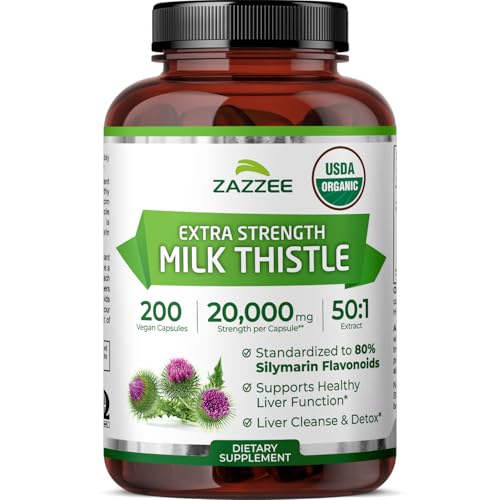
- CleanseParasites Heavy Metal + Microplastics Binder Editor’s Pick
Contains milk thistle alongside spirulina, zeolite, and other binder herbs. - Thorne Siliphos (Silybin Phosphatidylcholine Complex)
capsules, 1 capsule (~120mg silybin-phosphatidylcholine complex) — Phospholipid complex form (silybin bound to phosphatidylcholine) for liver support - Jarrow Formulas Milk Thistle 150mg (Silymarin Standardized Extract)
capsules, 1 capsule (150mg, 80% silymarin) — Widely used, standard 80% silymarin extract at an accessible price - NOW Foods Silymarin Milk Thistle Extract 150mg
capsules, 1 capsule (150mg, 80% silymarin) — Made under NOW’s GMP Quality Assured program, budget-friendly staple brand with consistent standardization - Nature’s Way Milk Thistle Thisilyn Standardized Extract
capsules, 1 capsule (175mg, 80% silymarin) — Long-running standardized formula, one of the most established milk thistle brands in the US market
As an Amazon Associate we earn from qualifying purchases. Quality varies widely — always choose a product with a published third-party test (COA) before buying.
A Note on the Evidence
Milk thistle supplements are not FDA-evaluated for safety or effectiveness and are not intended to diagnose, treat, cure, or prevent any disease. They can interact with CYP450-metabolized medications (including some statins, diabetes drugs, and hormonal therapies). Individuals with ragweed/Asteraceae allergies or diagnosed liver disease should consult a physician before use. This information is educational and not medical advice.
Frequently Asked Questions
What is the difference between silymarin and silybin?
Silymarin is the total flavonolignan complex extracted from milk thistle seeds, and silybin (silibinin) is its single largest constituent, alongside related flavonolignans such as isosilybin, silychristin and silydianin. Published estimates put silybin at roughly 50–70% of the silymarin complex[2], though some analyses report a higher share[3], and silymarin itself accounts for only about 65–80% of the finished extract[1]. A silybin percentage therefore means two different things depending on which of those denominators it is quoted against, so check the basis before comparing products. High-quality labels report both total silymarin and silybin percentages, and say which basis they use.
Is a higher extract ratio always better?
Not necessarily. A 50:1 extract standardized to 60% silymarin provides less silymarin per gram than a 30:1 extract standardized to 80% silymarin. Always multiply the extract amount by the standardization percentage to compare actual silymarin delivery.

What does "phytosome" or "liposomal" milk thistle mean?
These terms refer to delivery technologies that bind silybin to phospholipids (phytosome) or encapsulate it in lipid vesicles (liposomal) to enhance intestinal absorption. They can increase bioavailability but should still disclose the base silymarin standardization. Clinical data on specific formulations vary.
How much silymarin should I look for per serving?
Clinical studies on liver health have used daily silymarin doses ranging from 140 mg to 420 mg, usually divided into two or three doses. A single serving providing 100–200 mg of silymarin (from a 70–80% standardized extract) aligns with this range when taken two to three times daily.
Can I trust a product that only lists "milk thistle extract" without a standardization percentage?
No. Without a stated standardization, the silymarin content is unknown and likely variable. Such products may be crude powders or low-potency extracts. Always choose products that clearly state the silymarin percentage and, ideally, the silybin content.
Does organic certification guarantee a more potent milk thistle supplement?
Organic certification verifies farming practices (no synthetic pesticides/fertilizers) but does not measure or guarantee silymarin content. A non-organic standardized extract can be more potent and pure than an organic non-standardized powder. Evaluate potency and purity separately from organic status.
References
- Kroll DJ et al. Milk thistle nomenclature: why it matters in cancer research and pharmacokinetic studies. Integrative cancer therapies (2007). PMID 17548790
- Liu Y et al. Hepatoprotective effects of silybin in liver fibrosis. World journal of gastroenterology (2025). PMID 41278156
- Wadhwa K et al. Mechanistic Insights into the Pharmacological Significance of Silymarin. Molecules (Basel, Switzerland) (2022). PMID 36014565
These statements have not been evaluated by the Food and Drug Administration. This information is not intended to diagnose, treat, cure, or prevent any disease. Content is for informational purposes only and is not medical advice; consult a qualified healthcare provider before starting any supplement. As an Amazon Associate we earn from qualifying purchases.