Milk thistle (Silybum marianum) seed extract, standardized to the flavonolignan complex silymarin, has been studied for its potential to support liver health through antioxidant and membrane-stabilizing actions on hepatocytes. The primary active constituent, silybin (also called silibinin), is known for its poor aqueous solubility and limited oral bioavailability in its native form.
To address these pharmacokinetic challenges, phytosome technology — which complexes silybin with phospholipids such as phosphatidylcholine — has been developed. This article examines the theoretical and mechanistic differences between silymarin phytosome formulations and standard extracts, the proposed absorption pathways, and practical considerations for consumers.[1]
Key Takeaways
- Silymarin phytosome complexes silybin with phospholipids to improve water dispersibility and intestinal permeability, addressing the poor bioavailability of standard extracts.
- Human pharmacokinetic studies show silymarin phytosome yields 2- to 5-fold higher plasma silybin exposure (AUC and Cmax) compared to equivalent silybin doses from standard extract.
- Lower labeled silybin doses in phytosome products can provide comparable or greater systemic exposure than higher doses of standard silymarin extract.
- Phytosome is distinct from liposomes, cyclodextrin complexes, and SEDDS; each technology has a different evidence base and stability profile.
- Both formulations share the same interaction potential with CYP450-metabolized drugs; enhanced absorption may increase this risk. Consult a physician if you have liver disease, Asteraceae allergies, or take prescription medications.
What Is Silymarin and Why Does Absorption Matter
Silymarin is a mixture of flavonolignans — primarily silybin A, silybin B, isosilybin A, isosilybin B, silychristin, and silydianin — extracted from milk thistle seeds. Among these, silybin is considered the most biologically active and is the marker compound used for standardization. However, silybin exhibits low water solubility and poor intestinal permeability, two factors that limit its oral absorption. After oral administration of standard silymarin extracts, plasma concentrations of silybin are typically low, with high inter-individual variability.[2]
The liver is the primary target organ for silymarin’s proposed effects, which include free radical scavenging, inhibition of lipid peroxidation, stabilization of hepatocyte membranes against toxin binding, and modulation of inflammatory signaling pathways. For these mechanisms to be relevant after oral dosing, sufficient silybin must reach the portal circulation and, subsequently, the hepatocytes. This pharmacokinetic hurdle has driven the development of enhanced-delivery systems, of which the phytosome complex is among the most studied.[3]

Phytosome Technology: Mechanism and Rationale
A phytosome (also called a phytosome complex or herbosome) is a patented delivery system in which a standardized botanical extract is complexed with phospholipids — typically phosphatidylcholine derived from sunflower or soy lecithin — in a defined molar ratio. The process involves molecular interaction between the polar heads of the phospholipids and the polar functional groups of the flavonolignans, resulting in a stable complex that is neither a simple physical mixture nor a liposome.
The rationale is twofold: first, the phospholipid envelope improves the water dispersibility of silybin, facilitating its dissolution in gastrointestinal fluids; second, the lipid-compatible surface may enhance transmembrane passage across the enterocyte membrane, which is itself a phospholipid bilayer. In vitro models using Caco-2 cell monolayers and artificial membrane permeability assays have shown increased apparent permeability coefficients for silybin-phosphatidylcholine complexes compared to free silybin. These mechanistic studies support the hypothesis that phytosome formation can improve intestinal absorption without relying on surfactants or organic solvents.[4][5]
Comparative Pharmacokinetic Data: What the Evidence Shows
Head-to-head human pharmacokinetic studies comparing silymarin phytosome (typically standardized to 29–33% silybin complexed with phosphatidylcholine) to standard silymarin extract (typically 70–80% silymarin, ~30% silybin) have measured plasma silybin concentrations using validated LC-MS/MS methods. In crossover designs with healthy volunteers, the phytosome formulation consistently produced higher peak plasma concentrations (Cmax) and greater area under the curve (AUC) for total silybin (sum of silybin A and B) compared to an equivalent dose of silybin from standard extract. The magnitude of increase has ranged from approximately 2- to 4.7-fold for AUC and 3- to 5-fold for Cmax across studies.[6][7]
Time to maximum concentration (Tmax) was generally similar between formulations, suggesting that the absorption window is not substantially shifted, but the fraction absorbed is increased. Some studies also reported a higher ratio of unconjugated (free) silybin to conjugated (glucuronidated/sulfated) metabolites with the phytosome, which may be relevant because free silybin is considered the pharmacologically active form at the cellular level. However, the clinical significance of this metabolic profile difference remains under investigation.[6][8][9]
Dosing Implications and Practical Equivalence
Because of the enhanced bioavailability, silymarin phytosome products typically deliver a lower total silymarin dose per capsule (e.g., 150–300 mg of phytosome complex yielding ~50–100 mg silybin) compared to standard extracts (e.g., 175–250 mg silymarin per capsule yielding ~50–75 mg silybin). Despite the lower labeled silybin content, the systemic exposure achieved with phytosome can be comparable to or greater than that from higher doses of standard extract.

This has practical implications for product selection: a consumer taking a standard extract labeled as 250 mg silymarin (approx. 75 mg silybin) three times daily may achieve similar or lower plasma silybin levels than someone taking a 150 mg phytosome capsule (approx. 50 mg silybin) twice daily. Label reading should focus on the silybin-phosphatidylcholine complex content and the stated silybin equivalence, not just the total silymarin weight. Some phytosome products are standardized to a specific silybin-phosphatidylcholine ratio (e.g., 1:1 or 1:2 molar ratio), which can be used to calculate the actual silybin dose.[4][7]
Other Enhanced-Delivery Systems and How They Differ
Phytosome is one of several technologies aimed at improving silymarin bioavailability. Others include silymarin-vitamin E complexes, cyclodextrin inclusion complexes, lipid-based self-emulsifying drug delivery systems (SEDDS), and nanoparticle or liposomal encapsulation. Each approach addresses solubility and permeability through distinct mechanisms: cyclodextrins form water-soluble inclusion complexes; SEDDS create fine oil-in-water emulsions upon gastrointestinal dilution; liposomes encapsulate the extract in phospholipid vesicles. Direct comparative human data among these systems are limited.[10][11]
Phytosome differs from liposomes in that the drug-phospholipid complex is molecularly integrated rather than encapsulated in an aqueous core. This can confer greater physical stability and simpler manufacturing. Consumers should note that ‘liposomal silymarin’ and ‘silymarin phytosome’ are not interchangeable terms, and the evidence base for each varies. Marketing claims should be evaluated against published pharmacokinetic data for the specific branded ingredient.
Safety Profile and Known Interactions
Both standard silymarin extracts and silymarin phytosome have been generally well tolerated in clinical studies, with adverse events typically mild and gastrointestinal (nausea, dyspepsia, diarrhea). The phospholipid component (phosphatidylcholine) is a normal dietary constituent and GRAS-affirmed. No serious adverse events attributable to the phytosome complex itself have been reported in controlled trials.[12]

However, silymarin — regardless of formulation — is known to modulate cytochrome P450 enzymes (particularly CYP3A4, CYP2C9, and CYP2D6) and transporters such as P-glycoprotein in vitro and in some human studies. This raises the potential for interactions with medications metabolized by these pathways, including certain statins, antidiabetic agents, hormonal therapies, and immunosuppressants. The enhanced bioavailability of the phytosome formulation could theoretically amplify these interactions, though direct clinical interaction studies comparing formulations are lacking. Individuals with ragweed or Asteraceae family allergies should exercise caution. Milk thistle supplements are not FDA-evaluated for safety or effectiveness and are not intended to diagnose, treat, cure, or prevent any disease. Those with diagnosed liver disease or taking prescription medications should consult a physician before use.[13][14]
Choosing a Product: Quality Markers and Label Transparency
When evaluating silymarin products, look for: (1) clear identification of the delivery system (e.g., ‘silybin phytosome,’ ‘silybin-phosphatidylcholine complex’); (2) standardization to silybin content, not just total silymarin; (3) disclosure of the phospholipid source (sunflower vs. soy) for allergen awareness; (4) third-party testing for identity, potency, and contaminants (heavy metals, pesticides, microbial limits); and (5) the specific branded ingredient name (e.g., Siliphos, Meriva — though Meriva is curcumin phytosome, not silymarin), which links to the pharmacokinetic literature.
Avoid products that use proprietary blends without disclosing the amount of silybin-phosphatidylcholine complex per serving. Price per milligram of silybin delivered — adjusted for relative bioavailability — is a more meaningful metric than price per capsule. Because the phytosome complex is patented, genuine phytosome products will typically reference the patent or licensed technology on the label or manufacturer website.
🛒 Where to Buy Milk Thistle (Silymarin)
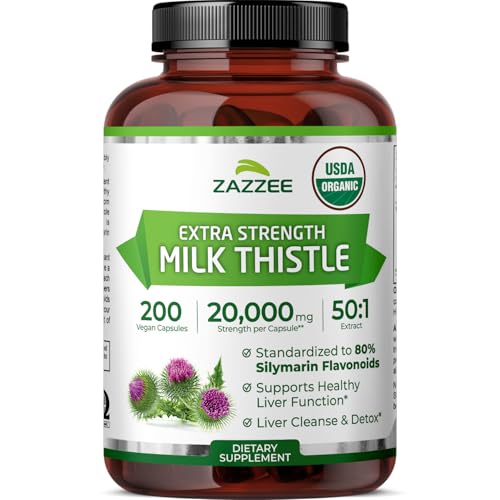
- CleanseParasites Heavy Metal + Microplastics Binder Editor’s Pick
Contains milk thistle alongside spirulina, zeolite, and other binder herbs. - Thorne Siliphos (Silybin Phosphatidylcholine Complex)
capsules, 1 capsule (~120mg silybin-phosphatidylcholine complex) — Phospholipid complex form (silybin bound to phosphatidylcholine) for liver support - Jarrow Formulas Milk Thistle 150mg (Silymarin Standardized Extract)
capsules, 1 capsule (150mg, 80% silymarin) — Widely used, standard 80% silymarin extract at an accessible price - NOW Foods Silymarin Milk Thistle Extract 150mg
capsules, 1 capsule (150mg, 80% silymarin) — Made under NOW’s GMP Quality Assured program, budget-friendly staple brand with consistent standardization - Nature’s Way Milk Thistle Thisilyn Standardized Extract
capsules, 1 capsule (175mg, 80% silymarin) — Long-running standardized formula, one of the most established milk thistle brands in the US market
As an Amazon Associate we earn from qualifying purchases. Quality varies widely — always choose a product with a published third-party test (COA) before buying.
A Note on the Evidence
Milk thistle supplements are not FDA-evaluated for safety or effectiveness and are not intended to diagnose, treat, cure, or prevent any disease. Silymarin can interact with CYP450-metabolized medications (including some statins, diabetes drugs, and hormonal therapies). Those with ragweed/Asteraceae allergies or diagnosed liver disease should consult a physician before use. This content is informational, not medical advice.
Frequently Asked Questions
Is silymarin phytosome more effective than standard milk thistle extract for liver health?
Phytosome formulations achieve higher blood levels of silybin, the primary active flavonolignan. However, clinical outcome studies directly linking this increased exposure to superior liver health endpoints are limited. Higher bioavailability is a pharmacokinetic advantage, not a proven clinical superiority.
How much silymarin phytosome should I take to match a standard extract dose?
Due to 2- to 5-fold higher bioavailability, a phytosome product providing 50–100 mg silybin daily (typically 150–300 mg complex) may yield similar plasma exposure to 150–250 mg silybin from standard extract (500–800 mg silymarin). Always follow the manufacturer’s dosing guidance and consult a healthcare provider.
Are there side effects unique to the phytosome form?
No formulation-specific serious adverse events have been reported. The phospholipid (phosphatidylcholine) is a normal dietary lipid. Side effect profiles in trials are similar to standard extract: mild GI symptoms in a minority of users.

Can I take silymarin phytosome with my statin or diabetes medication?
Silymarin inhibits several CYP450 enzymes and transporters involved in drug metabolism. The phytosome’s higher bioavailability may increase this potential. Do not combine with prescription medications without physician supervision.
How do I know if a product uses genuine phytosome technology?
Look for the branded ingredient name (e.g., Siliphos), a stated silybin-phosphatidylcholine complex amount, standardization to silybin content, and reference to the relevant patent or licensed technology. Avoid vague ‘proprietary blend’ labels.
Is silymarin phytosome safe for long-term use?
Clinical trials up to 12 months have not identified safety signals specific to the phytosome complex. However, long-term safety data beyond one year are limited for both standard and phytosome forms. Periodic medical review is prudent for any supplement used chronically, especially with underlying liver conditions.
References
- Javed S et al. Reassessing bioavailability of silymarin. Alternative medicine review : a journal of clinical therapeutic (2011). PMID 21951025
- Křen V et al. Silybin and its congeners: from traditional medicine to molecular effects. Natural product reports (2022). PMID 35510639
- Calani L et al. Absorption and metabolism of milk thistle flavanolignans in humans. Phytomedicine : international journal of phytotherapy and phytopharmacology (2012). PMID 23072776
- Barzaghi N et al. Pharmacokinetic studies on IdB 1016, a silybin- phosphatidylcholine complex, in healthy human subjects. European journal of drug metabolism and pharmacokinetics (1990). PMID 2088770
- Morazzoni P et al. Comparative pharmacokinetics of silipide and silymarin in rats. European journal of drug metabolism and pharmacokinetics (1993). PMID 8149949
- Gatti G et al. Plasma concentrations of free and conjugated silybin after oral intake of a silybin-phosphatidylcholine complex (silipide) in healthy volunteers. International journal of clinical pharmacology and therapeutics (1994). PMID 7874377
- Méndez-Sánchez N et al. Superior silybin bioavailability of silybin-phosphatidylcholine complex in oily-medium soft-gel capsules versus conventional silymarin tablets in healthy volunteers. BMC pharmacology & toxicology (2019). PMID 30635055
- Schandalik R et al. Pharmacokinetics of silybin following oral administration of silipide in patients with extrahepatic biliary obstruction. Drugs under experimental and clinical research (1994). PMID 7924893
- Schandalik R et al. Pharmacokinetics of silybin in bile following administration of silipide and silymarin in cholecystectomy patients. Arzneimittel-Forschung (1992). PMID 1329780
- Di Costanzo A et al. Formulation Strategies for Enhancing the Bioavailability of Silymarin: The State of the Art. Molecules (Basel, Switzerland) (2019). PMID 31181687
- Tvrdý V et al. Systematic review of pharmacokinetics and potential pharmacokinetic interactions of flavonolignans from silymarin. Medicinal research reviews (2021). PMID 33587317
- Soleimani V et al. Safety and toxicity of silymarin, the major constituent of milk thistle extract: An updated review. Phytotherapy research : PTR (2019). PMID 31069872
- Doehmer J et al. Assessment of drug-drug interaction for silymarin. Toxicology in vitro : an international journal published in association with BIBRA (2008). PMID 18249085
- Hermann R et al. Clinical evidence of herbal drugs as perpetrators of pharmacokinetic drug interactions. Planta medica (2012). PMID 22855269
These statements have not been evaluated by the Food and Drug Administration. This information is not intended to diagnose, treat, cure, or prevent any disease. Content is for informational purposes only and is not medical advice; consult a qualified healthcare provider before starting any supplement. As an Amazon Associate we earn from qualifying purchases.