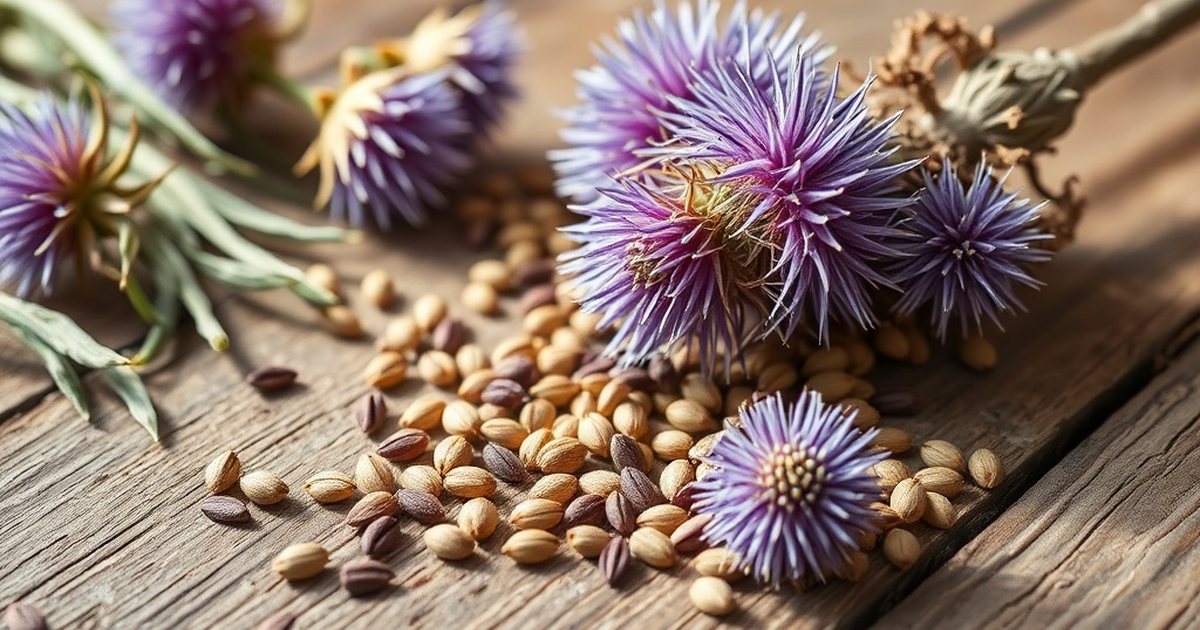
Milk thistle (Silybum marianum) is a spiky, purple-flowered plant in the daisy family, easy to spot by the white marbling on its leaves that gives it its common name. For centuries it has been used in traditional European herbal medicine, most often associated with supporting the liver. Today, the part of the plant used in supplements isn’t the leaf or flower but the seed, which is processed into a concentrated extract.
That extract is standardized to a group of plant compounds called silymarin, a mixture of flavonolignans, with silybin (also spelled silibinin) generally considered the most biologically active component[1]. This article explains where milk thistle comes from, what silymarin actually is chemically, and the mechanisms researchers propose for how it might interact with liver cells. It is written to inform, not to promise a cure or treatment for any condition.
Key Takeaways
- Milk thistle seed extract is standardized to silymarin, a mixture of flavonolignans, with silybin considered the most active component.
- Proposed mechanisms include antioxidant activity, hepatocyte membrane stabilization, and mild anti-inflammatory effects, mostly studied in lab and animal models.
- Milk thistle has a long folk-medicine history but is not FDA-evaluated for safety or effectiveness as a supplement.
- It can interact with CYP450-metabolized medications, including some statins, diabetes drugs, and hormonal therapies.
- This is informational content, not medical advice; consult a physician before use, especially with diagnosed liver disease or ragweed/Asteraceae allergies.
Where Milk Thistle Comes From
Silybum marianum is native to the Mediterranean region but has spread widely and now grows as a common roadside plant across parts of Europe, North Africa, the Middle East, and even North America. It has a long folk-medicine history, with mentions in classical and medieval herbal texts describing its use for liver and digestive complaints[2].
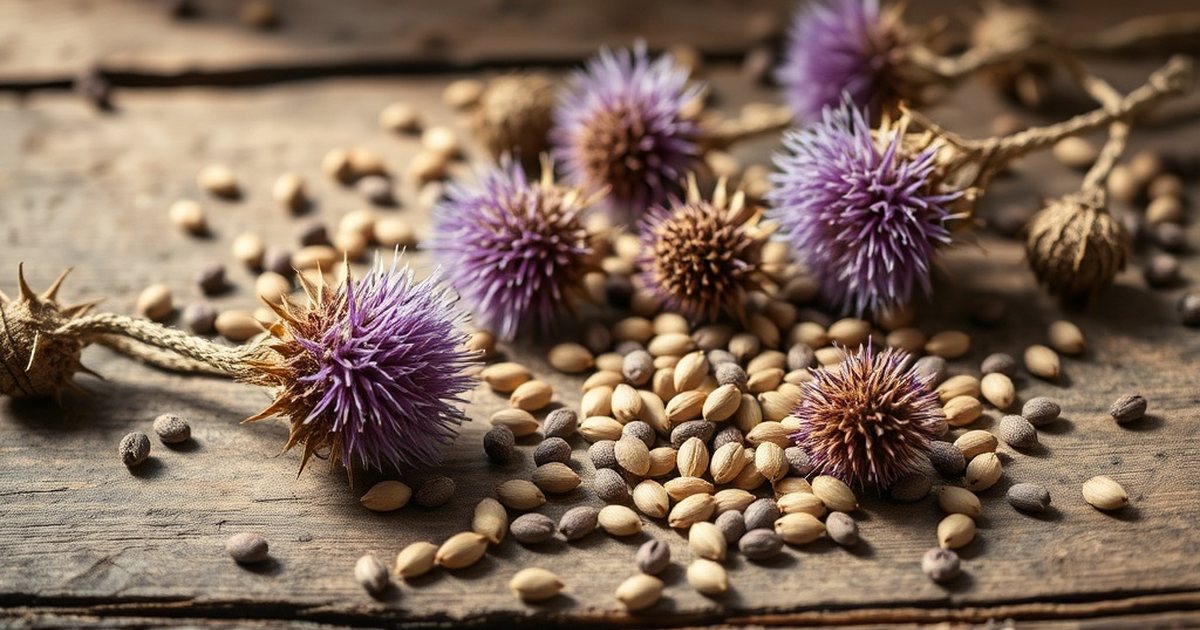
The part of interest to modern supplement makers is the seed (technically the fruit, or achene), which is dark, hard, and mottled. Seeds are harvested, dried, and processed to extract and concentrate the silymarin fraction, which is then standardized so that capsules or tablets can list a consistent percentage of silymarin content.

What Silymarin Actually Is
Silymarin is not a single molecule but a mixture of related flavonolignans found in milk thistle seed, including silybin, silydianin, and silychristin[3]. Silybin itself exists as a pair of diastereomers (silybin A and silybin B) and is usually the compound researchers focus on when studying mechanism, since it makes up the largest share of the silymarin complex and appears to be the most active[4].
Because silymarin is a mixture rather than a pure compound, the exact ratio of these flavonolignans can vary somewhat between extracts depending on the plant source and manufacturing process[5]. This is one reason supplement labels usually specify ‘standardized to X% silymarin’ rather than listing a single active ingredient the way a pharmaceutical drug would.
Proposed Mechanisms: Antioxidant Activity
One of the most frequently proposed mechanisms for silymarin’s effects on liver cells (hepatocytes) is antioxidant activity. The flavonolignan structure allows these compounds to scavenge free radicals and reactive oxygen species, which are byproducts of normal metabolism as well as of processing toxins and certain medications[6].
In laboratory and animal research, this antioxidant behavior is often the starting point for explaining downstream effects, since oxidative stress is a common contributor to cellular damage across many models of liver injury. It’s worth being clear that antioxidant activity observed in a lab setting does not automatically translate into a proven clinical benefit in humans[7].
Proposed Mechanisms: Membrane Stabilization and Mild Anti-Inflammatory Effects
Beyond scavenging free radicals, silymarin compounds are proposed to interact with the outer membrane of hepatocytes, potentially helping stabilize the cell membrane and reduce the entry of certain toxic substances into the cell[8]. This membrane-level interaction is one of the more distinctive mechanisms proposed for milk thistle compared to more generic antioxidant supplements.

Silymarin has also been studied for mild anti-inflammatory activity, with researchers proposing it may influence certain inflammatory signaling pathways within liver tissue[9]. As with the antioxidant mechanism, most of this mechanistic work comes from cell-culture and animal studies, and the degree to which it applies to human liver conditions is still an active area of research rather than settled fact[10][11].
How This Differs from a Drug
It’s important to understand that milk thistle supplements are regulated as dietary supplements, not drugs. In the United States, this means the FDA does not evaluate them for safety or effectiveness before they reach the market, and manufacturers cannot legally claim the product treats, cures, or prevents any disease.
This regulatory distinction matters practically: product quality, silymarin concentration, and purity can vary between brands, since supplements don’t go through the same premarket testing pharmaceuticals do. Anyone considering milk thistle for a specific liver concern should treat it as a supplement to discuss with a physician, not a substitute for diagnosed medical treatment.
🛒 Where to Buy Milk Thistle (Silymarin)

- CleanseParasites Heavy Metal + Microplastics Binder Editor’s Pick
Contains milk thistle alongside spirulina, zeolite, and other binder herbs. - Thorne Siliphos (Silybin Phosphatidylcholine Complex)
capsules, 1 capsule (~120mg silybin-phosphatidylcholine complex) — Phospholipid complex form (silybin bound to phosphatidylcholine) for liver support - Jarrow Formulas Milk Thistle 150mg (Silymarin Standardized Extract)
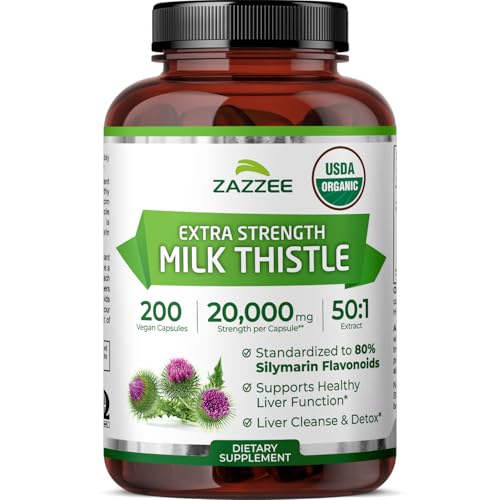
capsules, 1 capsule (150mg, 80% silymarin) — Widely used, standard 80% silymarin extract at an accessible price - NOW Foods Silymarin Milk Thistle Extract 150mg
capsules, 1 capsule (150mg, 80% silymarin) — Made under NOW’s GMP Quality Assured program, budget-friendly staple brand with consistent standardization - Nature’s Way Milk Thistle Thisilyn Standardized Extract
capsules, 1 capsule (175mg, 80% silymarin) — Long-running standardized formula, one of the most established milk thistle brands in the US market
As an Amazon Associate we earn from qualifying purchases. Quality varies widely — always choose a product with a published third-party test (COA) before buying.
A Note on the Evidence
This article is informational and not medical advice; milk thistle supplements are not FDA-evaluated for safety or effectiveness and are not intended to diagnose, treat, cure, or prevent any disease. Consult a physician before use if you take CYP450-metabolized medications, have diagnosed liver disease, or have ragweed/Asteraceae allergies.
Frequently Asked Questions
What part of the milk thistle plant is used in supplements?
The seed (technically the fruit or achene) is the part processed into extract. It’s harvested, dried, and standardized to a specific percentage of silymarin content for use in capsules or tablets.
Is silymarin the same thing as silybin?
No. Silymarin is the whole mixture of flavonolignans found in milk thistle seed, while silybin is the single most abundant and studied compound within that mixture.
Does milk thistle actually detox the liver?
The term ‘detox’ isn’t a precise scientific claim. Research instead focuses on specific proposed mechanisms, like antioxidant activity and membrane stabilization in liver cells, rather than a general detoxifying effect. Milk thistle is not FDA-approved to treat, cure, or prevent any liver disease.
Can milk thistle interact with medications?
Yes. Because it can affect CYP450 liver enzymes involved in drug metabolism, it may interact with some statins, diabetes medications, and hormonal therapies[12][13]. Anyone on these medications should talk to a physician before using milk thistle.
Who should be cautious with milk thistle?
People with diagnosed liver disease, those with ragweed or other Asteraceae plant allergies (milk thistle is in the same family), and anyone on CYP450-metabolized medications should consult a physician before use.
Is milk thistle regulated like a medication?
No. In the U.S. it’s sold as a dietary supplement, which means it is not evaluated by the FDA for safety or effectiveness before sale, unlike prescription or over-the-counter drugs.
References
- Křen V et al. Silybin and its congeners: from traditional medicine to molecular effects. Natural product reports (2022). PMID 35510639
- Marmouzi I et al. The food plant Silybum marianum (L.) Gaertn.: Phytochemistry, Ethnopharmacology and clinical evidence. Journal of ethnopharmacology (2021). PMID 32877720
- Lee JI et al. Separation and characterization of silybin, isosilybin, silydianin and silychristin in milk thistle extract by liquid chromatography-electrospray tandem mass spectrometry. Journal of chromatography. A (2006). PMID 16631762
- Křen V et al. Chirality Matters: Biological Activity of Optically Pure Silybin and Its Congeners. International journal of molecular sciences (2021). PMID 34360650
- Poppe L et al. Variation in the flavonolignan composition of fruits from different Silybum marianum chemotypes and suspension cultures derived therefrom. Phytochemistry (2016). PMID 27639292
- Wadhwa K et al. Mechanistic Insights into the Pharmacological Significance of Silymarin. Molecules (Basel, Switzerland) (2022). PMID 36014565
- Aghemo A et al. Role of silymarin as antioxidant in clinical management of chronic liver diseases: a narrative review. Annals of medicine (2022). PMID 35635048
- Valenzuela A et al. Biochemical bases of the pharmacological action of the flavonoid silymarin and of its structural isomer silibinin. Biological research (1994). PMID 8640239
- Lovelace ES et al. Silymarin Suppresses Cellular Inflammation By Inducing Reparative Stress Signaling. Journal of natural products (2015). PMID 26186142
- Rambaldi A et al. Milk thistle for alcoholic and/or hepatitis B or C virus liver diseases. The Cochrane database of systematic reviews (2007). PMID 17943794
- Fried MW et al. Effect of silymarin (milk thistle) on liver disease in patients with chronic hepatitis C unsuccessfully treated with interferon therapy: a randomized controlled trial. JAMA (2012). PMID 22797645
- Sridar C et al. Silybin inactivates cytochromes P450 3A4 and 2C9 and inhibits major hepatic glucuronosyltransferases. Drug metabolism and disposition: the biological fate of chemicals (2004). PMID 15155549
- Brantley SJ et al. Two flavonolignans from milk thistle (Silybum marianum) inhibit CYP2C9-mediated warfarin metabolism at clinically achievable concentrations. The Journal of pharmacology and experimental therapeutics (2010). PMID 19934397
These statements have not been evaluated by the Food and Drug Administration. This information is not intended to diagnose, treat, cure, or prevent any disease. Content is for informational purposes only and is not medical advice; consult a qualified healthcare provider before starting any supplement. As an Amazon Associate we earn from qualifying purchases.