Milk thistle’s use did not start in a supplement aisle. It has a documented history stretching back thousands of years, well before silymarin was ever isolated in a lab.
This article contains affiliate links. If you purchase through one of these links, we may earn a small commission at no extra cost to you. We only mention product categories and formats worth considering, not specific pricing or guaranteed outcomes.
Ancient and Traditional Use
References to milk thistle as a liver and digestive remedy appear in ancient Greek and Roman writings, and the plant was used across medieval European herbal medicine traditions for complaints related to the liver and spleen.
The plant’s distinctive white-veined leaves were traditionally associated with liver health partly through the ‘doctrine of signatures,’ an old folk belief that a plant’s appearance hinted at what it could treat, though this is not a scientific basis for its modern use.
Isolation of Silymarin
Modern scientific interest picked up in the 20th century when researchers isolated silymarin from milk thistle seeds and began studying its chemical structure and biological activity, moving the plant from folk remedy toward a subject of pharmacological research.
That shift depended on laboratory technique as much as on interest. Separating a plant extract into its individual constituents and then working out the structure of each one required chromatography and spectroscopy methods that simply were not available to earlier herbalists. Once those tools existed, milk thistle stopped being a single remedy and became a named mixture of related compounds that could be measured.
European Clinical Use
Silymarin extracts have a longer history of clinical use in parts of Europe, including intravenous silybin formulations used in hospital settings for severe cases of Amanita mushroom poisoning, which remains one of the better documented medical applications.
Regulatory history diverged at roughly the same point. Several European systems allow a plant preparation to be authorised as a herbal medicinal product on the basis of long standing use, while the United States framework treats the same material as a dietary supplement. The substance did not change, but the paperwork around it did, and that still shapes what a manufacturer is allowed to claim in each market.
Entry Into the Global Supplement Market
As interest in plant-based liver support grew through the late 20th and early 21st centuries, standardized milk thistle extracts became widely available as an over the counter supplement, and research expanded into areas like chronic liver disease and metabolic health.
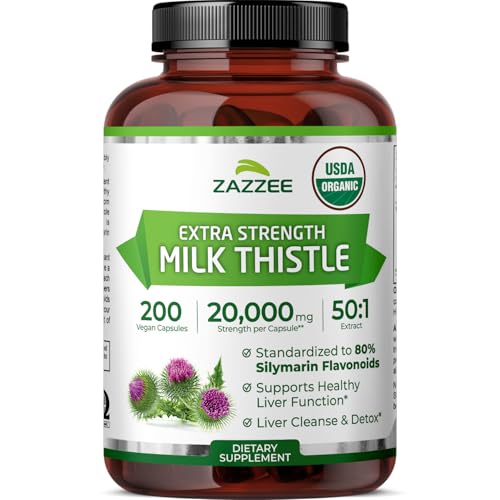
Commercial standardization arrived alongside that expansion. Buyers and researchers both needed some way to compare one bottle against another, and declaring the silymarin share of the extract became the convention that made comparison possible at all. It is an imperfect measure, since it says nothing about absorption, but it is the reason a modern label carries a number where a nineteenth century herbal did not.
Frequently Asked Questions
How old is the use of milk thistle as a remedy?
Written references to milk thistle for liver and digestive complaints date back to ancient Greek and Roman texts, making it one of the longer-used botanical remedies still sold today.

When was silymarin first isolated?
Silymarin was characterized and studied more intensively starting in the mid-20th century as analytical chemistry techniques improved enough to isolate and identify its individual compounds.
Is milk thistle used differently in Europe than the US?
Intravenous silybin formulations for mushroom poisoning have a longer clinical history in parts of Europe, while in the US milk thistle is primarily available as an oral dietary supplement.
These statements have not been evaluated by the FDA. This product is not intended to diagnose, treat, cure, or prevent any disease.
These statements have not been evaluated by the Food and Drug Administration. This information is not intended to diagnose, treat, cure, or prevent any disease. Content is for informational purposes only and is not medical advice; consult a qualified healthcare provider before starting any supplement. As an Amazon Associate we earn from qualifying purchases.
