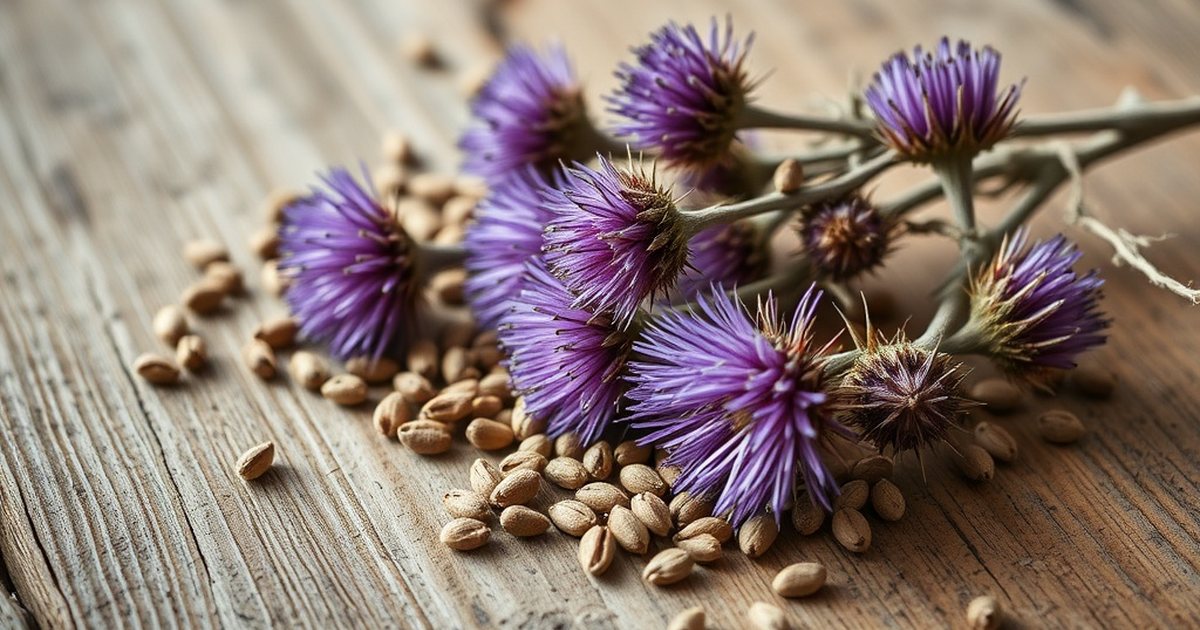
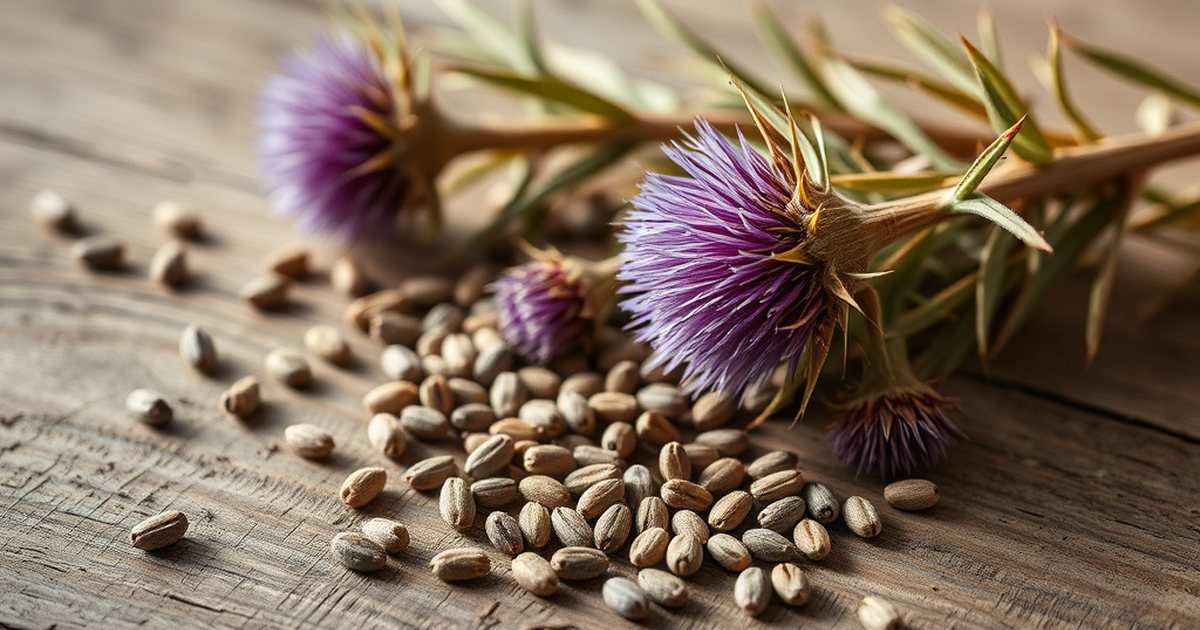
Milk thistle (Silybum marianum) is best known as a liver-support herb, but its seed extract, silymarin, and its main active compound, silibinin, have also been studied for effects on skin. Most of this research looks at inflammation, oxidative stress, and UV damage at the cellular and animal level, with a particular focus on skin cancer prevention rather than cosmetic skin concerns.
This article summarizes what’s been studied about silymarin and silibinin in skin, distinguishing between laboratory/animal findings and anything resembling human evidence. It is not a claim that milk thistle treats any skin condition, and it is not medical advice.
Key Takeaways
- Silymarin’s skin research centers on antioxidant, anti-inflammatory, and immunomodulatory mechanisms tied to UV damage [1].
- Most silymarin-and-skin studies focus on chemoprevention of non-melanoma skin cancers, not general skin health [2] [3].
- Evidence for modulating skin inflammatory response comes largely from cell and tissue-level studies, not human clinical trials [4].
- Acne is the exception. Three human trials have tested silymarin for acne, including a randomized comparison against oral doxycycline in which silymarin matched the antibiotic on one severity index and scored worse on the other [5]. For eczema, psoriasis, and rosacea there is still no clinical trial evidence.
- Sun protection remains the primary evidence-based strategy for reducing UV-related skin damage and cancer risk; silymarin research is preventive-mechanism research, not a replacement.
The Proposed Mechanism: Why Skin Researchers Got Interested
Silymarin is a mix of flavonolignans, with silybin (silibinin) considered the most active component. In skin research, the interest centers on three overlapping properties: antioxidant activity that can neutralize reactive oxygen species generated by UV exposure, anti-inflammatory activity that dampens inflammatory signaling in skin cells, and immunomodulatory effects that influence how skin’s immune response reacts to damage [1].
These same mechanisms, antioxidant, anti-inflammatory, and DNA-repair-supportive, are shared by a number of natural polyphenols studied for photoprotection, placing silymarin within a broader category of plant compounds researchers have investigated for UV-related skin damage [6].
Silymarin and UV-Induced Inflammation
A substantial portion of the research on silymarin and skin relates to protection against ultraviolet (UV) radiation, one of the primary drivers of skin inflammation, oxidative stress, and premature aging. Polyphenols like those in silymarin have been studied for their capacity to reduce UV-induced inflammatory markers and support the skin’s natural DNA repair mechanisms after sun exposure [6].

More specifically, research on the active components of silymarin has examined how they modulate the skin’s inflammatory response, looking at how these compounds influence inflammatory mediators and cell signaling pathways involved in skin irritation and damage [4]. This line of research treats silymarin’s components as tools for studying inflammatory modulation in skin tissue, not as an established topical treatment.
Skin Cancer Prevention: The Most Studied Application
The bulk of silymarin-and-skin research is framed around chemoprevention, using the compound’s anti-inflammatory, antioxidant, and immunomodulatory properties to potentially reduce the risk of skin cancers linked to UV damage, particularly non-melanoma skin cancers [1].
A dedicated review of silibinin and non-melanoma skin cancers describes how the compound has been investigated for its influence on the cellular processes involved in UV-induced carcinogenesis [2]. Separately, research comparing chemopreventive efficacy of silymarin across skin and prostate tissue has examined its potential role in reducing cancer risk in both organ systems [3].
It’s important to be clear about what this evidence represents: these are largely preclinical (cell and animal model) chemoprevention studies, not clinical trials showing that silymarin supplements or topical products prevent skin cancer in people. Skin cancer risk reduction depends primarily on established measures, sun protection, avoiding tanning beds, and regular skin checks, not on any supplement.

Oral Silymarin vs. Topical Use: An Important Distinction
Most of the available evidence on silymarin and skin comes from topical or in vitro application, applying the compound directly to skin cells or tissue, rather than oral supplementation. The pathways connecting an oral milk thistle capsule to a measurable anti-inflammatory effect in skin are far less established than the liver-focused pharmacology silymarin is best known for.
None of the cited evidence here demonstrates that oral milk thistle supplements reduce visible skin inflammation, acne, eczema, or redness in humans. The research base is concentrated on mechanistic and chemopreventive questions, largely in the context of UV damage and carcinogenesis, not general skin health or cosmetic outcomes.
Where the Evidence Runs Out
No clinical trial has tested milk thistle for psoriasis, eczema, or rosacea. The chemoprevention and anti-inflammatory findings behind the interest in those conditions come primarily from cell culture and animal models focused on UV damage and cancer biology.
Acne is the one inflammatory skin condition where human trials do exist, and they are worth reading precisely rather than in summary. A randomized trial in 60 patients compared oral silymarin against oral doxycycline and against the two combined. Silymarin was not significantly different from doxycycline on the Global Acne Grading System (p = 0.260), but it scored lower on the Acne Severity Index (p = 0.021), so it underperformed the antibiotic on one of the two measures used [5]. A split-face trial in 30 patients applied topical silymarin 1.4% cream to one side of the face and 30% salicylic acid peels to the other for three months, and found a significant grading-score reduction on both sides with no significant difference between them, with hyperpigmentation in two salicylic acid cases and no side effects recorded for the silymarin cream [7]. The third study is an open-label pilot with no control group, in which a 0.5% silymarin serum used alongside existing treatment lowered lesion counts over four weeks, though some participants were also taking low-dose oral isotretinoin [8].
These are small, short, single-center trials, and two of the three measured silymarin against an active comparator rather than against placebo. They are enough to retire the claim that acne has never been studied, and not enough to recommend milk thistle as a treatment for it.
Interestingly, silymarin’s anti-inflammatory and antioxidant mechanisms have also drawn interest outside dermatology, including preliminary research into neuroinflammation and Parkinson’s disease, which relies on some of the same oxidative-stress and anti-inflammatory pathways studied in skin [9]. This underscores that silymarin’s mechanisms are broadly studied across tissue types, but mechanism-level interest is not the same as proven clinical benefit in any single application.
🛒 Where to Buy Milk Thistle (Silymarin)

- CleanseParasites Heavy Metal + Microplastics Binder Editor’s Pick
Contains milk thistle alongside spirulina, zeolite, and other binder herbs. - Thorne Siliphos (Silybin Phosphatidylcholine Complex)
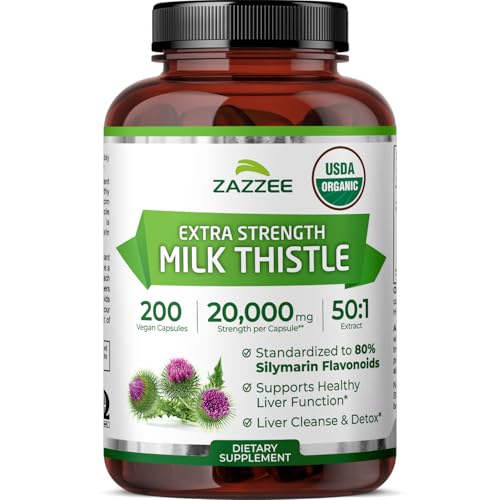
capsules, 1 capsule (~120mg silybin-phosphatidylcholine complex) — Phospholipid complex form (silybin bound to phosphatidylcholine) for liver support - Jarrow Formulas Milk Thistle 150mg (Silymarin Standardized Extract)
capsules, 1 capsule (150mg, 80% silymarin) — Widely used, standard 80% silymarin extract at an accessible price - NOW Foods Silymarin Milk Thistle Extract 150mg
capsules, 1 capsule (150mg, 80% silymarin) — Made under NOW’s GMP Quality Assured program, budget-friendly staple brand with consistent standardization - Nature’s Way Milk Thistle Thisilyn Standardized Extract
capsules, 1 capsule (175mg, 80% silymarin) — Long-running standardized formula, one of the most established milk thistle brands in the US market
As an Amazon Associate we earn from qualifying purchases. Quality varies widely — always choose a product with a published third-party test (COA) before buying.
A Note on the Evidence
The evidence here is predominantly preclinical (cell and animal model) research focused on UV damage and cancer chemoprevention, not clinical proof that milk thistle treats skin conditions. This is informational only, not medical advice; talk to a physician before using milk thistle, especially if you take CYP450-metabolized medications or have a ragweed/Asteraceae allergy or liver disease.
Frequently Asked Questions
Does milk thistle help with skin inflammation?
Some of its active compounds have been studied for modulating inflammatory response in skin tissue, largely in cell and animal models tied to UV exposure [4]. This isn’t the same as proven clinical benefit for skin conditions in people.
Can milk thistle prevent skin cancer?
Research has explored silymarin and silibinin’s chemopreventive potential against non-melanoma skin cancers through antioxidant and anti-inflammatory mechanisms [1] [2]. This research is preclinical, and sun protection remains the primary proven prevention strategy.
Is topical milk thistle different from taking it orally?
Yes. Nearly all of the cited skin research involves topical application or in vitro study of silymarin components, not oral supplementation, so results don’t necessarily translate to taking a capsule [6].
Does milk thistle help with acne or eczema?
The two conditions differ. For eczema, as for psoriasis and rosacea, there is no clinical trial evidence. For acne there is: three human trials have tested silymarin, the largest randomizing 60 patients between oral silymarin, oral doxycycline, and both, where silymarin matched doxycycline on one severity index and scored worse on the other [5][7]. That evidence is real but small and mixed, and none of it establishes milk thistle as an acne treatment.
What's the connection between silymarin's skin research and its use for the liver or brain?
Silymarin’s antioxidant and anti-inflammatory mechanisms are studied across multiple tissue types, including preliminary neuroinflammation research related to Parkinson’s disease [9]. The underlying mechanisms overlap, but each application needs its own dedicated clinical evidence.
Is it safe to use milk thistle products on skin or take them for skin health?
Milk thistle supplements are not FDA-evaluated for safety or effectiveness and aren’t intended to diagnose, treat, cure, or prevent any disease. It can interact with CYP450-metabolized medications, and people with ragweed/Asteraceae allergies or diagnosed liver disease should consult a physician before use.
References
- Katiyar SK et al. Silymarin and skin cancer prevention: anti-inflammatory, antioxidant and immunomodulatory effects (Review). International journal of oncology (2005). PMID 15586237
- Prasad RR et al. Silibinin and non-melanoma skin cancers. Journal of traditional and complementary medicine (2020). PMID 32670818
- Deep G et al. Chemopreventive efficacy of silymarin in skin and prostate cancer. Integrative cancer therapies (2007). PMID 17548792
- Juráňová J et al. Modulation of Skin Inflammatory Response by Active Components of Silymarin. Molecules (Basel, Switzerland) (2018). PMID 30598040
- Shie Morteza M et al. Efficacy and safety of oral silymarin in comparison with oral doxycycline and their combination therapy in the treatment of acne vulgaris. Dermatologic therapy (2019). PMID 31579978
- Nichols JA et al. Skin photoprotection by natural polyphenols: anti-inflammatory, antioxidant and DNA repair mechanisms. Archives of dermatological research (2010). PMID 19898857
- Atallah DA et al. Topical Silymarin Cream as a Novel Therapy Versus Salicylic Acid Peels in Acne Vulgaris: A Split-Face Clinical Trial. Journal of cutaneous medicine and surgery (2024). PMID 37942562
- Kim J et al. Efficacy and safety of silymarin containing antioxidant serum as an adjuvant treatment of mild-to-moderate acne vulgaris: A prospective, open-label pilot study. Journal of cosmetic dermatology (2023). PMID 36204969
- Ullah H et al. Anti-Parkinson Potential of Silymarin: Mechanistic Insight and Therapeutic Standing. Frontiers in pharmacology (2018). PMID 29755356
These statements have not been evaluated by the Food and Drug Administration. This information is not intended to diagnose, treat, cure, or prevent any disease. Content is for informational purposes only and is not medical advice; consult a qualified healthcare provider before starting any supplement. As an Amazon Associate we earn from qualifying purchases.