Milk thistle (Silybum marianum) seed extract, standardized to the flavonolignan complex silymarin, has been studied for decades for its hepatoprotective properties. Its primary constituents — silybin (silibinin), isosilybin, silychristin, and silydianin — exhibit a range of biochemical activities that converge on reducing oxidative stress in hepatocytes. Understanding these mechanisms requires distinguishing between direct chemical antioxidant effects and indirect modulation of cellular signaling pathways.
Research spans from early in vitro free radical scavenging assays to recent animal studies elucidating specific molecular pathways involving nuclear factor erythroid 2-related factor 2 (Nrf2), ferroptosis suppression, mitochondrial succinate regulation, and gut microbiota–liver axis signaling. This article reviews the current evidence for how silymarin and its major flavonolignans exert antioxidant activity in the liver, citing only the studies provided.
Key Takeaways
- Silymarin exerts antioxidant effects through both direct radical scavenging (hydrogen donation from phenolic hydroxyls) and indirect upregulation of endogenous defenses via Nrf2.
- Emerging evidence identifies ferroptosis inhibition — via xCT/GPX4 modulation and gut microbiota–derived bile acid remodeling — as a key mechanism in metabolic liver disease models.
- Silybin inhibits hepatic succinate accumulation, linking mitochondrial metabolic reprogramming to reduced ROS and fibrosis reversal.
- In obese mice with MASLD, silymarin lowered the microbial metabolite 7-keto-DCA, which acts as an FXR antagonist.
- Most mechanistic data derive from cell and animal studies; human clinical translation of these specific pathways remains limited.
Direct Free Radical Scavenging and Lipid Peroxidation Inhibition
The foundational antioxidant mechanism of silymarin components is their capacity to directly neutralize reactive oxygen species (ROS) and inhibit lipid peroxidation. Early in vitro work demonstrated that the flavonolignan complex IdB 1016 (silymarin) and its constituents scavenge hydroxyl radicals, superoxide anions, and hypochlorous acid, while also chelating iron ions that catalyze Fenton reactions [1]. Silybin glycosides were shown to protect microsomal membranes from NADPH- and ADP/Fe²⁺-dependent lipid peroxidation, with efficacy comparable to or exceeding that of vitamin E in some assay systems [2].
A later study using the silybin-phospholipid complex (silipide) confirmed scavenging of ethanol-derived free radicals (1-hydroxyethyl and superoxide) in both cell-free and hepatocyte systems, suggesting improved bioavailability enhances this direct antioxidant action [3]. A comprehensive 2013 review of silymarin components concluded that their polyphenolic structure — particularly the 3-OH group on the flavonolignan skeleton — underpins hydrogen atom donation to peroxyl radicals, breaking lipid peroxidation chain reactions in membranes [4]. The 2015 overview further contextualized these direct effects as complementary to indirect, enzyme-mediated antioxidant upregulation [5].

Activation of the Nrf2 Antioxidant Response Pathway
Beyond direct scavenging, silymarin activates the Nrf2–KEAP1 signaling axis, a master regulator of cellular antioxidant defense. Upon activation, Nrf2 translocates to the nucleus and binds antioxidant response elements (ARE), driving transcription of genes encoding glutathione synthesis enzymes (GCL, GSS), glutathione peroxidase (GPX), superoxide dismutase (SOD), catalase, and heme oxygenase-1 (HO-1). A 2025 study in acute liver failure models demonstrated that silibinin modulates the AKT/GSK3β/Nrf2/GPX4 pathway, increasing nuclear Nrf2 accumulation and upregulating GPX4 — a key enzyme that reduces lipid hydroperoxides and prevents ferroptosis [6].
This Nrf2-mediated upregulation of endogenous antioxidants represents a sustained, adaptive response distinct from stoichiometric radical scavenging. The same study showed that silibinin’s hepatoprotection was attenuated when Nrf2 was knocked down, confirming pathway dependence. The 2024 review on nutraceuticals for drug-induced liver injury also highlighted silymarin’s Nrf2 activation as a core mechanism across multiple toxin models [7].
Inhibition of Ferroptosis via xCT and GPX4 Modulation
Ferroptosis — an iron-dependent, lipid peroxidation-driven form of regulated cell death — has emerged as a key pathway in metabolic liver disease. Recent work identifies silymarin as a modulator of this pathway. A 2026 study showed that silymarin ameliorates MAFLD-associated ferroptosis by targeting xCT (system xc⁻ cystine/glutamate antiporter), the rate-limiting component for cellular cystine uptake and glutathione synthesis [8]. By enhancing xCT expression and function, silymarin supports GSH production, enabling GPX4 activity to suppress lethal lipid peroxidation.
Complementary 2025 research demonstrated that silymarin regulates gut microbiota-derived glycochenodeoxycholic acid (GCDCA) to suppress the ferroptosis–ROS–NFκB signaling cascade in diet-induced gallstone models [9]. This connects microbial bile acid metabolism to hepatocellular ferroptosis resistance, positioning silymarin at the intersection of gut–liver signaling and oxidative cell death pathways.

Mitochondrial Modulation: Succinate Inhibition and Metabolic Reprogramming
Mitochondria are both major ROS sources and targets of oxidative damage. A 2025 study revealed a novel mechanism: silybin inhibits succinate production and secretion in hepatocytes, thereby reversing liver fibrosis [10]. Succinate accumulation — driven by metabolic rewiring in injured livers — stabilizes HIF-1α and promotes ROS generation via reverse electron transport at mitochondrial Complex I. By suppressing succinate accumulation, silybin interrupts this pro-oxidant, pro-fibrotic loop.
This finding reframes silymarin’s antioxidant action as metabolic modulation rather than mere radical interception. Reduced succinate flux lowers mitochondrial ROS burden, decreases HIF-1α–mediated fibrogenic signaling, and may restore NAD⁺/NADH balance, collectively enhancing hepatic redox homeostasis.
Gut Microbiota–Liver Axis: FXR Signaling and Bile Acid Remodeling
The gut–liver axis provides another route for silymarin’s antioxidant effects. A 2024 study in obese mice with MASLD showed that silymarin treatment lowers the microbial metabolite 7-keto-deoxycholic acid (7-keto-DCA), which acts as a farnesoid X receptor (FXR) antagonist [11]. FXR activation in hepatocytes and enterocytes regulates bile acid synthesis (via CYP7A1 suppression), lipid metabolism, and inflammatory signaling — all of which influence oxidative stress.
In this mouse model, silymarin lowered a bile acid that acts as an FXR antagonist, which the authors described as negative feedback regulation of FXR. How this affects antioxidant capacity in the human liver is not known. This suggests gut microbiota may play a role in how silymarin affects the liver in mice.

Membrane Stabilization and Hepatocyte Integrity
Classical pharmacology describes silymarin as a membrane stabilizer that prevents toxin entry into hepatocytes. The flavonolignans integrate into lipid bilayers, reducing membrane fluidity and permeability to hepatotoxins such as phalloidin and α-amanitin. This physical stabilization complements biochemical antioxidant actions by limiting the initial insult that triggers ROS bursts. The 2015 overview notes that membrane interaction also positions silymarin to intercept lipid peroxyl radicals at their site of propagation [5].
While direct membrane effects are difficult to isolate in vivo, they provide a plausible explanation for silymarin’s acute protective effects against toxin-induced necrosis, where rapid radical generation overwhelms inducible enzymatic defenses. The combination of membrane anchoring, radical scavenging, and enzyme induction creates a multi-layered antioxidant strategy.
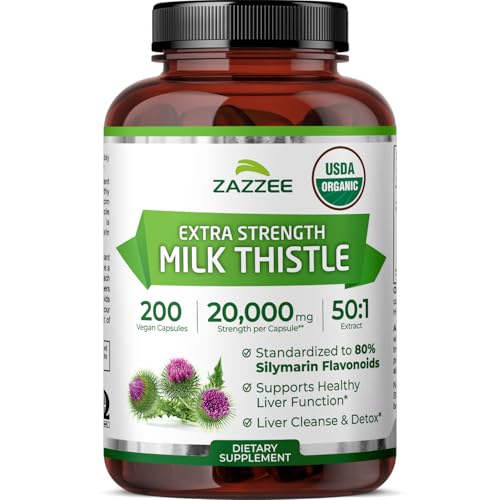
🛒 Where to Buy Milk Thistle (Silymarin)
- CleanseParasites Heavy Metal + Microplastics Binder Editor’s Pick
Contains milk thistle alongside spirulina, zeolite, and other binder herbs. - Thorne Siliphos (Silybin Phosphatidylcholine Complex)
capsules, 1 capsule (~120mg silybin-phosphatidylcholine complex) — Phospholipid complex form (silybin bound to phosphatidylcholine) for liver support - Jarrow Formulas Milk Thistle 150mg (Silymarin Standardized Extract)
capsules, 1 capsule (150mg, 80% silymarin) — Widely used, standard 80% silymarin extract at an accessible price - NOW Foods Silymarin Milk Thistle Extract 150mg
capsules, 1 capsule (150mg, 80% silymarin) — Made under NOW’s GMP Quality Assured program, budget-friendly staple brand with consistent standardization - Nature’s Way Milk Thistle Thisilyn Standardized Extract
capsules, 1 capsule (175mg, 80% silymarin) — Long-running standardized formula, one of the most established milk thistle brands in the US market
As an Amazon Associate we earn from qualifying purchases. Quality varies widely — always choose a product with a published third-party test (COA) before buying.
A Note on the Evidence
Milk thistle supplements are not FDA-evaluated for safety or effectiveness and are not intended to diagnose, treat, cure, or prevent any disease. Silymarin can interact with CYP450-metabolized medications (including some statins, diabetes drugs, and hormonal therapies). Those with ragweed/Asteraceae allergies or diagnosed liver disease should consult a physician before use. This content is informational, not medical advice.
Frequently Asked Questions
Does milk thistle directly neutralize free radicals in the liver?
Yes. In vitro and cell-based studies show silymarin components (silybin, silydianin, silychristin) scavenge hydroxyl, superoxide, and peroxyl radicals and inhibit iron-dependent lipid peroxidation in membranes [4][2][3].
How does milk thistle affect the body's own antioxidant enzymes?
Silymarin activates the Nrf2 pathway, increasing transcription of glutathione synthesis enzymes, glutathione peroxidase (GPX4), superoxide dismutase, and catalase in hepatocytes [6][7].
What is ferroptosis and does milk thistle inhibit it?
Ferroptosis is iron-dependent cell death driven by lipid peroxidation. Recent animal studies show silymarin suppresses ferroptosis by upregulating the cystine transporter xCT and GPX4, and by modulating gut microbiota–derived bile acids that inhibit the ROS–NFκB–ferroptosis axis [8][9].

Can milk thistle improve mitochondrial function in the liver?
A 2025 study found silybin inhibits succinate production and secretion in hepatocytes, reducing mitochondrial ROS from reverse electron transport and reversing fibrosis in models [10].
Does gut microbiota play a role in milk thistle's liver effects?
Yes. Silymarin reduced the microbial metabolite 7-keto-deoxycholic acid, which the study identified as an FXR antagonist, in obese mice with MASLD [11].
Are these antioxidant mechanisms proven in humans?
The cited mechanisms are established in cell culture and rodent models. Human studies of silymarin show mixed clinical outcomes, and direct evidence for Nrf2 activation, ferroptosis inhibition, or succinate modulation in human liver is lacking.
References
- Comoglio A et al. Studies on the antioxidant and free radical scavenging properties of IdB 1016 a new flavanolignan complex. Free radical research communications (1990). PMID 2074043
- Kosina P et al. Antioxidant properties of silybin glycosides. Phytotherapy research : PTR (2002). PMID 11933137
- Comoglio A et al. Scavenging effect of silipide, a new silybin-phospholipid complex, on ethanol-derived free radicals. Biochemical pharmacology (1995). PMID 7488251
- Anthony KP et al. Free Radical Scavenging and Antioxidant Activities of Silymarin Components. Antioxidants (Basel, Switzerland) (2013). PMID 26784472
- Surai PF et al. Silymarin as a Natural Antioxidant: An Overview of the Current Evidence and Perspectives. Antioxidants (Basel, Switzerland) (2015). PMID 26785346
- Li Y et al. Silibinin alleviates acute liver failure by modulating AKT/GSK3β/Nrf2/GPX4 pathway. Naunyn-Schmiedeberg's archives of pharmacology (2025). PMID 39779605
- Sethi N et al. Therapeutic Potential of Nutraceuticals against Drug-Induced Liver Injury. Seminars in liver disease (2024). PMID 39393795
- Xu H et al. Targeting xCT-mediated amino acid metabolism: A novel mechanism of silymarin in ameliorating MAFLD-associated ferroptosis. The Journal of nutritional biochemistry (2026). PMID 41654271
- Wang Q et al. Silymarin ameliorates diet-induced gallstone formation by regulating gut microbiota-derived GCDCA to suppress ferroptosis-ROS-NFκB signaling pathway. Free radical biology & medicine (2025). PMID 40774366
- Yang X et al. Silybin inhibits succinate production and secretion in hepatocytes to reverse liver fibrosis. Archives of pharmacal research (2025). PMID 40739373
- Yi M et al. Silymarin targets the FXR protein through microbial metabolite 7-keto-deoxycholic acid to treat MASLD in obese mice. Phytomedicine : international journal of phytotherapy and phytopharmacology (2024). PMID 39178642
These statements have not been evaluated by the Food and Drug Administration. This information is not intended to diagnose, treat, cure, or prevent any disease. Content is for informational purposes only and is not medical advice; consult a qualified healthcare provider before starting any supplement. As an Amazon Associate we earn from qualifying purchases.