Milk thistle (Silybum marianum) seed extract, standardized to the flavonolignan complex silymarin, has been studied for liver health. Its primary constituent silybin (silibinin) is thought to exert antioxidant, membrane-stabilizing, and anti-inflammatory effects on hepatocytes. However, supplements are not FDA-evaluated for safety or effectiveness and are not intended to diagnose, treat, cure, or prevent any disease.
This guide summarizes available clinical trial data on silymarin dosing for specific liver conditions, highlighting studied doses, formulations, and outcomes. It also notes key limitations, including small sample sizes, variability in preparations, and potential drug interactions via CYP450 enzymes. Individuals with ragweed or Asteraceae allergies, diagnosed liver disease, or those taking medications metabolized by CYP450 should consult a physician before use.
Key Takeaways
- Silymarin doses studied in clinical trials range from 210 mg to 1,400 mg daily, with higher doses and enhanced-bioavailability formulations showing greater effects on liver enzymes.
- In chronic hepatitis C, randomized trials have not demonstrated significant antiviral or histologic benefit from silymarin, though it may lower ferritin.
- For NASH, a 48-week trial of silymarin in non-cirrhotic patients found no significant histological benefit compared with placebo.
- Evidence in alcoholic liver disease and decompensated cirrhosis is limited and heterogeneous; high-dose silymarin has been tested in decompensated disease but requires medical supervision.
- Silymarin supplements are not FDA-approved for any liver condition and can interact with CYP450-metabolized drugs; consult a healthcare provider before use.
Proposed Mechanisms and Pharmacokinetics
Silymarin is a mixture of flavonolignans, with silybin being the most biologically active. Preclinical research indicates that silymarin and its isolated flavanonol lignans act as liver X receptor (LXR) antagonists, which may modulate lipid metabolism and inflammatory pathways in the liver [1]. Additionally, silymarin has demonstrated protective effects in models of bile duct obstruction, attenuating cholemic nephropathy through antioxidant and anti-inflammatory mechanisms [2].
A major challenge in translating these mechanisms to clinical practice is silymarin’s poor oral bioavailability, which is limited by low solubility, extensive phase II metabolism, and efflux transporters. Formulation strategies such as phytosome complexes, lipid-based nanoparticles, and solid dispersions have been explored to enhance absorption and achieve therapeutic plasma concentrations [3]. A 2024 dose-response meta-analysis of silymarin supplementation across multiple trials confirmed that higher doses and improved formulations correlate with greater improvements in liver enzyme levels, though heterogeneity among studies remains high [4].

Chronic Hepatitis C
A randomized controlled trial evaluated silymarin in patients with chronic hepatitis C who had not responded to interferon-based therapy. The study used a standardized silymarin extract administered at 420 mg three times daily and found no statistically significant difference in viral load or alanine aminotransferase (ALT) levels compared with placebo [5].
Earlier phase I work assessed the safety and pharmacokinetics of ascending multiple oral doses of silymarin in noncirrhotic chronic hepatitis C patients, establishing a tolerability profile up to high daily doses [6]. The rationale and design of a subsequent phase II trial of a botanical silymarin product for chronic hepatitis C have also been published, highlighting challenges in botanical standardization and patient recruitment [7].
An observational study reported that silybin treatment was associated with a reduction in serum ferritin levels in chronic hepatitis C patients, suggesting a potential effect on iron overload, which can exacerbate liver injury [8].
Non-Alcoholic Steatohepatitis (NASH)
A randomized, double-blind, placebo-controlled trial investigated silymarin in non-cirrhotic patients with biopsy-proven NASH. Participants received silymarin (Legalon) at 420 mg or 700 mg, or placebo, three times daily for 48 weeks. Silymarin did not meet the primary endpoint of histological improvement of at least 2 points in NAS (reached by 15% on 700 mg, 19% on 420 mg and 12% on placebo, p = 0.79), and fibrosis stage improved most in the placebo group, although not significantly different from the other groups [9].

These findings suggest that silymarin may have a role as an adjunctive therapy in early-stage NASH, particularly for metabolic and inflammatory parameters. However, the trial was relatively small, and longer-term outcomes remain unknown.
Alcoholic Liver Disease and Cirrhosis
A review focused on primary and secondary prevention of alcoholic liver cirrhosis concluded that the effectiveness of most hepatoprotectors, including milk thistle, equals that of placebo [10]. Clinical data specific to alcoholic liver disease are limited, and most evidence comes from heterogeneous studies with varying silymarin preparations and doses.
The 2024 dose-response meta-analysis included trials involving alcoholic liver disease and noted a trend toward improvement in liver function tests with silymarin supplementation, but the authors emphasized the need for larger, well-designed trials to establish optimal dosing [4].
Decompensated Liver Disease
A randomized controlled trial specifically examined high-dose silymarin in patients with decompensated liver disease. The study compared a high-dose regimen (1,050 mg/day of silymarin) against the regular 420 mg/day dose and reported improvements in albumin, bilirubin, INR and Child score over 12 weeks, while the regular dose did not achieve these changes [11].

These results are hypothesis-generating; high-dose silymarin in decompensated cirrhosis should only be considered within a clinical trial or under close medical supervision due to the complexity of these patients and potential for drug interactions.
Bioavailability, Formulation, and Practical Dosing Considerations
Because silymarin’s oral bioavailability is low and highly variable, the choice of formulation significantly influences the effective dose delivered to the liver. Phytosome (silybin-phosphatidylcholine complex) and other lipid-based delivery systems have shown 5- to 10-fold increases in plasma silybin concentrations compared with standard extracts [3].
Clinical trials have used a wide range of doses, from 210 mg/day up to 1,400 mg/day, often divided into two or three administrations. The 2024 meta-analysis suggests a dose-response relationship for liver enzyme reduction, but the optimal dose for specific conditions remains undefined [4]. Patients should select products that specify the silymarin content and, when possible, use formulations with demonstrated enhanced bioavailability.
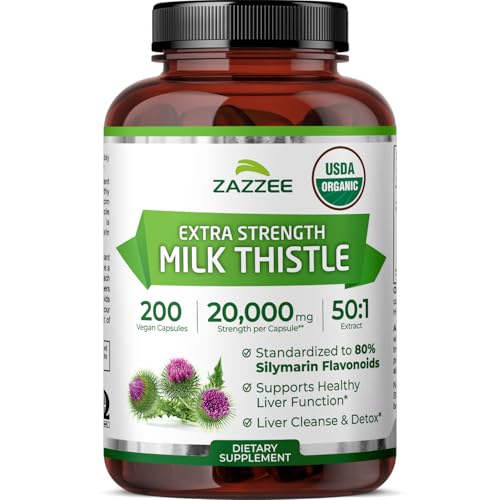
🛒 Where to Buy Milk Thistle (Silymarin)
- CleanseParasites Heavy Metal + Microplastics Binder Editor’s Pick
Contains milk thistle alongside spirulina, zeolite, and other binder herbs. - Thorne Siliphos (Silybin Phosphatidylcholine Complex)
capsules, 1 capsule (~120mg silybin-phosphatidylcholine complex) — Phospholipid complex form (silybin bound to phosphatidylcholine) for liver support - Jarrow Formulas Milk Thistle 150mg (Silymarin Standardized Extract)
capsules, 1 capsule (150mg, 80% silymarin) — Widely used, standard 80% silymarin extract at an accessible price - NOW Foods Silymarin Milk Thistle Extract 150mg
capsules, 1 capsule (150mg, 80% silymarin) — Made under NOW’s GMP Quality Assured program, budget-friendly staple brand with consistent standardization - Nature’s Way Milk Thistle Thisilyn Standardized Extract
capsules, 1 capsule (175mg, 80% silymarin) — Long-running standardized formula, one of the most established milk thistle brands in the US market
As an Amazon Associate we earn from qualifying purchases. Quality varies widely — always choose a product with a published third-party test (COA) before buying.
A Note on the Evidence
This article is informational and not medical advice. Milk thistle supplements are not FDA-evaluated for safety or effectiveness and are not intended to diagnose, treat, cure, or prevent any disease. Clinical evidence is limited by small sample sizes, heterogeneous preparations, and short durations; always consult a healthcare professional before starting any supplement, especially if you have liver disease or take prescription medications.
Frequently Asked Questions
What is the typical silymarin dose used in clinical trials for liver disease?
Trials have used doses ranging from 210 mg to 1,400 mg per day, often divided into two or three doses. The 2024 dose-response meta-analysis found that higher doses correlated with greater reductions in liver enzymes, but an optimal dose for each condition has not been established [4].
Does milk thistle cure hepatitis C?
No. A randomized controlled trial in interferon-resistant chronic hepatitis C patients found that silymarin (420 mg three times daily) did not significantly reduce viral load or ALT compared with placebo [5]. It is not a substitute for antiviral therapy.
Can silymarin help with fatty liver (NASH)?
A randomized, double-blind, placebo-controlled trial in non-cirrhotic NASH patients found no significant benefit from silymarin at 420 mg or 700 mg three times daily for 48 weeks on the primary histological endpoint, and fibrosis stage improved most in the placebo group, although not significantly different from the other groups [9].

Is high-dose silymarin safe for decompensated cirrhosis?
A randomized trial compared 1,050 mg/day with 420 mg/day in decompensated liver disease and reported some functional improvements, but the study was small and not powered for safety outcomes. Such high doses should only be used under medical supervision due to potential drug interactions and the fragility of these patients [11].
Why does formulation matter for milk thistle supplements?
Silymarin has poor oral bioavailability. Formulations such as phytosome complexes or lipid-based nanoparticles can increase plasma silybin concentrations several-fold, potentially improving clinical efficacy [3].
Who should avoid milk thistle or use it with caution?
People with allergies to ragweed or other Asteraceae plants, those taking medications metabolized by CYP450 enzymes (e.g., certain statins, diabetes drugs, hormonal therapies), and individuals with diagnosed liver disease should consult a physician before using milk thistle supplements.
References
- Bandomir NC et al. Silymarin and Its Isolated Flavanonol Lignans Are Liver X Receptor Antagonists. Archiv der Pharmazie (2026). PMID 42246628
- Ommati MM et al. Silymarin mitigates bile duct obstruction-induced cholemic nephropathy. Naunyn-Schmiedeberg's archives of pharmacology (2021). PMID 33538845
- Di Costanzo A et al. Formulation Strategies for Enhancing the Bioavailability of Silymarin: The State of the Art. Molecules (Basel, Switzerland) (2019). PMID 31181687
- Mohammadi S et al. Effects of silymarin supplementation on liver and kidney functions: A systematic review and dose-response meta-analysis. Phytotherapy research : PTR (2024). PMID 38475999
- Fried MW et al. Effect of silymarin (milk thistle) on liver disease in patients with chronic hepatitis C unsuccessfully treated with interferon therapy: a randomized controlled trial. JAMA (2012). PMID 22797645
- Hawke RL et al. Silymarin ascending multiple oral dosing phase I study in noncirrhotic patients with chronic hepatitis C. Journal of clinical pharmacology (2010). PMID 19841158
- Reddy KR et al. Rationale, challenges, and participants in a Phase II trial of a botanical product for chronic hepatitis C. Clinical trials (London, England) (2012). PMID 22058086
- Bares JM et al. Silybin treatment is associated with reduction in serum ferritin in patients with chronic hepatitis C. Journal of clinical gastroenterology (2008). PMID 18458640
- Navarro VJ et al. Silymarin in non-cirrhotics with non-alcoholic steatohepatitis: A randomized, double-blind, placebo controlled trial. PloS one (2019). PMID 31536511
- Beliakin SA et al. [Primary and secondary prevention of alcoholic liver cirrhosis]. Voenno-meditsinskii zhurnal (2013). PMID 23808210
- Fathalah WF et al. High Dose of Silymarin in Patients with Decompensated Liver Disease: A Randomized Controlled Trial. Journal of interferon & cytokine research : the official journal of the International Society for Interferon and Cytokine Research (2017). PMID 29135373
These statements have not been evaluated by the Food and Drug Administration. This information is not intended to diagnose, treat, cure, or prevent any disease. Content is for informational purposes only and is not medical advice; consult a qualified healthcare provider before starting any supplement. As an Amazon Associate we earn from qualifying purchases.