Milk thistle (Silybum marianum) is a distinctive annual or biennial herb in the Asteraceae family, recognized by its glossy green leaves with prominent white marbling and sharp spines. Native to the Mediterranean region, it has naturalized worldwide and is often found in disturbed soils, roadsides, and pastures.
This guide covers the key morphological features for accurate field identification and outlines the basic cultural requirements for growing milk thistle. Proper identification is essential because several spiny thistles share similar habitats, and cultivation success depends on understanding the plant’s Mediterranean origins and growth cycle.
Key Takeaways
- Milk thistle is identified by its glossy, white-marbled leaves with spiny margins, large solitary purple flower heads with reflexed spiny bracts, and a stout taproot.
- It grows as a winter annual in Mediterranean climates and as a spring annual or biennial in cooler regions, requiring full sun and well-drained soil.
- Direct sow seeds 1–2 cm deep in spring or autumn; thin to 30–45 cm spacing; minimal fertilizer and irrigation needed once established.
- Harvest seed heads when pappus bristles appear and bracts brown; wear gloves for handling spiny material.
- Check local regulations before planting — milk thistle is a listed noxious weed in some jurisdictions and can spread aggressively.
Key Identification Features
Milk thistle grows 1 to 2 meters tall with a sturdy, branched stem. The most diagnostic feature is the large, basal rosette of leaves: each leaf is deeply lobed with spiny margins and shows a striking network of white veins on a glossy dark-green surface — a pattern often described as marbled or mottled. This variegation is unique among common thistles and gives rise to the ‘milk’ in its common name, from a legend that the Virgin Mary’s milk fell on the leaves.
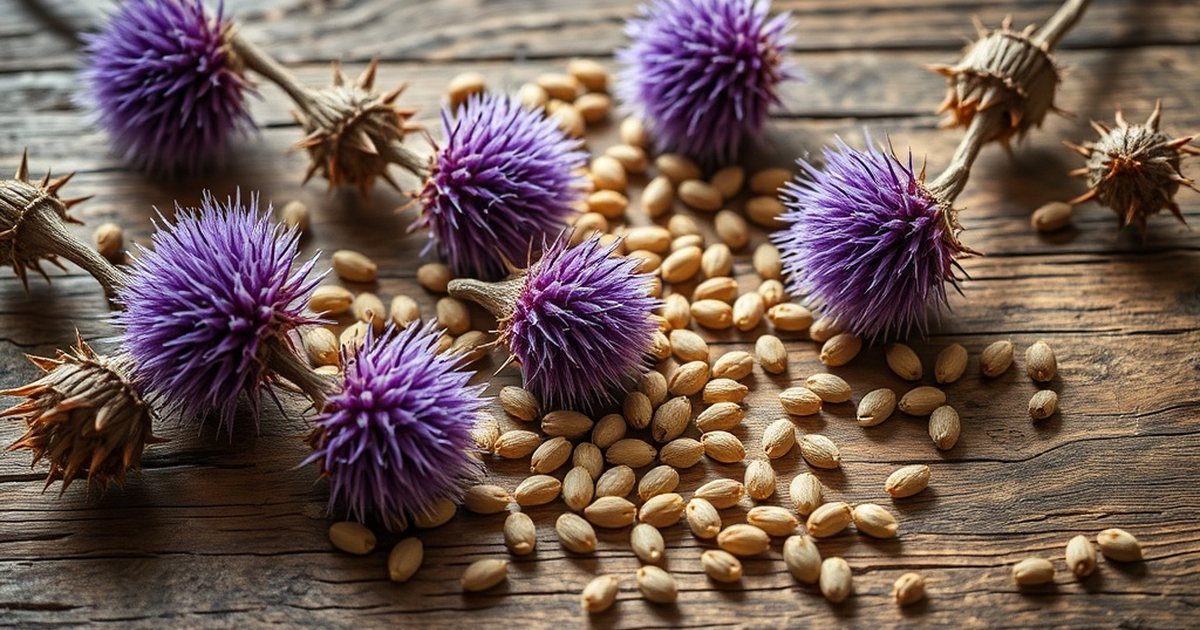
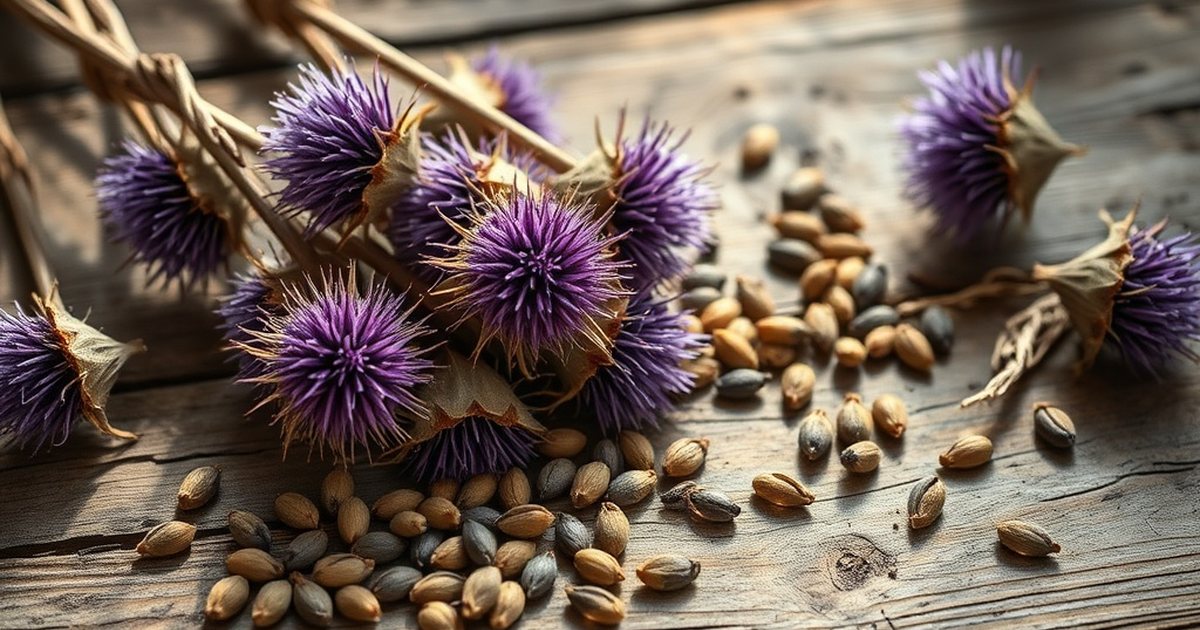
The flower heads are solitary, 4 to 7 centimeters wide, and composed of purple-pink tubular florets surrounded by spiny, reflexed bracts (phyllaries) that form a conspicuous, egg-shaped involucre. Flowering typically occurs from late spring through summer. After pollination, each floret produces a single achene (seed) topped with a pappus of silky, white bristles 1 to 2 centimeters long that aids wind dispersal.
Seedlings can be recognized early by their large, fleshy cotyledons followed by the first true leaves, which already show the characteristic white veining and spiny margins. The taproot is stout and can penetrate deeply, making established plants difficult to remove.

Distinguishing from Similar Species
Several other spiny Asteraceae species grow in similar habitats. Bull thistle (Cirsium vulgare) has deeply lobed leaves but lacks the white marbling; its leaf surfaces are green and often hairy underneath. Canada thistle (Cirsium arvense) has smaller, less deeply lobed leaves without prominent white veins and spreads by creeping rhizomes rather than a taproot. Scotch thistle (Onopordum acanthium) is larger overall, with woolly, gray-green leaves and broader, more flattened flower heads.
The combination of glossy, white-marbled leaves, large solitary purple heads with reflexed spiny bracts, and a stout taproot reliably separates milk thistle from these look-alikes. When in doubt, the seed’s pappus of simple (unbranched) bristles also helps confirm the genus Silybum.
Life Cycle and Growth Habit
In its native Mediterranean climate, milk thistle typically behaves as a winter annual: seeds germinate with autumn rains, the plant forms a large rosette over winter, bolts in spring, flowers in early summer, sets seed, and dies by late summer. In cooler temperate regions, it may act as a spring annual or biennial, with rosettes overwintering and flowering in the second year.
The plant is highly adaptable to disturbed, open sites and thrives in full sun. It tolerates a wide range of soil types, from sandy to heavy clay, provided drainage is adequate. Its deep taproot allows it to access moisture during dry periods, contributing to its success in arid and semi-arid environments.
Cultivation Requirements
Milk thistle is easily grown from seed sown directly in situ. For annual production, sow in early spring as soon as the soil can be worked, or in autumn in mild-winter areas (USDA zones 7 and warmer) for overwintering rosettes. Plant seeds 1 to 2 centimeters deep in rows spaced 60 to 90 centimeters apart; thin seedlings to 30 to 45 centimeters within the row.

The plant prefers well-drained, moderately fertile soil with a pH between 6.0 and 7.5. Excessive nitrogen promotes lush foliage at the expense of seed yield. Once established, milk thistle is drought-tolerant but benefits from occasional irrigation during prolonged dry spells, especially during flowering and seed fill. Weed control is important early on; the spiny rosettes eventually suppress most competitors.
Harvest seed heads when the pappus bristles begin to emerge and the bracts turn brown, typically 4 to 6 weeks after flowering. Cut heads and dry in a well-ventilated area before threshing. Wear gloves — the spines remain sharp on dried material. Yields vary widely but can reach 500 to 1,000 kilograms of seed per hectare under favorable conditions.
Pest and Disease Considerations
Milk thistle has few serious pests. The thistle head weevil (Rhinocyllus conicus), introduced as a biological control for invasive thistles, can reduce seed set by larval feeding in developing flower heads. Aphids may colonize flower stems but rarely cause economic damage. Fungal diseases such as powdery mildew (Erysiphe spp.) or leaf spots (Alternaria, Septoria) can appear in humid, crowded conditions; adequate spacing and airflow minimize risk.
Because milk thistle is a host for some insects that also attack crops (e.g., the painted lady butterfly, Vanessa cardui), monitor plantings near vegetable gardens. Conversely, its flowers attract diverse pollinators, including bees and beneficial wasps.
Legal and Ecological Notes
In several U.S. states (including Washington, Oregon, and California) and parts of Australia, milk thistle is listed as a noxious weed or invasive species. Before planting, check local regulations; cultivation may be restricted or require containment measures to prevent spread into natural areas. The plant produces thousands of wind-dispersed seeds per individual and can form dense stands that displace native vegetation, particularly in overgrazed pastures and disturbed riparian zones.
If grown for seed, harvest promptly to minimize volunteer seedlings. In home gardens, deadheading spent flowers before seed maturity prevents unwanted spread. Do not plant near natural areas or waterways where seeds could disperse into sensitive habitats.

🛒 Where to Buy Milk Thistle (Silymarin)
- CleanseParasites Heavy Metal + Microplastics Binder Editor’s Pick
Contains milk thistle alongside spirulina, zeolite, and other binder herbs. - Thorne Siliphos (Silybin Phosphatidylcholine Complex)Lab-tested / studied
capsules, 1 capsule (~120mg silybin-phosphatidylcholine complex) — Clinically-studied phospholipid complex form used in bioavailability research; NSF Certified for Sport option - Jarrow Formulas Milk Thistle 150mg (Silymarin Standardized Extract)
capsules, 1 capsule (150mg, 80% silymarin) — Widely used, third-party tested, standard 80% silymarin extract at an accessible price - NOW Foods Silymarin Milk Thistle Extract 150mg
capsules, 1 capsule (150mg, 80% silymarin) — GMP-certified, budget-friendly staple brand with consistent standardization - Nature’s Way Milk Thistle Thisilyn Standardized Extract
capsules, 1 capsule (175mg, 80% silymarin) — Long-running standardized formula, one of the most established milk thistle brands in the US market
As an Amazon Associate we earn from qualifying purchases. Quality varies widely — always choose a product with a published third-party test (COA) before buying.
A Note on the Evidence
This guide provides botanical and horticultural information only. Milk thistle supplements are not FDA-evaluated for safety or effectiveness and are not intended to diagnose, treat, cure, or prevent any disease. The plant can interact with CYP450-metabolized medications; those with ragweed/Asteraceae allergies or diagnosed liver disease should consult a physician before use.
Frequently Asked Questions
How can I tell milk thistle apart from other thistles?
Look for the unique white marbling on glossy green leaves, large solitary purple flower heads with reflexed spiny bracts, and a prominent taproot. Other common thistles lack the distinctive white-veined leaf pattern.
When is the best time to plant milk thistle seeds?
Sow in early spring as soon as soil can be worked, or in autumn in mild-winter areas (USDA zones 7+) for overwintering rosettes that flower the following summer.

Does milk thistle require fertilizer?
It prefers moderately fertile soil but excessive nitrogen reduces seed yield in favor of foliage. A balanced, low-nitrogen amendment at planting is usually sufficient.
Is milk thistle invasive?
Yes, in several U.S. states and other regions it is classified as a noxious weed. It produces thousands of wind-dispersed seeds and can form dense stands. Check local regulations and prevent seed escape.
What pests or diseases affect milk thistle?
The thistle head weevil can reduce seed set. Aphids, powdery mildew, and leaf spots occasionally appear but rarely cause serious damage. Good spacing and airflow help prevent fungal issues.
Can I grow milk thistle in containers?
Yes, use a deep container (at least 30 cm) to accommodate the taproot, well-draining potting mix, and full sun. Container plants need more frequent watering than in-ground plantings.
These statements have not been evaluated by the Food and Drug Administration. This information is not intended to diagnose, treat, cure, or prevent any disease. Content is for informational purposes only and is not medical advice; consult a qualified healthcare provider before starting any supplement. As an Amazon Associate we earn from qualifying purchases.