Milk thistle and TUDCA (tauroursodeoxycholic acid) are two of the most frequently recommended supplements for liver support, but they aren’t interchangeable. Milk thistle is a plant-derived antioxidant complex traditionally used to protect liver cells from damage, while TUDCA is a bile acid derivative studied for its ability to reduce cellular stress and support bile flow. People often ask which one is ‘better,’ but that framing assumes they do the same job. They don’t.
This article walks through how each compound is thought to work, what the research base looks like for each, and where the honest limits of that evidence are. Neither milk thistle nor TUDCA is FDA-evaluated for safety or effectiveness, and neither is intended to diagnose, treat, cure, or prevent any disease. This is informational content, not medical advice, and anyone with diagnosed liver disease or who takes CYP450-metabolized medications should talk to a physician before adding either supplement.
Key Takeaways
- Milk thistle (silymarin/silybin) is proposed to work through antioxidant and membrane-stabilizing mechanisms on liver cells, and it has been tested in randomized, placebo-controlled trials in fatty liver disease that missed their primary histologic endpoint[1] [2].
- TUDCA has mechanistic and some clinical evidence for reducing bile-acid-induced hepatocyte injury [3], supporting bile flow [4], and reducing ER stress [5].
- TUDCA has been studied clinically in specific conditions like parenteral nutrition-associated liver disease [6] and familial amyloid polyneuropathy [7], not as a general wellness supplement.
- Bile acid handling in liver disease is tied to metabolic status, including insulin resistance in NASH [8], which is part of why TUDCA’s mechanism is metabolically relevant.
- Neither supplement is FDA-evaluated for safety or effectiveness; both can interact with medications or require caution for certain people, so a physician conversation matters before starting either.
How Milk Thistle Is Thought to Work
Milk thistle (Silybum marianum) seed extract is standardized to silymarin, a complex of flavonolignans that includes silybin (also called silibinin) as its primary active component. The proposed mechanisms are largely antioxidant and membrane-stabilizing: silymarin is thought to scavenge free radicals, help stabilize hepatocyte cell membranes against toxin-induced damage, and exert mild anti-inflammatory effects within the liver.
It’s worth being direct about the evidence picture here: milk thistle’s mechanisms are proposed based on a long history of laboratory and traditional use, but its strongest randomized trials measured liver-biopsy scores rather than the bile-acid pathways TUDCA acts on, so the two are not measuring the same thing. That difference matters. Readers evaluating milk thistle should look for randomized clinical trial data on outcomes like liver enzyme levels, not assume mechanism equals proven benefit.

How TUDCA Is Thought to Work
TUDCA is a taurine-conjugated form of ursodeoxycholic acid, a bile acid that occurs naturally in small amounts in the body. Its liver-related mechanisms are better characterized in mechanistic and animal research than milk thistle’s. TUDCA has been studied for its ability to reduce bile-acid-induced apoptosis and cytolysis in hepatocytes [3], to improve bile flow following ischemia-reperfusion injury in rat livers [4], and to act through pathways involving the farnesoid X receptor (FXR), Nrf2, and CHOP-DR5-caspase-8 signaling in models of cholestatic liver injury [9].
Mechanistically, TUDCA is also recognized as a chemical chaperone that can reduce endoplasmic reticulum (ER) stress, a cellular stress pathway implicated across a range of metabolic diseases [5]. A broader review of TUDCA’s mechanisms describes multiple routes of hepatoprotection, including anti-apoptotic, anti-oxidative, and membrane-stabilizing effects [10]. Some of this research has extended beyond the liver, including work on TUDCA’s effects in neuroinflammation after traumatic brain injury [11] and in oncology contexts [12], which illustrates how broadly this bile acid’s signaling effects have been studied, though those applications are distinct from liver-specific use.
Clinical Evidence: Where Each Compound Has Been Tested in Humans
TUDCA has more direct pediatric and adult clinical investigation among the sources reviewed here. One clinical study examined TUDCA’s use in preventing total parenteral nutrition-associated liver disease, a serious condition affecting patients, often infants, who receive all their nutrition intravenously [6]. TUDCA has also been studied clinically in the treatment of familial amyloid polyneuropathy, a hereditary condition affecting the nervous system and other organs, where it has been used as part of a treatment approach [7]. These are specific, narrow clinical contexts, not general-purpose ‘liver health’ trials in otherwise healthy adults.

No head-to-head trial has compared milk thistle with TUDCA, so it would be inaccurate to claim clinical evidence ranks one supplement above the other for general liver support. What can be said honestly is that the two have been studied for different endpoints: TUDCA for bile-acid-driven hepatocyte injury and ER stress, silymarin for biopsy-scored fatty liver disease, where its largest trials came up short on their primary outcome.
Relevant Context: Bile Acids and Metabolic Liver Disease
Understanding TUDCA’s relevance also requires understanding bile acid biology in liver disease. Research has shown that in NASH (non-alcoholic steatohepatitis), increases in plasma bile acid levels are dependent on insulin resistance, suggesting bile acid handling is tied into broader metabolic dysfunction rather than being an isolated liver issue [8]. This is part of why TUDCA, as a bile acid derivative, has drawn research interest in metabolic and cholestatic liver conditions specifically, whereas milk thistle’s antioxidant mechanism is proposed to act more generally against oxidative and inflammatory damage regardless of bile acid status.
TUDCA’s bile-related and hepatoprotective effects have also been examined in a comparative transcriptomic study of arsenic-induced hepatic injury in mice [13], and in combination with glutamine for reducing bacterial translocation in obstructive jaundiced rats [14]. These are animal studies, which means they inform biological plausibility but do not establish effectiveness in humans.
Practical Differences to Weigh
Milk thistle is a plant extract with a long history of traditional and antioxidant-focused use, generally regarded as having a mild interaction profile, though it can still interact with CYP450-metabolized medications and should be avoided or discussed with a physician by anyone with ragweed or Asteraceae allergies. TUDCA is a bile acid derivative with mechanistic evidence in bile-flow regulation, ER stress reduction, and hepatocyte protection from bile-acid toxicity, and it has been studied clinically in specific conditions like parenteral nutrition-associated liver disease and familial amyloid polyneuropathy.

Neither should be framed as a treatment for diagnosed liver disease. Both raise the same practical questions before use: what condition (if any) is being addressed, what medications are currently being taken, and whether a physician monitoring liver function should be involved. The ‘better’ choice depends entirely on the mechanism relevant to the individual’s situation, not on a general ranking.
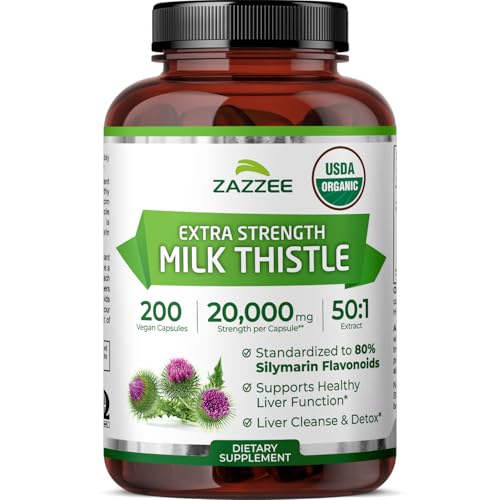
🛒 Where to Buy Milk Thistle (Silymarin)
- CleanseParasites Heavy Metal + Microplastics Binder Editor’s Pick
Contains milk thistle alongside spirulina, zeolite, and other binder herbs. - Thorne Siliphos (Silybin Phosphatidylcholine Complex)
capsules, 1 capsule (~120mg silybin-phosphatidylcholine complex) — Phospholipid complex form (silybin bound to phosphatidylcholine) for liver support - Jarrow Formulas Milk Thistle 150mg (Silymarin Standardized Extract)
capsules, 1 capsule (150mg, 80% silymarin) — Widely used, standard 80% silymarin extract at an accessible price - NOW Foods Silymarin Milk Thistle Extract 150mg
capsules, 1 capsule (150mg, 80% silymarin) — Made under NOW’s GMP Quality Assured program, budget-friendly staple brand with consistent standardization - Nature’s Way Milk Thistle Thisilyn Standardized Extract
capsules, 1 capsule (175mg, 80% silymarin) — Long-running standardized formula, one of the most established milk thistle brands in the US market
As an Amazon Associate we earn from qualifying purchases. Quality varies widely — always choose a product with a published third-party test (COA) before buying.
A Note on the Evidence
This article summarizes proposed mechanisms and a limited set of cited studies, several of which are animal or narrow clinical-context research rather than broad human trials; it is not medical advice, and anyone with diagnosed liver disease, ragweed/Asteraceae allergies, or who takes CYP450-metabolized medications should consult a physician before using either supplement.
Frequently Asked Questions
Can I take milk thistle and TUDCA together?
No published human trial has examined the combined use of milk thistle and TUDCA, so no combined-safety claim can be made. Anyone considering combining supplements, especially with existing liver disease or CYP450-metabolized medications, should check with a physician first.
Is TUDCA proven to treat liver disease?
TUDCA has been studied in specific, narrow contexts such as parenteral nutrition-associated liver disease (where one neonatal trial found no benefit) [6] and as part of treatment for familial amyloid polyneuropathy [7], but it is not FDA-approved to treat, cure, or prevent liver disease generally.
Does milk thistle have strong human clinical trial support?
The evidence available for this comparison did not include milk thistle-specific clinical trial citations. Its use is grounded in a long history of traditional and laboratory research on antioxidant mechanisms, but readers should look for and weigh dedicated clinical trial data separately.

How does TUDCA reduce cell stress in the liver?
TUDCA acts partly as a chemical chaperone that reduces endoplasmic reticulum stress, a pathway implicated in metabolic disease [5], and it has been shown to reduce bile-acid-induced apoptosis and cell death in hepatocytes [3].
Are there safety concerns with either supplement?
Milk thistle can interact with CYP450-metabolized medications, including some statins, diabetes drugs, and hormonal therapies, and should be avoided or discussed with a doctor by people with ragweed or Asteraceae allergies. Neither milk thistle nor TUDCA is FDA-evaluated for safety, so anyone with diagnosed liver disease or on relevant medications should consult a physician before use.
Is one supplement simply 'stronger' than the other?
No, they act through different mechanisms; milk thistle is antioxidant and membrane-focused, TUDCA is bile-acid and cell-stress focused, so ‘stronger’ isn’t a meaningful comparison without a specific condition or outcome in mind.
References
- Wah Kheong C et al. A Randomized Trial of Silymarin for the Treatment of Nonalcoholic Steatohepatitis. Clinical gastroenterology and hepatology (2017). PMID 28419855
- Navarro VJ et al. Silymarin in non-cirrhotics with non-alcoholic steatohepatitis: A randomized, double-blind, placebo controlled trial. PloS one (2019). PMID 31536511
- Benz C et al. Effect of tauroursodeoxycholic acid on bile-acid-induced apoptosis and cytolysis in rat hepatocytes. Journal of hepatology (1998). PMID 9537871
- Ono T et al. Effect of tauroursodeoxycholic acid on bile flow and calcium excretion in ischemia-reperfusion injury of rat livers. Journal of hepatology (1995). PMID 8583148
- Alotaibi G et al. Pharmacological landscape of endoplasmic reticulum stress: Uncovering therapeutic avenues for metabolic diseases. European journal of pharmacology (2025). PMID 40089262
- Heubi JE et al. Tauroursodeoxycholic acid (TUDCA) in the prevention of total parenteral nutrition-associated liver disease. The Journal of pediatrics (2002). PMID 12183720
- Adams D et al. [Treatment of familial amyloid polyneuropathy]. Presse medicale (Paris, France : 1983) (2012). PMID 22341949
- Grzych G et al. NASH-related increases in plasma bile acid levels depend on insulin resistance. JHEP reports : innovation in hepatology (2021). PMID 33615207
- Song G et al. Potential therapeutic action of tauroursodeoxycholic acid against cholestatic liver injury via hepatic Fxr/Nrf2 and CHOP-DR5-caspase-8 pathway. Clinical science (London, England : 1979) (2023). PMID 36795945
- Häussinger D et al. Mechanisms of Tauroursodeoxycholate-Mediated Hepatoprotection. Digestive diseases (Basel, Switzerland) (2017). PMID 28249278
- Xu J et al. Tauroursodeoxycholic acid modulates neuroinflammation via STING/NF-κB inhibition after traumatic brain injury. International immunopharmacology (2025). PMID 40915187
- Vavrušáková B et al. From traditional Chinese medicine to molecular oncology – pleiotropic effects of tauroursodeoxycholic acid. Klinicka onkologie : casopis Ceske a Slovenske onkologicke spolecnosti (2025). PMID 40962506
- Zheng X et al. Effects of tauroursodeoxycholate on arsenic-induced hepatic injury in mice: A comparative transcriptomic analysis. Journal of trace elements in medicine and biology : organ of the Society for Minerals and Trace Elements (GMS) (2024). PMID 39232337
- Hatipoğlu AR et al. Combined effects of tauroursodeoxycholic Acid and glutamine on bacterial translocation in obstructive jaundiced rats:. Balkan medical journal (2013). PMID 25207142
These statements have not been evaluated by the Food and Drug Administration. This information is not intended to diagnose, treat, cure, or prevent any disease. Content is for informational purposes only and is not medical advice; consult a qualified healthcare provider before starting any supplement. As an Amazon Associate we earn from qualifying purchases.