Milk thistle (Silybum marianum) is one of the most studied liver-support herbs, and its seed extract, standardized to the flavonolignan complex silymarin, has a real body of clinical literature behind it [8]. But there’s a catch that rarely makes it onto a supplement label: silymarin’s main active compound, silybin, is absorbed by the body quite poorly.
This isn’t a fringe concern. It’s discussed directly in the pharmaceutical literature as one of the central limitations of oral silymarin, and it’s the reason a whole category of reformulated products, phospholipid complexes, self-emulsifying systems, and newer cocrystal forms, exists in the first place [3] [7]. This article walks through why absorption is limited, what the research says about it, and what formulation approaches have actually been tested.
Key Takeaways
- Silybin, milk thistle’s main active flavonolignan, has low water solubility and undergoes rapid first-pass metabolism, which limits how much reaches circulation from a standard extract [3]
- Phospholipid complexes (silybin-phosphatidylcholine, sometimes called silipide/IdB 1016) are the most established bioavailability-enhancing approach, with data from healthy volunteers, animal models, and a patient population [2] [1] [10]
- Newer strategies like SMEDDS and cocrystal formulations are being actively researched and have shown improved pharmacokinetic measures in early studies [5] [9]
- Milligram-for-milligram label comparisons between silymarin products can be misleading if formulation type isn’t accounted for [7]
- Better absorption is a pharmacokinetic finding, not a guarantee of proportionally better clinical benefit; this is not medical advice
What Silymarin Actually Is, and What Gets Absorbed
Silymarin extracted from milk thistle seed is not a single molecule. It’s a mixture of flavonolignans, silybin (also called silibinin), silydianin, and silychristin, with silybin generally considered the most pharmacologically active and best-studied component [4]. When people talk about milk thistle’s liver-protective mechanisms (antioxidant activity, membrane stabilization on hepatocytes, mild anti-inflammatory effects), they’re largely describing effects attributed to silybin and its relatives.
The problem is that having a bioactive molecule in a capsule doesn’t guarantee it reaches the liver in meaningful amounts. Absorption depends on the compound actually dissolving in the gut, crossing the intestinal wall, and surviving first-pass metabolism, all before it can act anywhere in the body [6].

Why Silybin Is Poorly Absorbed
Silybin is a flavonolignan with low water solubility, and low aqueous solubility is one of the classic reasons an oral compound underperforms its dose. A widely cited pharmacokinetic reassessment found that oral bioavailability of silymarin is low, largely attributable to poor solubility and limited intestinal permeability, compounded by extensive first-pass metabolism and rapid biliary excretion [3].
In plain terms: even a generous milligram dose of standard silymarin extract may only put a small fraction of active silybin into circulation, because most of it never fully dissolves in the gut, and what does dissolve is quickly conjugated (glucuronidated/sulfated) in the liver and gut wall and shuttled out through bile before it can accumulate or act repeatedly [7]. This is consistent with why some clinical effects of silymarin have been inconsistent across studies, dose delivered to tissue may vary far more than dose swallowed.
Phospholipid Complexes: The First Fix
One of the earliest and most-studied approaches to this problem is binding silybin to phosphatidylcholine, forming what’s often marketed as silybin-phosphatidylcholine complex (sometimes called silipide or IdB 1016). Phospholipids are naturally amphiphilic, they have both water-loving and fat-loving regions, which helps ferry a poorly soluble molecule like silybin across the intestinal membrane.

An early pharmacokinetic study in healthy volunteers found that this silybin-phosphatidylcholine complex produced meaningfully higher plasma silybin levels than standard silymarin at equivalent doses [2]. A follow-up comparative bioavailability study in rats reinforced that the complexed form outperformed uncombined silymarin [1], and a study in patients with extrahepatic biliary obstruction examined silybin pharmacokinetics from this same silipide formulation in a clinical population, not just healthy volunteers [10]. These three studies, spanning healthy subjects, animal models, and a clinically relevant patient group, form much of the evidence base for phospholipid-complexed silymarin products on the market today.
Newer Approaches: SMEDDS and Cocrystals
Phospholipid complexing isn’t the only strategy that’s been tested. Self-microemulsifying drug delivery systems (SMEDDS) are formulations designed to spontaneously form a fine oil-in-water emulsion in the gut, increasing the effective surface area of a poorly soluble compound so more of it can be absorbed. A study in healthy Thai volunteers testing a silymarin SMEDDS formulation reported improved pharmacokinetic parameters compared with conventional silymarin [5].
More recently, researchers have explored silybin cocrystals, a solid-state chemistry approach where silybin is co-crystallized with another molecule to alter its physical properties (like solubility and dissolution rate) without chemically modifying silybin itself. A 2025 study reported improved solubility and bioavailability using this cocrystal strategy [9]. A broader review of formulation strategies for silymarin catalogs these and other approaches (nanoparticles, solid dispersions, liposomes) as active areas of pharmaceutical development, underscoring that bioavailability remains an unsolved problem being approached from multiple angles rather than a single settled fix [7].
What This Means When Comparing Products
The practical takeaway is that not all silymarin supplements are pharmacokinetically equivalent, even at the same milligram dose of silymarin or silybin on the label. A standard, non-complexed extract and a phospholipid-complexed or SMEDDS-based extract may deliver very different amounts of silybin into the bloodstream, based on the formulation studies above [3] [7].

That said, higher measured plasma silybin is a pharmacokinetic marker, not automatically a guarantee of proportionally better clinical outcomes. Silymarin has supportive evidence in various liver disease contexts as reviewed narratively in the literature [8], but bioavailability-enhanced formulations have not been uniformly proven to outperform standard extracts on hard clinical endpoints across the board. The formulation research answers ‘does more silybin reach circulation,’ not definitively ‘does that translate into a proportionally better outcome for every use case.’
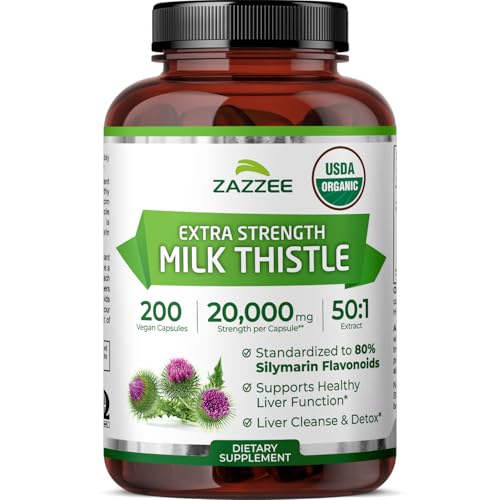
🛒 Where to Buy Milk Thistle (Silymarin)
- CleanseParasites Heavy Metal + Microplastics Binder Editor’s Pick
Contains milk thistle alongside spirulina, zeolite, and other binder herbs. - Thorne Siliphos (Silybin Phosphatidylcholine Complex)Lab-tested / studied
capsules, 1 capsule (~120mg silybin-phosphatidylcholine complex) — Clinically-studied phospholipid complex form used in bioavailability research; NSF Certified for Sport option - Jarrow Formulas Milk Thistle 150mg (Silymarin Standardized Extract)
capsules, 1 capsule (150mg, 80% silymarin) — Widely used, third-party tested, standard 80% silymarin extract at an accessible price - NOW Foods Silymarin Milk Thistle Extract 150mg
capsules, 1 capsule (150mg, 80% silymarin) — GMP-certified, budget-friendly staple brand with consistent standardization - Nature’s Way Milk Thistle Thisilyn Standardized Extract
capsules, 1 capsule (175mg, 80% silymarin) — Long-running standardized formula, one of the most established milk thistle brands in the US market
As an Amazon Associate we earn from qualifying purchases. Quality varies widely — always choose a product with a published third-party test (COA) before buying.
A Note on the Evidence
The formulation studies cited here are largely small pharmacokinetic trials (some in healthy volunteers, some in specific patient groups), not large outcome-based trials, so improved absorption should not be read as proof of superior clinical benefit. Anyone with diagnosed liver disease, on CYP450-metabolized medications, or with a ragweed/Asteraceae allergy should consult a physician before using milk thistle.
Frequently Asked Questions
Why is milk thistle considered poorly absorbed?
Its main active compound, silybin, has low water solubility and undergoes extensive first-pass metabolism and rapid biliary excretion, all of which limit how much reaches the bloodstream from a standard oral extract [3].
What is a silybin-phosphatidylcholine complex?
It’s a formulation where silybin is bound to phosphatidylcholine, a phospholipid that helps the compound cross the intestinal membrane more efficiently. Studies in healthy volunteers and other populations found higher plasma silybin levels with this complex compared to standard silymarin [2] [10].
Are SMEDDS or cocrystal milk thistle formulas better than regular silymarin?
Early studies suggest these newer formulations can improve pharmacokinetic measures like peak plasma concentration and overall exposure compared with conventional silymarin [5] [9]. Whether that translates into meaningfully better clinical outcomes for a given person hasn’t been established across the board.

Does higher bioavailability mean milk thistle works better for liver health?
Not automatically. Silymarin has supportive evidence in various liver-disease contexts [8] [6], but bioavailability studies measure how much silybin reaches circulation, not directly how much a given clinical outcome improves. More research connecting the two is still needed.
Is milk thistle safe to take with medications?
Silymarin can interact with drugs metabolized by CYP450 enzymes, including some statins, diabetes medications, and hormonal therapies. Anyone on these medications, with diagnosed liver disease, or with a ragweed/Asteraceae allergy should talk to a physician before starting milk thistle.
Is milk thistle FDA-approved to treat liver disease?
No. Milk thistle supplements are not evaluated by the FDA for safety or effectiveness and are not intended to diagnose, treat, cure, or prevent any disease. This article is informational, not medical advice.
References
- Morazzoni P et al. Comparative bioavailability of Silipide, a new flavanolignan complex, in rats. European journal of drug metabolism and pharmacokinetics (1992). PMID 1499596
- Barzaghi N et al. Pharmacokinetic studies on IdB 1016, a silybin- phosphatidylcholine complex, in healthy human subjects. European journal of drug metabolism and pharmacokinetics (1990). PMID 2088770
- Javed S et al. Reassessing bioavailability of silymarin. Alternative medicine review : a journal of clinical therapeutic (2011). PMID 21951025
- Abenavoli L et al. Milk thistle (Silybum marianum): A concise overview on its chemistry, pharmacological, and nutraceutical uses in liver diseases. Phytotherapy research : PTR (2018). PMID 30080294
- Sornsuvit C et al. The Bioavailability and Pharmacokinetics of Silymarin SMEDDS Formulation Study in Healthy Thai Volunteers. Evidence-based complementary and alternative medicine : eCAM (2018). PMID 30108644
- Liakopoulou C et al. Silimarin and Cancer. Anti-cancer agents in medicinal chemistry (2018). PMID 30205806
- Di Costanzo A et al. Formulation Strategies for Enhancing the Bioavailability of Silymarin: The State of the Art. Molecules (Basel, Switzerland) (2019). PMID 31181687
- Gillessen A et al. Silymarin as Supportive Treatment in Liver Diseases: A Narrative Review. Advances in therapy (2020). PMID 32065376
- Zhu B et al. Silybin Cocrystals with Improved Solubility and Bioavailability. Pharmaceuticals (Basel, Switzerland) (2025). PMID 39861153
- Schandalik R et al. Pharmacokinetics of silybin following oral administration of silipide in patients with extrahepatic biliary obstruction. Drugs under experimental and clinical research (1994). PMID 7924893
These statements have not been evaluated by the Food and Drug Administration. This information is not intended to diagnose, treat, cure, or prevent any disease. Content is for informational purposes only and is not medical advice; consult a qualified healthcare provider before starting any supplement. As an Amazon Associate we earn from qualifying purchases.