Milk thistle (Silybum marianum) and dandelion root (Taraxacum officinale) are two of the most common herbal ingredients marketed for liver support, and they’re often positioned as interchangeable or even combined in the same supplement. They are not the same plant, they don’t work through identical mechanisms, and the depth of research behind each differs quite a bit.
This article lays out what each herb is, what’s proposed to happen in the body, and what the available evidence actually says, without overstating either one. Neither is FDA-evaluated to diagnose, treat, cure, or prevent any disease, and this is informational content, not medical advice.
Key Takeaways
- Milk thistle and dandelion root work through different proposed mechanisms and are not interchangeable, despite frequently being marketed together.
- Most dandelion root liver research cited here comes from animal and lab studies, not large human clinical trials [1][2][3].
- A specific dandelion compound, taraxasterol, has shown protective effects against drug-induced liver injury in preclinical research [4].
- Herbal supplements carry real safety considerations, including allergy risk (ragweed/Asteraceae family) and possible drug interactions [5].
- Neither herb is FDA-evaluated to diagnose, treat, cure, or prevent liver disease; anyone with existing liver conditions or on liver-metabolized medications should consult a physician first.
Milk Thistle: Mechanism and Positioning
Milk thistle seed extract is standardized to silymarin, a complex of flavonolignans dominated by silybin (also called silibinin). The proposed mechanisms are antioxidant activity, stabilization of hepatocyte cell membranes, and mild anti-inflammatory effects that may reduce oxidative stress on liver cells during metabolic strain.
Milk thistle is the more extensively studied of the two herbs in clinical and mechanistic liver research, which is part of why it’s often treated as the default ‘liver herb.’ That said, the evidence provided here focuses specifically on dandelion root, since milk thistle’s own literature isn’t part of the source set for this comparison, and the goal is to be precise about what’s actually cited rather than to summarize milk thistle research from memory.

Dandelion Root: Mechanism and Proposed Actions
Dandelion root contains a mix of bioactive compounds, including polysaccharides, phenolic acids, sesquiterpenes like taraxasterol, and various phytochemicals that have been studied for antioxidant and anti-inflammatory activity in liver tissue. Purified polysaccharides from dandelion root have shown hepatoprotective effects in laboratory research, with proposed antioxidant mechanisms behind the protective activity [1].
In animal models, ethanolic dandelion root extract reduced liver injury markers following acetaminophen-induced toxicity, a standard model researchers use to study drug-induced liver stress [2]. Dandelion root extract has also been studied in models of acute-on-chronic liver failure, a more severe pattern of liver injury, with protective effects reported in that experimental setting [3]. A specific compound found in dandelion, taraxasterol, has been investigated for its protective role against acetaminophen-induced liver injury using network pharmacology alongside in vitro and in vivo experiments, pointing to a plausible multi-target mechanism [4].
Broader reviews have grouped dandelion among wild or spontaneous-flora plants studied for roles in managing diabetes, liver disorders, and cardiovascular disease, suggesting its relevance extends beyond the liver alone [6]. A 2025 review specifically focused on dandelion’s role in liver health summarized hepatoprotective properties and mechanisms across the available literature [7].
How the Research Bases Actually Compare
It’s worth being direct about an asymmetry here: the dandelion root evidence available for this article is almost entirely preclinical, meaning it comes from animal models, isolated compounds, or laboratory (in vitro) work rather than large human clinical trials. Findings like reduced liver injury markers in rodents given acetaminophen are meaningful signals for further research, but they don’t establish that dandelion root produces the same protective effect in people at typical supplement doses.
Milk thistle has a longer track record of human clinical investigation in conditions like alcohol-related liver disease and viral hepatitis, though results across those trials have been mixed rather than uniformly positive. Dandelion root’s literature, by contrast, is younger and more concentrated in mechanistic and animal studies, including newer metabolomic profiling work on dandelion species like Taraxacum Kok-Saghyz that maps out the plant’s chemical constituents without yet testing clinical outcomes in humans [8].

Neither herb should be read as ‘proven’ for treating a diagnosed liver condition. Both are better understood as ingredients with plausible, partially-supported mechanisms that warrant more rigorous human research before stronger claims are appropriate.
Beyond the Liver: Other Studied Uses of Dandelion
Dandelion’s research footprint extends past liver-specific studies. It has been reviewed for potential roles in gastrointestinal health, with proposed benefits related to digestion and gut-related inflammation [9]. Separately, dandelion supplementation has been studied for antischistosomicidal and immunomodulatory effects in animal models, an entirely different application from liver support but relevant to understanding the plant’s broader bioactive profile [10].
Newer research has also looked at dandelion’s phytochemical composition in the context of brain health-oriented functional foods, an area still in early exploratory stages [11]. None of this cross-application research substitutes for liver-specific human trials, but it does show dandelion is being actively investigated across multiple domains rather than being a static, long-settled ingredient.
Safety Considerations for Both Herbs
Herbal supplements as a category are not risk-free simply because they’re plant-derived. A systematic overview of adverse effects associated with herbal medicines found that reported harms ranged from mild gastrointestinal upset to more serious organ-specific reactions, and that adverse event reporting for herbal products is often incomplete compared to pharmaceutical drugs [5].

For dandelion specifically, people with allergies to plants in the Asteraceae/Compositae family (which includes ragweed) should be cautious, as cross-reactivity is a known concern for many plants in this family. Anyone with a diagnosed liver condition, gallbladder disease, or who is taking prescription medications metabolized by the liver should talk to a physician before adding either dandelion root or milk thistle to their routine, since herb-drug interactions are possible even when direct evidence for a specific interaction is limited.
Which One Should You Consider?
Neither herb has evidence strong enough to be called a treatment for liver disease, and framing this as a competition somewhat misses the point. Milk thistle has more human clinical history behind it, while dandelion root’s current evidence base leans preclinical but is expanding, with plausible mechanisms tied to specific compounds like polysaccharides and taraxasterol.
If you’re considering either for general wellness support, the more useful question is what your actual liver health picture looks like, which is something a physician or hepatologist can assess with bloodwork, not something a supplement label can determine. Self-selecting between two under-researched herbs based on marketing claims isn’t a substitute for that evaluation.
🛒 Where to Buy Milk Thistle (Silymarin)
- CleanseParasites Heavy Metal + Microplastics Binder Editor’s Pick
Contains milk thistle alongside spirulina, zeolite, and other binder herbs. - Thorne Siliphos (Silybin Phosphatidylcholine Complex)
capsules, 1 capsule (~120mg silybin-phosphatidylcholine complex) — Phospholipid complex form (silybin bound to phosphatidylcholine) for liver support - Jarrow Formulas Milk Thistle 150mg (Silymarin Standardized Extract)
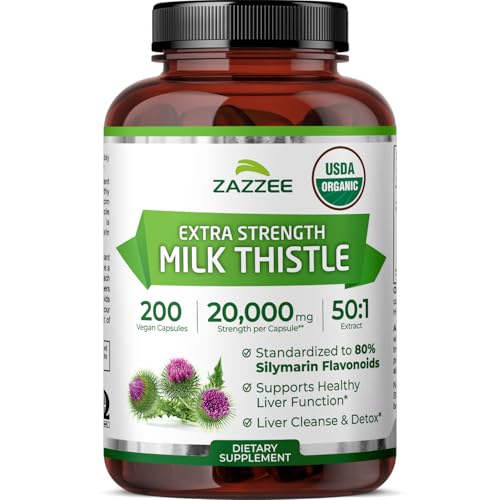
capsules, 1 capsule (150mg, 80% silymarin) — Widely used, standard 80% silymarin extract at an accessible price - NOW Foods Silymarin Milk Thistle Extract 150mg
capsules, 1 capsule (150mg, 80% silymarin) — Made under NOW’s GMP Quality Assured program, budget-friendly staple brand with consistent standardization - Nature’s Way Milk Thistle Thisilyn Standardized Extract
capsules, 1 capsule (175mg, 80% silymarin) — Long-running standardized formula, one of the most established milk thistle brands in the US market
As an Amazon Associate we earn from qualifying purchases. Quality varies widely — always choose a product with a published third-party test (COA) before buying.
A Note on the Evidence
The dandelion root evidence summarized here is largely preclinical (animal and lab studies), so it does not confirm the same effects occur in humans at supplement doses. This content is informational, not medical advice; consult a physician before use if you have diagnosed liver disease, take CYP450-metabolized medications, or have a ragweed/Asteraceae allergy.
Frequently Asked Questions
Is dandelion root as well-studied as milk thistle for liver health?
No. The dandelion root evidence available here is mostly preclinical, animal models and lab-based compound studies, while milk thistle has a longer history of human clinical trials, even though those trial results have been mixed [7].
What compounds in dandelion root are linked to liver protection?
Research has focused on polysaccharides purified from the root and specific compounds like taraxasterol, both studied for antioxidant and protective effects in liver injury models [1][4].
Can dandelion root protect against acetaminophen-related liver damage?
In animal studies, dandelion root extract and the compound taraxasterol reduced markers of liver injury after acetaminophen-induced toxicity, but this hasn’t been established in human clinical trials [2][4].

Who should avoid dandelion root or milk thistle?
People with ragweed or Asteraceae family allergies should be cautious with dandelion due to potential cross-reactivity. Anyone with diagnosed liver disease or taking medications metabolized by CYP450 enzymes should consult a physician before use, given the general adverse-effect profile documented for herbal medicines [5].
Does dandelion root have uses beyond liver support?
Yes. It has been studied for gastrointestinal health, immunomodulatory and antiparasitic effects in animal models, and more recently for phytochemical relevance to brain health-oriented foods, though these are separate research areas from liver-specific findings [9][10][11].
Should I take milk thistle and dandelion root together?
There’s no strong clinical evidence establishing that combining them produces better outcomes than either alone. Given the interaction and allergy considerations for both herbs, it’s worth discussing with a physician, especially if you take other medications, rather than assuming combination products are automatically safer or more effective.
References
- Cai L et al. Purification, Preliminary Characterization and Hepatoprotective Effects of Polysaccharides from Dandelion Root. Molecules (Basel, Switzerland) (2017). PMID 28841174
- Nazari A et al. Chemical composition and hepatoprotective activity of ethanolic root extract of Taraxacum Syriacum Boiss against acetaminophen intoxication in rats. Bratislavske lekarske listy (2015). PMID 25666961
- Pfingstgraf IO et al. Protective Effects of Taraxacum officinale L. (Dandelion) Root Extract in Experimental Acute on Chronic Liver Failure. Antioxidants (Basel, Switzerland) (2021). PMID 33804908
- Ge B et al. Protection of taraxasterol against acetaminophen-induced liver injury elucidated through network pharmacology and in vitro and in vivo experiments. Phytomedicine : international journal of phytotherapy and phytopharmacology (2023). PMID 37209606
- Posadzki P et al. Adverse effects of herbal medicines: an overview of systematic reviews. Clinical medicine (London, England) (2013). PMID 23472485
- Ignat MV et al. Plants of the Spontaneous Flora with Beneficial Action in the Management of Diabetes, Hepatic Disorders, and Cardiovascular Disease. Plants (Basel, Switzerland) (2021). PMID 33498684
- Herrera Vielma F et al. The Role of Dandelion (Taraxacum officinale) in Liver Health and Hepatoprotective Properties. Pharmaceuticals (Basel, Switzerland) (2025). PMID 40732279
- Tan M et al. Exploring the Medicinal Potential of Taraxacum Kok-Saghyz (TKS) Using Widely Targeted Metabolomics. Metabolites (2025). PMID 40422883
- Li Y et al. The potential of dandelion in the fight against gastrointestinal diseases: A review. Journal of ethnopharmacology (2022). PMID 35405251
- Nofal AE et al. In Vivo Antischistosomicidal and Immunomodulatory Effects of Dietary Supplementation with Taraxacum officinale. Journal of xenobiotics (2024). PMID 39189171
- Masciulli F et al. Phytochemical composition and bioactivity of edible Taraxacum officinale: potential as an ingredient in brain health-oriented functional foods. Food & function (2025). PMID 40832870
These statements have not been evaluated by the Food and Drug Administration. This information is not intended to diagnose, treat, cure, or prevent any disease. Content is for informational purposes only and is not medical advice; consult a qualified healthcare provider before starting any supplement. As an Amazon Associate we earn from qualifying purchases.