Milk thistle (Silybum marianum) is a flowering plant in the daisy family that has been used for centuries as a traditional remedy for liver complaints. Today it shows up as a standardized extract on supplement shelves, usually listed by its active compound, silymarin.
If you are looking at a bottle for the first time, the ingredient panel and the marketing copy can say very different things. This guide separates what the plant actually is from what current research supports, and where the evidence is still thin.
This article contains affiliate links. If you purchase through one of these links, we may earn a small commission at no extra cost to you. We only mention product categories and formats worth considering, not specific pricing or guaranteed outcomes.
What Milk Thistle Actually Is
The plant itself is a thistle with purple flowers and distinctive white-veined leaves, native to the Mediterranean and now naturalized across much of Europe and North America. The seeds contain a group of plant compounds collectively called silymarin, which is a mixture of several flavonolignans, the most studied of which is silybin.
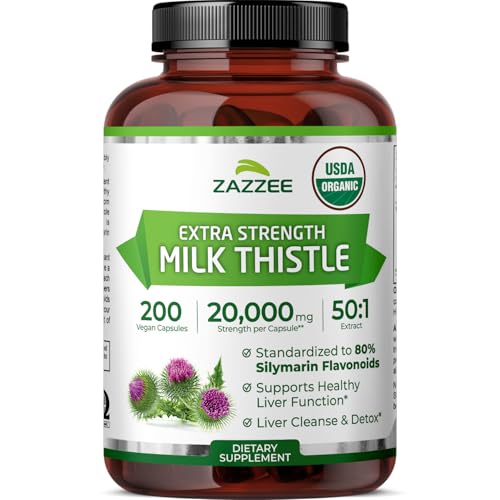
Supplement extracts are standardized to a percentage of silymarin, commonly 70 to 80 percent, because the raw seed itself contains only a small fraction of active compound by weight.[2]
Why It Is Associated With Liver Health
Silymarin has been studied for decades primarily around liver function. Laboratory and animal research suggests it can act as an antioxidant and may help stabilize liver cell membranes, which is the basis for its traditional use around liver stress from alcohol, certain medications, and environmental toxins.[2][6]
One of the more well documented uses is as a supportive treatment alongside conventional medical care for Amanita mushroom poisoning, where intravenous silybin has been used in hospital settings. That is a very different context from an oral supplement taken daily for general wellness, and the two should not be conflated.
What the Research Actually Supports
Human trials on oral milk thistle supplements for general liver health, fatty liver, or as a hangover remedy are mixed. Some studies show modest improvements in liver enzyme markers in people with existing liver conditions, while others show no meaningful difference compared to placebo.
It is fair to describe milk thistle as a well-tolerated supplement with a long history of traditional use and some promising but inconsistent clinical evidence, rather than a proven treatment for any specific condition.
Who Tends to Use It
People typically reach for milk thistle for general liver support, after periods of heavier alcohol consumption, alongside certain long-term medications that are processed by the liver, or simply as part of a broader supplement routine focused on digestive and metabolic health.
Blood Sugar and Metabolic Markers
A smaller set of studies has looked at silymarin in people with type 2 diabetes, with some showing modest improvements in fasting blood sugar and cholesterol markers when used alongside standard diabetes care. This is an emerging area rather than an established use, and it should never replace prescribed diabetes treatment.
Skin and Cosmetic Applications
Topical formulations containing silymarin have been studied for skin protection against UV damage, since the compound’s antioxidant properties may help limit oxidative stress in skin cells. This is a separate use case from oral supplementation and the two shouldn’t be assumed to have the same effect.
Frequently Asked Questions
Is milk thistle the same as silymarin?
Silymarin is the group of active compounds extracted from milk thistle seeds. When you buy a milk thistle supplement, you are really buying a standardized amount of silymarin, so the terms are often used interchangeably on labels.

Does milk thistle detox the liver?
The word ‘detox’ is marketing language rather than a clinical term. Milk thistle does not flush toxins out of the body. The more accurate description is that some research suggests it may support liver cell function under stress, which is a narrower and more honest claim.
How is milk thistle typically taken?
Most oral supplements come as capsules or tablets standardized to a silymarin percentage, though tinctures and powders are also available. Dosage and timing are covered in our dedicated dosage guide.
Is milk thistle safe for most adults?
It is generally well tolerated, with mild digestive upset being the most commonly reported side effect. People with ragweed allergies or on certain medications should check with a doctor first, which we cover in our safety guides.
These statements have not been evaluated by the FDA. This product is not intended to diagnose, treat, cure, or prevent any disease.
References
- Abenavoli L, Izzo AA, Milic N, et al. Milk thistle (Silybum marianum): A concise overview on its chemistry, pharmacological and nutraceutical uses in liver diseases. Phytotherapy Research 2018;32(11):2202-2213. PMID 30080294
- Surai PF, Surai A, Earle-Payne K. Silymarin and Inflammation: Food for Thoughts. Antioxidants 2024;13(1):98. PMID 38247522
These statements have not been evaluated by the Food and Drug Administration. This information is not intended to diagnose, treat, cure, or prevent any disease. Content is for informational purposes only and is not medical advice; consult a qualified healthcare provider before starting any supplement. As an Amazon Associate we earn from qualifying purchases.
