Milk thistle (Silybum marianum) seed extract, standardized to the flavonolignan complex silymarin, is widely used for liver support. Its primary active component, silybin (silibinin), can modulate cytochrome P450 (CYP450) enzymes, which metabolize a large proportion of prescription medications. This raises important questions about potential drug-supplement interactions.
This article reviews the available evidence on silymarin’s effects on CYP450 isoforms, drawing from in vitro studies, human clinical trials, and pharmacokinetic modeling. We summarize findings without overstating clinical significance, emphasizing that supplements are not FDA-evaluated for safety or effectiveness and are not intended to diagnose, treat, cure, or prevent any disease.
Key Takeaways
- In vitro studies show silymarin components can inhibit CYP2C9, CYP2C19, CYP2D6, and CYP3A4, but clinical studies at typical doses have not demonstrated significant effects on these enzymes in humans.
- Milk thistle supplementation did not significantly alter CYP3A activity compared to strong inducers/inhibitors in a controlled clinical trial using midazolam as a probe.
- PBPK modeling predicts a potential interaction between silybin A and losartan, illustrating that specific drug-supplement pairs may pose risks not captured by general phenotype studies.
- Clinical evidence for milk thistle as a perpetrator of clinically relevant pharmacokinetic interactions remains limited and inconsistent across available studies.
- Individuals on CYP450-metabolized medications, especially those with narrow therapeutic indices, should consult a healthcare professional before using milk thistle.
CYP450 Enzymes and Herbal Supplement Interactions
Cytochrome P450 enzymes, primarily located in the liver and intestine, are responsible for the metabolic clearance of many drugs. Herbal supplements can act as perpetrators of pharmacokinetic interactions by inhibiting or inducing these enzymes, thereby altering drug exposure and potentially leading to toxicity or therapeutic failure. Milk thistle has been investigated for its potential to modulate major CYP isoforms including CYP3A4, CYP2C9, CYP2C19, and CYP2D6. A review of clinical evidence for herbal drugs as perpetrators of pharmacokinetic interactions includes milk thistle among the botanicals assessed [1]. Understanding the magnitude and clinical relevance of these interactions is essential for patients on polypharmacy, particularly those taking medications with narrow therapeutic indices.

In Vitro Findings: Direct Enzyme Modulation
In vitro studies provide mechanistic insight into how silymarin components interact with recombinant human CYP enzymes. Research evaluating the interaction of silymarin flavonolignans and their sulfate metabolites with CYP2C9, CYP2C19, CYP2D6, and CYP3A4 found that several components can inhibit these enzymes at concentrations that may be achievable in the gut and liver after oral supplementation [2]. An earlier assessment of drug-drug interaction potential for silymarin in vitro also characterized inhibition kinetics across multiple CYP isoforms [3]. Notably, a study on the hepatoprotective mechanism of silymarin reported no evidence for involvement of CYP2E1, suggesting a degree of selectivity in its enzyme interactions [4]. These in vitro data indicate a potential for interaction, but they cannot directly predict clinical outcomes due to factors like bioavailability, protein binding, and metabolic conversion.
Human Clinical Studies: CYP Phenotype Assessment
Clinical trials have directly measured the effect of milk thistle supplementation on probe substrates for CYP activity in healthy volunteers. An in vivo assessment of botanical supplementation on human CYP phenotypes, including milk thistle, used specific probe drugs for CYP1A2, CYP2D6, CYP2E1, and CYP3A4/5. After 28 days of supplementation, milk thistle did not significantly alter the activity of any of these phenotypes [5]. A separate study compared a milk thistle product to rifampin (a strong CYP3A inducer) and clarithromycin (a strong CYP3A inhibitor) using midazolam as a CYP3A probe. The milk thistle product did not produce clinically relevant induction or inhibition of CYP3A activity at the tested dose [6]. These findings suggest that, at typical supplement doses, milk thistle does not markedly affect the major CYP enzymes probed in these studies.
Pharmacokinetic Modeling: Predicting Specific Interactions
Physiologically based pharmacokinetic (PBPK) modeling can extrapolate in vitro inhibition data to predict clinical interaction risk for specific drug-supplement pairs. A PBPK modeling study predicted CYP-mediated interactions between silybin A (a major silymarin component) and losartan, a drug metabolized primarily by CYP2C9 and CYP3A4. The model suggested a potential for increased losartan exposure when co-administered with silybin A, highlighting that specific combinations may pose risks not captured by general phenotype studies using broad probes [7]. This approach underscores the importance of evaluating interaction potential on a case-by-case basis, especially for drugs with narrow therapeutic windows.

Clinical Significance and Context
The collective evidence indicates a disconnect between in vitro inhibition potential and observed clinical effects at standard supplement doses. While silymarin components can inhibit certain CYP enzymes in test tubes, controlled human studies have not demonstrated significant effects on CYP3A or other major phenotypes. The review of clinical evidence for herbal drugs as perpetrators of pharmacokinetic interactions notes that data for milk thistle are limited and often inconsistent [1]. Factors such as formulation (e.g., silymarin content, presence of phospholipid complexes), dose, duration of use, and inter-individual variability in CYP expression all influence interaction risk. For most patients, the risk of a clinically significant interaction appears low, but caution is warranted with narrow therapeutic index drugs metabolized by the affected CYP isoforms.
Practical Considerations for Patients and Providers
Patients taking medications metabolized by CYP2C9, CYP2C19, CYP2D6, or CYP3A4 should discuss milk thistle use with their healthcare provider. This is especially relevant for those on drugs with narrow therapeutic windows, such as warfarin, certain antidiabetic agents, and hormonal therapies. An older pharmacological review provides broader context for silymarin’s mechanisms [8], but modern clinical decisions should rely on current interaction data. Monitoring for changes in drug effect or side effects is prudent when initiating or discontinuing milk thistle supplementation. Because supplement quality and standardization vary, the specific product used may influence interaction potential.
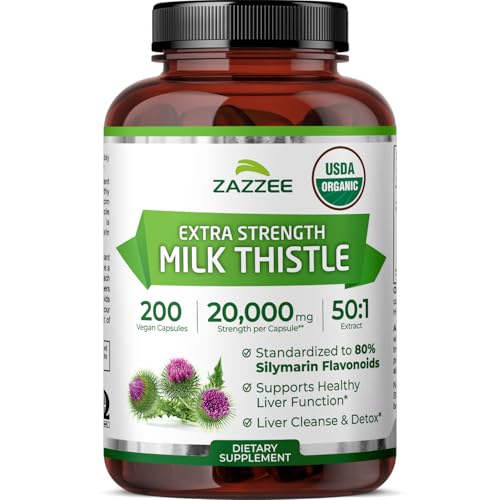
🛒 Where to Buy Milk Thistle (Silymarin)

- CleanseParasites Heavy Metal + Microplastics Binder Editor’s Pick
Contains milk thistle alongside spirulina, zeolite, and other binder herbs. - Thorne Siliphos (Silybin Phosphatidylcholine Complex)Lab-tested / studied
capsules, 1 capsule (~120mg silybin-phosphatidylcholine complex) — Clinically-studied phospholipid complex form used in bioavailability research; NSF Certified for Sport option - Jarrow Formulas Milk Thistle 150mg (Silymarin Standardized Extract)
capsules, 1 capsule (150mg, 80% silymarin) — Widely used, third-party tested, standard 80% silymarin extract at an accessible price - NOW Foods Silymarin Milk Thistle Extract 150mg
capsules, 1 capsule (150mg, 80% silymarin) — GMP-certified, budget-friendly staple brand with consistent standardization - Nature’s Way Milk Thistle Thisilyn Standardized Extract
capsules, 1 capsule (175mg, 80% silymarin) — Long-running standardized formula, one of the most established milk thistle brands in the US market
As an Amazon Associate we earn from qualifying purchases. Quality varies widely — always choose a product with a published third-party test (COA) before buying.
A Note on the Evidence
Milk thistle supplements are not FDA-evaluated for safety or effectiveness and are not intended to diagnose, treat, cure, or prevent any disease. Individuals with ragweed/Asteraceae allergies, diagnosed liver disease, or those taking CYP450-metabolized medications should consult a physician before use. The evidence reviewed here is limited to the cited studies and may not reflect all potential interactions.
Frequently Asked Questions
Does milk thistle inhibit CYP3A4?
In vitro studies indicate silymarin components can inhibit CYP3A4, but a clinical trial using midazolam as a probe found no clinically relevant inhibition or induction of CYP3A after milk thistle supplementation [6]. Another clinical study also reported no significant change in CYP3A4/5 activity [5].
Can milk thistle affect how my body processes losartan or other blood pressure medications?
A PBPK modeling study predicted that silybin A, a major component of silymarin, could increase losartan exposure by inhibiting CYP2C9 and CYP3A4 [7]. Clinical confirmation is needed, but caution is advised when combining milk thistle with drugs metabolized by these enzymes.
Is there evidence that milk thistle interacts with statins or diabetes drugs?
Milk thistle is often named as a potential interactant with CYP450-metabolized drugs such as some statins and diabetes medications, but the direct pharmacokinetic testing against a statin has been done in rodents rather than in people [9]. In vitro data suggest possible inhibition of relevant enzymes [2], while testing in human hepatocytes found no induction of CYP2C9 or CYP3A4 [3]. A real human interaction has been documented for another CYP2C9 substrate: a patient stable on warfarin had his INR rise from 2.64 to 4.12 after starting a milk thistle ‘liver cleanse’ [10]. Separately, and not a CYP effect at all, a triple-blinded randomized trial in type 2 diabetes patients already on stable medication found silymarin lowered fasting blood sugar by about 11% and insulin resistance by about 26% versus placebo [11]. That additive glucose-lowering effect is worth raising with your prescriber before combining. Consult your doctor.
What about CYP2E1? Does milk thistle affect it?
Research has shown no evidence for involvement of CYP2E1 in silymarin’s hepatoprotective mechanism, and clinical phenotype studies found no significant effect on CYP2E1 activity [4][5].

Should I stop milk thistle before surgery or when starting a new medication?
Because milk thistle may modulate several CYP enzymes in vitro, it is prudent to inform your healthcare provider about its use. They may recommend discontinuing it before surgery or when initiating a narrow therapeutic index drug, based on individual risk assessment.
Are all milk thistle products the same regarding drug interactions?
Formulation, standardization to silymarin content, and dose can influence interaction potential. The clinical trials cited used specific products; results may not generalize to all supplements. Quality and consistency vary among products.
References
- Hermann R et al. Clinical evidence of herbal drugs as perpetrators of pharmacokinetic drug interactions. Planta medica (2012). PMID 22855269
- Faisal Z et al. Interaction of silymarin components and their sulfate metabolites with human serum albumin and cytochrome P450 (2C9, 2C19, 2D6, and 3A4) enzymes. Biomedicine & pharmacotherapy = Biomedecine & pharmacotherapie (2021). PMID 33706132
- Doehmer J et al. Assessment of drug-drug interaction for silymarin. Toxicology in vitro : an international journal published in association with BIBRA (2008). PMID 18249085
- Miguez MP et al. Hepatoprotective mechanism of silymarin: no evidence for involvement of cytochrome P450 2E1. Chemico-biological interactions (1994). PMID 8194125
- Gurley BJ et al. In vivo assessment of botanical supplementation on human cytochrome P450 phenotypes: Citrus aurantium, Echinacea purpurea, milk thistle, and saw palmetto. Clinical pharmacology and therapeutics (2004). PMID 15536458
- Gurley B et al. Assessing the clinical significance of botanical supplementation on human cytochrome P450 3A activity: comparison of a milk thistle and black cohosh product to rifampin and clarithromycin. Journal of clinical pharmacology (2006). PMID 16432272
- Tanveer A et al. Prediction of CYP-mediated silybin A-losartan pharmacokinetic interactions using physiological based pharmacokinetic modeling. Journal of pharmacokinetics and pharmacodynamics (2022). PMID 35061161
- Rui YC et al. Advances in pharmacological studies of silymarin. Memorias do Instituto Oswaldo Cruz (1991). PMID 1842018
- Li Y et al. Effects of Silymarin on the In Vivo Pharmacokinetics of Simvastatin and Its Active Metabolite in Rats. Molecules (2019). PMID 31035343
- Lash DB et al. CYP2C9-mediated warfarin and milk thistle interaction. Journal of clinical pharmacy and therapeutics (2020). PMID 31633199
- Ebrahimpour-Koujan S et al. Lower glycemic indices and lipid profile among type 2 diabetes mellitus patients who received novel dose of Silybum marianum (silymarin) extract supplement: a triple-blinded randomized controlled clinical trial. Phytomedicine (2018). PMID 29895491
These statements have not been evaluated by the Food and Drug Administration. This information is not intended to diagnose, treat, cure, or prevent any disease. Content is for informational purposes only and is not medical advice; consult a qualified healthcare provider before starting any supplement. As an Amazon Associate we earn from qualifying purchases.