Milk thistle (Silybum marianum), a flowering plant native to the Mediterranean region, has a documented history of medicinal use spanning over two millennia. Its seeds and above-ground parts were employed across diverse traditional medical systems, primarily targeting disorders of the liver, spleen, and gallbladder.
Long before the isolation of the flavonolignan complex silymarin in the 20th century, healers valued the plant for its bitter principles and perceived ability to ‘cool’ hepatic congestion and promote bile flow. This article traces the ethnobotanical trajectory of milk thistle from classical antiquity through medieval monastic medicine to early modern herbal practice.
Key Takeaways
- Milk thistle has over 2,000 years of documented use in Mediterranean and European traditional medicine, consistently targeting the liver, spleen, and biliary system.
- Classical physicians (Dioscorides, Pliny) and medieval authorities (Hildegard, Avicenna) established its reputation for ‘opening obstructions’ and treating jaundice.
- 19th-century Eclectic physicians in North America refined the use of the seeds specifically for hepatic congestion and portal venous stasis.
- The plant’s integration into Ayurveda and TCM is modern but aligns with its traditional energetic profile (bitter, cooling, liver-directing).
- Historical use as a galactagogue and topical vulnerary reflects the broad folk application of the whole plant, not just the seed extract.
Classical Antiquity: Greek and Roman Foundations
The earliest written records of milk thistle appear in Greek materia medica. Dioscorides, a 1st-century CE physician and pharmacologist, described the plant in *De Materia Medica* under the name *silybon*. He recommended a decoction of the root and herb for ‘carrying off bile’ and treating serpent bites, noting its use for infants with spasms.
Pliny the Elder, in *Naturalis Historia* (1st century CE), similarly documented the plant’s use for expelling bile and melancholy humors. These classical texts established the foundational association between milk thistle and the hepatic-biliary system that persisted throughout Western herbal tradition. The genus name *Silybum* derives directly from Dioscorides’ *silybon*.
Medieval Monastic and Arabic Medicine
During the medieval period, milk thistle cultivation spread through European monastery gardens, where it was grown as both a vegetable and a remedy. Hildegard of Bingen (1098–1179), a German abbess and polymath, classified the herb in her *Physica* as warm and dry, prescribing it for side pains and ‘hardening’ of the liver.

In the Arabic medical tradition, physicians such as Avicenna (Ibn Sina) referenced the plant in *The Canon of Medicine*. It was utilized for obstructions of the liver and spleen, jaundice, and as an antidote for mushroom poisoning—a specific indication that foreshadows modern research into amatoxin antagonism. The white mottling on the leaves, traditionally attributed to the Virgin Mary’s milk, reinforced its status as a ‘blessed’ herb for nursing mothers and liver ailments alike.
Renaissance and Early Modern European Herbals
The advent of printing standardized herbal knowledge across Europe. John Gerard’s *Herball* (1597) and Nicholas Culpeper’s *Complete Herbal* (1653) both featured milk thistle prominently. Culpeper, an astrological botanist, assigned the plant to Jupiter and recommended the distilled water of the herb for ‘the infirmities of the liver’ and to ‘open obstructions of the spleen.’
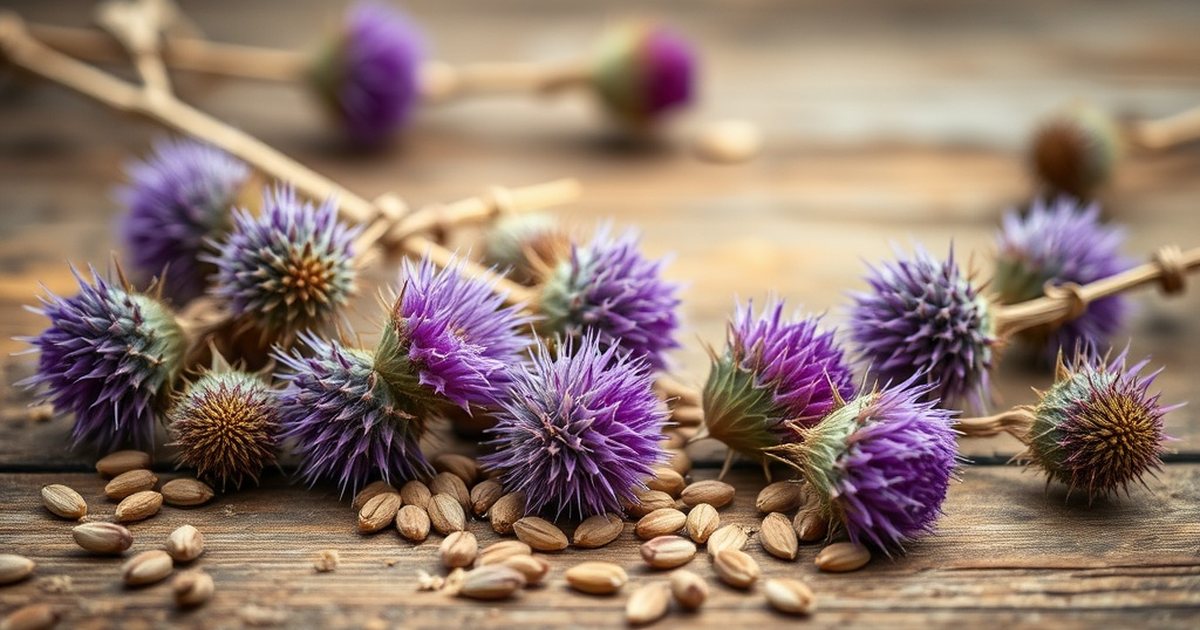
These texts expanded the indications to include dropsy (edema), kidney stones, and hypochondriac melancholy. The seeds—now recognized as the primary source of silymarin—were often prepared as a tincture in wine or a decoction in water. The young stalks and leaves were also consumed as a spring vegetable, blurring the line between food and medicine in humoral dietary theory.
Eclectic and Physiomedicalist Medicine in North America
In the 19th century, the Eclectic physicians—a sect of American doctors who relied on botanical remedies—adopted milk thistle from European materia medica. King’s *American Dispensatory* (1898) listed the seeds (*Cardui mariae fructus*) as a ‘tonic to the liver and portal system,’ indicated for hepatic congestion, varicose veins of the abdomen, and biliary calculi.
The Physiomedicalists, who emphasized vital force and tissue tone, similarly employed the remedy for ‘torpid liver’ with constipation and sallow complexion. They prepared a specific tincture of the fresh seeds, considering it superior to the dried herb. This period solidified the seed as the preferred medicinal part in Western phytotherapy, a preference validated later by phytochemical analysis showing higher silymarin concentration in the fruit.

Traditional Use in Ayurveda and Chinese Medicine
While milk thistle is not a classical herb in Ayurveda or Traditional Chinese Medicine (TCM)—being native to the Mediterranean—it has been integrated into modern practice within these systems. In Ayurveda, the seeds are categorized by their *rasa* (taste) as bitter and pungent, with a cooling *virya* (energy), making them suitable for *Pitta* imbalances affecting the liver (*yakrit*) and blood (*rakta dhatu*).
In contemporary TCM practice, the herb is classified as clearing damp-heat from the Liver and Gallbladder channels. Practitioners may use it for patterns of Liver Qi stagnation transforming into heat, presenting as flank pain, bitter taste, and irritability. This cross-cultural adoption reflects a convergence on the organ system—liver/hepatobiliary—identified by Western tradition centuries earlier.
Galactagogue and Dermatological Folk Uses
Beyond hepatic applications, milk thistle held a consistent reputation as a galactagogue—an agent promoting lactation. The doctrine of signatures, interpreting the white-veined leaves as a sign of milk, supported this use across European folk medicine. Midwives and herbalists prescribed the boiled young leaves or seed tea to nursing mothers.
Topically, the fresh leaf juice or a poultice of crushed seeds was applied to ulcers, cancers, and inflammatory skin conditions. Culpeper noted its use for ‘running sores’ and the ‘king’s evil’ (scrofula). While less documented than the internal uses, these dermatological applications align with the antioxidant and anti-inflammatory properties later attributed to silymarin constituents.

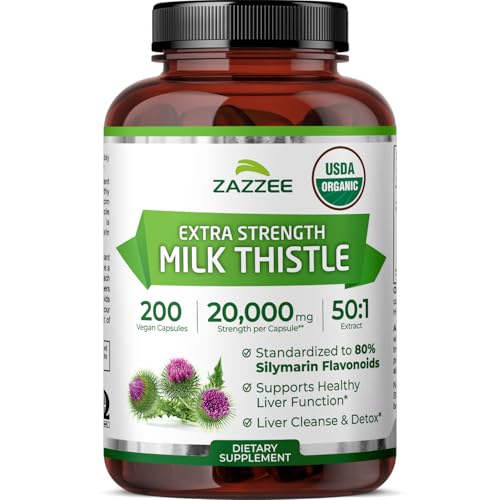
🛒 Where to Buy Milk Thistle (Silymarin)
- CleanseParasites Heavy Metal + Microplastics Binder Editor’s Pick
Contains milk thistle alongside spirulina, zeolite, and other binder herbs. - Thorne Siliphos (Silybin Phosphatidylcholine Complex)Lab-tested / studied
capsules, 1 capsule (~120mg silybin-phosphatidylcholine complex) — Clinically-studied phospholipid complex form used in bioavailability research; NSF Certified for Sport option - Jarrow Formulas Milk Thistle 150mg (Silymarin Standardized Extract)
capsules, 1 capsule (150mg, 80% silymarin) — Widely used, third-party tested, standard 80% silymarin extract at an accessible price - NOW Foods Silymarin Milk Thistle Extract 150mg
capsules, 1 capsule (150mg, 80% silymarin) — GMP-certified, budget-friendly staple brand with consistent standardization - Nature’s Way Milk Thistle Thisilyn Standardized Extract
capsules, 1 capsule (175mg, 80% silymarin) — Long-running standardized formula, one of the most established milk thistle brands in the US market
As an Amazon Associate we earn from qualifying purchases. Quality varies widely — always choose a product with a published third-party test (COA) before buying.
A Note on the Evidence
This historical review describes traditional uses and does not constitute medical advice or evidence of efficacy. Milk thistle supplements are not FDA-evaluated for safety or effectiveness and can interact with CYP450-metabolized medications. Individuals with ragweed/Asteraceae allergies, hormone-sensitive conditions, or diagnosed liver disease should consult a physician before use.
Frequently Asked Questions
When was milk thistle first used medicinally?
The earliest written records date to the 1st century CE in the works of Greek physician Dioscorides and Roman naturalist Pliny the Elder, who described its use for bile-related conditions and serpent bites.
What parts of the plant were used traditionally?
Traditional texts reference the seeds (fruits), roots, leaves, and young stalks. The seeds became the preferred medicinal part in 19th-century Western herbalism, while the leaves were eaten as a vegetable and used for lactation support.
Was milk thistle used for mushroom poisoning historically?
Yes. Arabic physicians, notably Avicenna in *The Canon of Medicine*, documented its use as an antidote for mushroom poisoning. This specific indication aligns with modern intravenous silibinin protocols for amatoxin toxicity.
Is milk thistle a traditional Ayurvedic or Chinese herb?
No. It is native to the Mediterranean and not found in classical Ayurvedic or TCM texts. However, contemporary practitioners in both systems have adopted it based on its pharmacological profile and energetic properties (bitter, cooling, liver-affinity).
How was milk thistle prepared in traditional practice?
Preparations included decoctions of the seed or root in water or wine, tinctures of the fresh seeds in alcohol, distilled waters of the herb, and the young leaves eaten as a cooked green or applied as a poultice.
What did the 'doctrine of signatures' suggest about milk thistle?
The white mottling on the leaves was interpreted as a signature of the Virgin Mary’s milk, leading to its use as a galactagogue for nursing mothers and reinforcing its association with ‘white’ fluids like bile and lymph.
These statements have not been evaluated by the Food and Drug Administration. This information is not intended to diagnose, treat, cure, or prevent any disease. Content is for informational purposes only and is not medical advice; consult a qualified healthcare provider before starting any supplement. As an Amazon Associate we earn from qualifying purchases.