Non-alcoholic fatty liver disease (NAFLD) and its progressive form, non-alcoholic steatohepatitis (NASH), are leading causes of chronic liver disease worldwide. As lifestyle modification remains the cornerstone of management, interest has grown in complementary approaches such as milk thistle (Silybum marianum), whose seed extract is standardized to the flavonolignan complex silymarin.
This review summarizes the current clinical evidence for silymarin in NAFLD and NASH, drawing from randomized controlled trials, systematic reviews, and meta-analyses. It outlines proposed mechanisms, highlights key findings, and emphasizes important limitations and safety considerations for informed decision-making.
Key Takeaways
- Silymarin shows consistent reductions in liver enzymes (ALT, AST) in NAFLD/NASH across multiple meta-analyses, but histological benefit is less established.
- Mechanistic data support antioxidant, anti-inflammatory, and metabolic effects, though human translation remains incomplete.
- Current trials are limited by small size, short duration, formulation variability, and reliance on surrogate endpoints.
- Silymarin has a generally favorable safety profile but can interact with CYP450-metabolized drugs; medical supervision is essential for those on chronic medications.
- Lifestyle modification remains the primary, evidence-based therapy for NAFLD/NASH; silymarin may serve as a complementary option under clinician guidance.
Proposed Mechanisms of Silymarin in Liver Health
Silymarin, primarily composed of silybin (silibinin), is thought to exert hepatoprotective effects through antioxidant activity, stabilization of hepatocyte membranes, modulation of inflammatory pathways, and regulation of lipid metabolism. Preclinical studies suggest silymarin can reduce oxidative stress, inhibit hepatic stellate cell activation, and improve insulin signaling in the liver [1]. Animal models of diet-induced NAFLD have shown that silibinin supplementation modifies hepatic de novo lipogenesis and enhances fatty acid oxidation, leading to reduced steatosis [2].
These mechanistic insights provide a biological rationale for clinical investigation. However, translation from animal models to human outcomes requires rigorous clinical validation, as pharmacokinetic differences and disease complexity can alter efficacy.
Randomized Controlled Trial Evidence
A notable 2017 randomized trial evaluated silymarin in patients with biopsy-proven NASH. The study reported improvements in liver enzyme levels (ALT, AST) and histological features, including steatosis and lobular inflammation, compared to placebo [3]. While promising, the trial was relatively small and of limited duration, underscoring the need for larger, longer-term studies.

An ongoing randomized controlled trial, the Siliver trial, aims to further assess the efficacy and safety of silymarin in NAFLD patients with a more robust design [4]. Results from this study are expected to clarify optimal dosing, treatment duration, and patient subgroups most likely to benefit.
Systematic Reviews and Meta-Analyses
A 2024 systematic review and meta-analysis pooled data from multiple randomized trials and concluded that silymarin supplementation significantly reduced serum ALT and AST levels compared to control in NAFLD/NASH patients [5]. The analysis also noted improvements in fasting blood glucose and lipid profiles, though heterogeneity across studies was considerable.
A 2024 network meta-analysis of natural products for NAFLD ranked silymarin among the more effective interventions for lowering liver enzymes, though the certainty of evidence was rated as low to moderate due to risk of bias and imprecision [6]. An earlier 2018 review of nutraceuticals similarly highlighted silymarin as having the most consistent clinical data among liver-directed supplements, while calling for standardized preparations and larger trials [7].
A 2024 comprehensive review of polyphenol interventions in NAFLD included silymarin and noted that while polyphenols collectively show promise, high-quality evidence for specific compounds remains limited [8].
Evidence Gaps and Research Limitations
Despite multiple meta-analyses, the clinical evidence base for silymarin in NAFLD/NASH has important limitations. Many trials are small, short-term (often 3-12 months), and use varying silymarin formulations and doses (typically 140-600 mg/day). Histological endpoints are rare; most rely on surrogate markers such as liver enzymes and imaging.

Patient populations are heterogeneous, including varying degrees of fibrosis, diabetes status, and background therapies. Publication bias and methodological weaknesses (e.g., lack of intention-to-treat analysis) further reduce confidence. The Siliver trial and other ongoing studies may address some of these gaps [4].
Safety Profile, Drug Interactions, and Special Populations
Silymarin is generally well tolerated in clinical trials, with adverse events typically mild and gastrointestinal (e.g., nausea, diarrhea). However, silymarin can inhibit and induce several cytochrome P450 enzymes (CYP3A4, CYP2C9, CYP2D6) and transporters (P-glycoprotein), potentially altering the pharmacokinetics of co-administered medications [1]. Clinically relevant interactions may occur with statins, diabetes medications (e.g., metformin, sulfonylureas), hormonal therapies, and immunosuppressants.
Individuals with allergies to plants in the Asteraceae/Compositae family (ragweed, chrysanthemums, marigolds, daisies) may experience hypersensitivity reactions. Patients with diagnosed liver disease, including cirrhosis, should consult a physician before using milk thistle supplements, as safety in advanced liver disease is not well established.
Practical Considerations and Quality Assurance
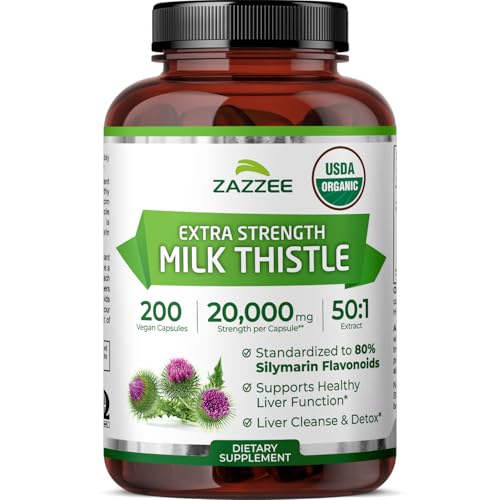
Milk thistle supplements are not evaluated by the FDA for safety or effectiveness and are not intended to diagnose, treat, cure, or prevent any disease. Product quality varies widely; consumers should seek products standardized to 70-80% silymarin, ideally with third-party verification (e.g., USP, NSF). Typical studied doses range from 140 mg to 600 mg of silymarin daily, often divided into two or three doses.
Silymarin should be viewed as a potential adjunct to, not a replacement for, evidence-based lifestyle interventions (weight loss of 7-10%, Mediterranean diet, regular physical activity) and management of metabolic comorbidities (type 2 diabetes, dyslipidemia, hypertension). Regular monitoring of liver enzymes and metabolic parameters is advisable during supplementation.

🛒 Where to Buy Milk Thistle (Silymarin)
- CleanseParasites Heavy Metal + Microplastics Binder Editor’s Pick
Contains milk thistle alongside spirulina, zeolite, and other binder herbs. - Thorne Siliphos (Silybin Phosphatidylcholine Complex)Lab-tested / studied
capsules, 1 capsule (~120mg silybin-phosphatidylcholine complex) — Clinically-studied phospholipid complex form used in bioavailability research; NSF Certified for Sport option - Jarrow Formulas Milk Thistle 150mg (Silymarin Standardized Extract)
capsules, 1 capsule (150mg, 80% silymarin) — Widely used, third-party tested, standard 80% silymarin extract at an accessible price - NOW Foods Silymarin Milk Thistle Extract 150mg
capsules, 1 capsule (150mg, 80% silymarin) — GMP-certified, budget-friendly staple brand with consistent standardization - Nature’s Way Milk Thistle Thisilyn Standardized Extract
capsules, 1 capsule (175mg, 80% silymarin) — Long-running standardized formula, one of the most established milk thistle brands in the US market
As an Amazon Associate we earn from qualifying purchases. Quality varies widely — always choose a product with a published third-party test (COA) before buying.
A Note on the Evidence
Milk thistle supplements are not FDA-evaluated for safety or effectiveness and are not intended to diagnose, treat, cure, or prevent any disease. They can interact with CYP450-metabolized medications (including some statins, diabetes drugs, and hormonal therapies). Those with ragweed/Asteraceae allergies or diagnosed liver disease should consult a physician before use. This article is informational, not medical advice.
Frequently Asked Questions
Does milk thistle cure NAFLD or NASH?
No. Milk thistle supplements are not FDA-approved to diagnose, treat, cure, or prevent any disease. Clinical trials show improvements in liver enzymes and some metabolic markers, but there is insufficient evidence to claim cure or reversal of liver fibrosis [5].
What dose of silymarin is used in studies?
Most clinical trials use silymarin standardized to 70-80% flavonolignans at doses of 140-600 mg daily, often divided. The optimal dose and duration are not yet established [3][5].
Can I take milk thistle with my statin or diabetes medication?
Silymarin can interact with CYP450 enzymes and drug transporters, potentially affecting levels of statins, diabetes drugs, and hormonal therapies. Consult your prescribing physician before combining [1].
Is milk thistle safe for people with liver cirrhosis?
Safety in advanced liver disease (cirrhosis) is not well studied. Patients with diagnosed liver disease should consult a hepatologist before using milk thistle.
How long does it take to see effects on liver enzymes?
In trials, reductions in ALT and AST are often observed within 3-6 months of consistent use, but individual response varies [5].
Are there any ongoing trials for silymarin in NAFLD?
Yes, the Siliver trial (NCT05233245) is a randomized controlled trial currently evaluating silymarin in NAFLD patients, which may provide higher-quality evidence on efficacy and safety [4].
References
- Mobasheri L et al. Pathophysiology of diabetic hepatopathy and molecular mechanisms underlying the hepatoprotective effects of phytochemicals. Biomedicine & pharmacotherapy = Biomedecine & pharmacotherapie (2023). PMID 37734266
- Cui CX et al. Silibinin Capsules improves high fat diet-induced nonalcoholic fatty liver disease in hamsters through modifying hepatic de novo lipogenesis and fatty acid oxidation. Journal of ethnopharmacology (2017). PMID 28648927
- Wah Kheong C et al. A Randomized Trial of Silymarin for the Treatment of Nonalcoholic Steatohepatitis. Clinical gastroenterology and hepatology : the official clinical practice journal of the American Gastroenterological Association (2017). PMID 28419855
- de Avelar CR et al. Efficacy of silymarin in patients with non-alcoholic fatty liver disease – the Siliver trial: a study protocol for a randomized controlled clinical trial. Trials (2023). PMID 36899430
- Li S et al. Administration of silymarin in NAFLD/NASH: A systematic review and meta-analysis. Annals of hepatology (2024). PMID 38579127
- Liu H et al. Effects of different natural products in patients with non-alcoholic fatty liver disease-A network meta-analysis of randomized controlled trials. Phytotherapy research : PTR (2024). PMID 38886838
- Cicero AFG et al. Nutraceutical Approach to Non-Alcoholic Fatty Liver Disease (NAFLD): The Available Clinical Evidence. Nutrients (2018). PMID 30142943
- Ranneh Y et al. Polyphenol Intervention Ameliorates Non-Alcoholic Fatty Liver Disease: An Updated Comprehensive Systematic Review. Nutrients (2024). PMID 39683546
These statements have not been evaluated by the Food and Drug Administration. This information is not intended to diagnose, treat, cure, or prevent any disease. Content is for informational purposes only and is not medical advice; consult a qualified healthcare provider before starting any supplement. As an Amazon Associate we earn from qualifying purchases.