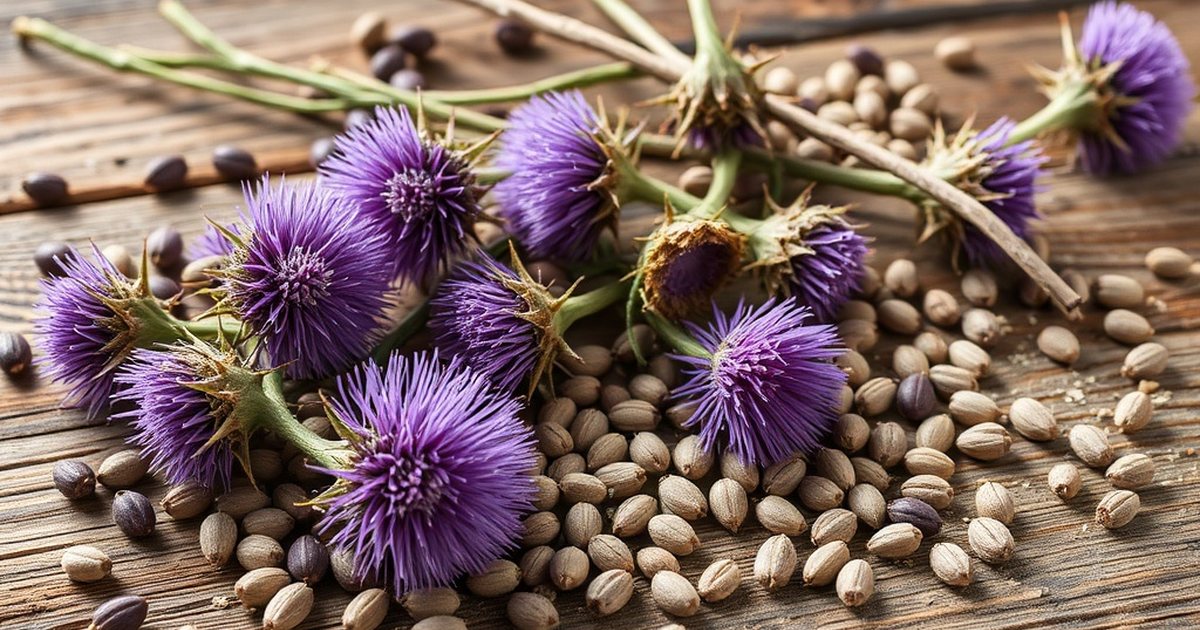
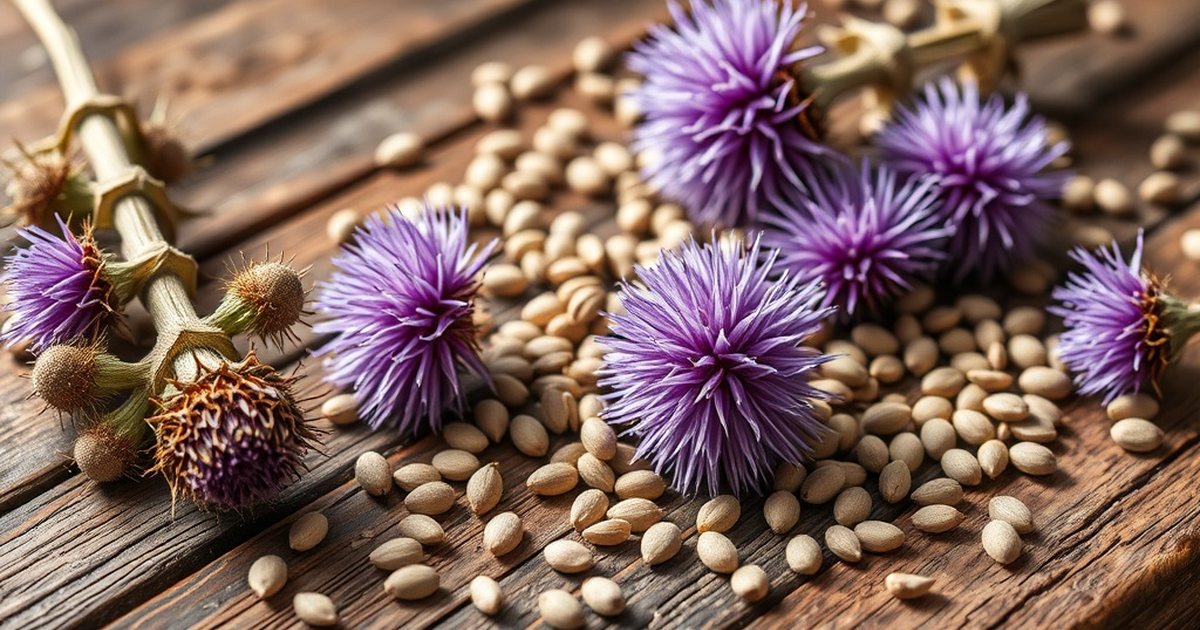
Milk thistle (Silybum marianum) is one of the most widely sold liver-support herbs, and also one of the most inconsistently labeled. The active compound isn’t ‘milk thistle’ as a whole plant, it’s silymarin, a mix of flavonolignans extracted from the seeds, with silybin (also spelled silibinin) considered the most biologically active component. Two bottles both labeled ‘500mg Milk Thistle’ can contain wildly different amounts of actual silymarin depending on the extract ratio and standardization used.
This article does not rank specific brands or claim any product cures or treats liver disease. Instead, it explains what to actually look for on a label, so you can evaluate any milk thistle product for yourself: standardization percentage, extract type, dose ranges used in available research, and the safety considerations that matter before you buy.
Key Takeaways
- The standardization percentage (e.g., ‘80% silymarin’) matters more than the total milligram count on the front label.
- Extract ratio and standardization together determine actual active-compound content, calculate it rather than trusting marketing language.
- Phytosome/phospholipid-complex formulations use a different dosing scale than standard extracts due to improved absorption.
- Third-party testing (USP, NSF, ConsumerLab-style verification) is a meaningful quality signal since these products aren’t FDA-evaluated pre-market.
- Check for CYP450 drug interactions and ragweed/Asteraceae allergy history before starting, and consult a physician if you have diagnosed liver disease.
What 'Standardized' Actually Means on a Label
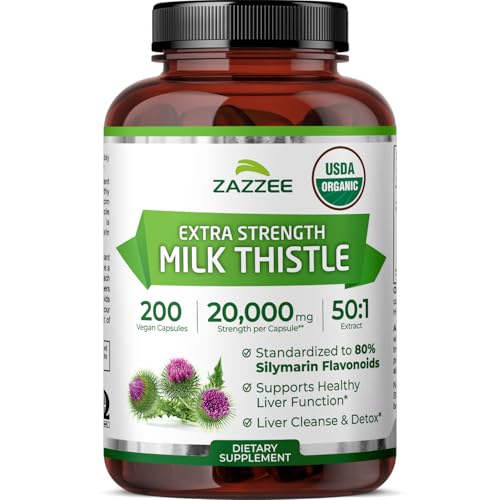
When a label says ‘standardized to 80% silymarin,’ it means the manufacturer has measured and guaranteed that 80% of the extract’s weight is the silymarin flavonolignan complex, not just the raw seed powder. This is the single most important label detail. A capsule of plain milk thistle seed powder with no standardization may contain only a small, unpredictable fraction of active silymarin, while a standardized extract gives you a known, repeatable dose.
Look for the extract ratio too (e.g., ‘4:1′ or ’10:1’), which describes how much raw plant material was concentrated into the extract, alongside the standardization percentage. The two numbers together, plus the milligram amount, tell you the actual silymarin content per capsule, something you can calculate and compare across brands rather than trusting marketing language like ‘potent’ or ‘high-strength.’
This is not a theoretical concern. When researchers quantified the six main flavonolignans in commercial standardized silymarin extracts by liquid chromatography–mass spectrometry, they reported significant variation between different commercial sources[1]. A review of silymarin composition makes the same point from the manufacturing side: the exact composition of a given preparation is often unknown, and it shifts with processing, the chemical variety of the plant used, and the growing conditions of the crop[2].
Silybin vs. the Full Silymarin Complex
Silymarin itself is a mixture of several flavonolignans, including silybin, silydianin, and silychristin, with silybin (silibinin) typically making up the largest and most studied fraction. Some premium products isolate or concentrate silybin specifically, sometimes paired with phosphatidylcholine (a phospholipid complex) to improve absorption, since silybin on its own is poorly absorbed by the gut[3][4].

If a product markets itself as a ‘phytosome’ or ‘phospholipid complex,’ it is claiming improved bioavailability over standard silymarin extract[4]. That is a legitimate formulation approach worth knowing about, but it also typically costs more and uses a different dosing scale (often lower milligram amounts because absorption is higher), so don’t compare its dose directly to a standard 80% silymarin extract without adjusting for that.
Typical Dose Ranges You'll See on Labels
Commercial silymarin extract products commonly range from around 150mg to 450mg of standardized extract per day, split into one to three doses. There is no single ‘correct’ dose established for general use, and appropriate amounts can vary by formulation and concentration, which is exactly why the standardization percentage matters more than the raw milligram number on the front of the bottle.
Because dosing conventions vary by manufacturer and extract type, it’s worth comparing the actual silymarin content (mg standardization percentage) across products rather than the total capsule weight. A 500mg capsule at 20% standardization delivers less active compound than a 200mg capsule at 80% standardization.
Third-Party Testing and Quality Red Flags
Because milk thistle supplements are not FDA-evaluated for safety or effectiveness before they reach shelves, quality control is left largely to the manufacturer and any voluntary third-party certification. Look for products tested by an independent lab (USP, NSF, or ConsumerLab-type verification) confirming the label’s standardization claim, contaminant screening (heavy metals, pesticides), and batch consistency.
Red flags include labels that list only ‘Milk Thistle Extract’ with no standardization percentage, proprietary blends that hide the actual silymarin amount behind a combined total for several ingredients, and pricing that seems too low for a properly standardized extract (high-purity silymarin extraction is not cheap to produce).

Proposed Mechanisms: Why Silymarin Is Studied for Liver Support
The mechanisms usually proposed for silymarin’s liver interest are antioxidant activity (scavenging free radicals that can damage hepatocyte membranes), membrane-stabilizing effects on liver cells, and mild anti-inflammatory action. The antioxidant half of that story is worth qualifying, because it is the half marketing copy leans on hardest: a 2022 review of the chemistry concludes that flavonolignans do not act as antioxidants in the body at all, but as specific ligands of biological targets[3]. Direct free-radical scavenging is a test-tube observation, not a description of what happens after you swallow a capsule. These are mechanistic hypotheses studied in laboratory and some clinical settings, not confirmed clinical outcomes for any specific condition, and the strength of evidence varies considerably by the outcome being measured.
It is worth being direct about this: this page is a product and label comparison rather than a review of trial results, so it does not quote efficacy statistics. Any specific outcome claim, such as normalized liver enzymes or a specific study statistic, should be sourced to a real cited study before you rely on it, not accepted from marketing copy.
Who Should Be Cautious
Milk thistle belongs to the Asteraceae (ragweed) family, so people with ragweed, chrysanthemum, marigold, or daisy allergies should be cautious of cross-reactivity. Silymarin is also routinely listed as a CYP450 interaction risk, and that claim deserves more precision than it usually gets. Silymarin does inhibit several cytochrome P450 enzymes in laboratory assays, but mostly at concentrations far above what an oral dose produces in blood; the study measuring this concluded that at the roughly 0.2 µM plasma level actually seen in people, there is no drug-drug interaction problem[6]. A 2019 safety review reaches the same conclusion — low drug interactions, no major effect on cytochrome P450 — while still advising caution when silymarin is combined with narrow-therapeutic-window drugs[5]. Those narrow-window medications are the case where checking first genuinely matters.
Anyone with a diagnosed liver disease, anyone on prescription medication metabolized by the liver, and anyone who is pregnant or breastfeeding should talk to a physician before starting milk thistle. This is informational content, not a substitute for individualized medical advice.

🛒 Where to Buy Milk Thistle (Silymarin)
- CleanseParasites Heavy Metal + Microplastics Binder Editor’s Pick
Contains milk thistle alongside spirulina, zeolite, and other binder herbs. - Thorne Siliphos (Silybin Phosphatidylcholine Complex)
capsules, 1 capsule (~120mg silybin-phosphatidylcholine complex) — Phospholipid complex form (silybin bound to phosphatidylcholine) for liver support - Jarrow Formulas Milk Thistle 150mg (Silymarin Standardized Extract)
capsules, 1 capsule (150mg, 80% silymarin) — Widely used, standard 80% silymarin extract at an accessible price - NOW Foods Silymarin Milk Thistle Extract 150mg
capsules, 1 capsule (150mg, 80% silymarin) — Made under NOW’s GMP Quality Assured program, budget-friendly staple brand with consistent standardization - Nature’s Way Milk Thistle Thisilyn Standardized Extract
capsules, 1 capsule (175mg, 80% silymarin) — Long-running standardized formula, one of the most established milk thistle brands in the US market
As an Amazon Associate we earn from qualifying purchases. Quality varies widely — always choose a product with a published third-party test (COA) before buying.
A Note on the Evidence
This page is a label and product comparison, not a review of clinical outcomes, so it deliberately does not quote efficacy statistics. The sources listed below are analytical and safety literature — what is actually inside a commercial extract, how well it is absorbed, and what the drug-interaction evidence does and does not show — because those are the questions a buying decision actually turns on. Treat any product marketing that quotes an outcome statistic with skepticism unless it links to a real, verifiable study, and consult a physician before starting milk thistle if you take prescription medication or have a diagnosed liver condition.
Frequently Asked Questions
Is a higher milligram milk thistle supplement always stronger?
No. Total milligrams only tells you the extract weight, not the active silymarin content. A lower-milligram capsule with a higher standardization percentage (e.g., 80% silymarin) can deliver more active compound than a larger capsule with no standardization or a low percentage.
What's the difference between silymarin and silybin?
Silymarin is the full flavonolignan complex extracted from milk thistle seeds, and silybin (silibinin) is generally the most studied and most active single component within that complex. Some products isolate or concentrate silybin specifically, often paired with a phospholipid carrier to improve absorption.
Do I need a 'phytosome' formulation, or is standard extract fine?
A phytosome/phospholipid complex is a bioavailability-enhancement approach, not a requirement. Standard standardized silymarin extract is the more common and lower-cost option; phytosome versions cost more and use different, typically lower, dosing because absorption is improved.
Can milk thistle interact with my medications?
Less than its reputation suggests. Silymarin inhibits cytochrome P450 enzymes in laboratory assays, but at the plasma levels an oral dose actually reaches, a controlled assessment and a 2019 safety review both report no meaningful cytochrome P450 effect. The real caution is for drugs with a narrow therapeutic window, where even a small shift matters. If you take any prescription medication, especially one of those, talk to your physician or pharmacist before starting milk thistle.
Is milk thistle FDA-approved to treat liver disease?
No. Milk thistle supplements are not FDA-evaluated for safety or effectiveness and are not intended to diagnose, treat, cure, or prevent any disease. Anyone with a diagnosed liver condition should be under a physician’s care and discuss any supplement use with them first.
Who should avoid milk thistle or use extra caution?
People with ragweed, daisy, marigold, or chrysanthemum allergies (Asteraceae family) should be cautious due to possible cross-reactivity. Pregnant or breastfeeding individuals and anyone with diagnosed liver disease or on CYP450-metabolized medications should consult a physician before use.
References
- Lee JI et al. Analysis and comparison of active constituents in commercial standardized silymarin extracts by liquid chromatography-electrospray ionization mass spectrometry. J Chromatogr B Analyt Technol Biomed Life Sci (2007). PMID 16942922
- Chambers CS et al. The silymarin composition… and why does it matter??? Food Res Int (2017). PMID 28964357
- Křen V et al. Silybin and its congeners: from traditional medicine to molecular effects. Nat Prod Rep (2022). PMID 35510639
- Kidd P et al. A review of the bioavailability and clinical efficacy of milk thistle phytosome: a silybin-phosphatidylcholine complex (Siliphos). Altern Med Rev (2005). PMID 16164374
- Soleimani V et al. Safety and toxicity of silymarin, the major constituent of milk thistle extract: An updated review. Phytother Res (2019). PMID 31069872
- Doehmer J et al. Assessment of drug-drug interaction for silymarin. Toxicol In Vitro (2008). PMID 18249085
These statements have not been evaluated by the Food and Drug Administration. This information is not intended to diagnose, treat, cure, or prevent any disease. Content is for informational purposes only and is not medical advice; consult a qualified healthcare provider before starting any supplement. As an Amazon Associate we earn from qualifying purchases.