Non-alcoholic fatty liver disease (NAFLD) is now one of the most common liver conditions worldwide, and current treatment strategies center on weight loss, metabolic risk-factor control, and, in some cases, emerging pharmacotherapies [1]. Because lifestyle change is hard to sustain, there’s ongoing interest in whether a plant-derived supplement like milk thistle could offer supportive benefit alongside diet and exercise, not as a replacement for either.
Milk thistle seed extract is standardized to silymarin, a mixture of flavonolignans (silybin/silibinin being the most studied) with antioxidant and membrane-stabilizing effects on liver cells [2]. This article reviews what randomized trials and meta-analyses actually report for NAFLD and its more advanced form, non-alcoholic steatohepatitis (NASH), including where the evidence is solid and where it remains thin.
Key Takeaways
- Silymarin (milk thistle’s active flavonolignan complex) shows the most consistent trial evidence for lowering liver enzymes (ALT/AST) in people with NAFLD/NASH [3][4].
- Evidence for reversing liver fat, inflammation, or fibrosis on biopsy is less consistent and based on fewer, smaller trials [5][6].
- Some of the newer positive trials tested silymarin in multi-herb combination products, not milk thistle alone [7][8].
- Milk thistle is not a replacement for weight loss, diet, and exercise, which remain the foundation of NAFLD management [1].
- Formulation and dose vary widely across studies, so look for standardized silymarin content rather than assuming all supplements are equivalent [2].
How Silymarin Is Thought to Work in the Liver
Silymarin’s proposed mechanisms include scavenging reactive oxygen species, stabilizing hepatocyte cell membranes, and modulating inflammatory pathways involved in liver cell injury [2]. In fatty liver disease specifically, oxidative stress and lipid peroxidation are thought to contribute to the progression from simple steatosis to inflammation and fibrosis, which is the rationale for testing an antioxidant-focused compound like silymarin in this population [9].
It’s worth being clear that these are proposed mechanisms studied mostly in preclinical and mechanistic work; they explain why researchers tested silymarin in NAFLD/NASH trials, but mechanism alone doesn’t prove clinical benefit. That has to come from the human trial data below.

What Meta-Analyses Show for Liver Enzymes and Liver Fat
Several systematic reviews and meta-analyses have pooled randomized trial data on silymarin in NAFLD/NASH. One meta-analysis found silymarin supplementation was associated with improvements in liver enzymes (ALT and AST) and some metabolic markers compared to placebo [3]. A separate systematic review and meta-analysis focused specifically on NAFLD/NASH populations similarly reported favorable effects on liver enzyme levels [4].
A broader meta-analysis looking at dietary polyphenol supplementation (including silymarin among other polyphenols) for NAFLD treatment also reported improvements in liver-related and metabolic outcomes, though it examined silymarin as one of several polyphenol interventions rather than in isolation [10]. Across these pooled analyses, the most consistent signal is a reduction in liver enzymes, a marker of reduced hepatocyte injury rather than proof of reversed fibrosis or fat content on its own.
Randomized Controlled Trials in NASH
One of the more rigorous trials was a randomized study testing high-dose silymarin specifically in patients with biopsy-confirmed nonalcoholic steatohepatitis; it evaluated histologic outcomes rather than just blood markers [5]. A separate randomized, double-blind, placebo-controlled trial in non-cirrhotic NASH patients likewise assessed silymarin’s effects on liver-related endpoints [6].

More recent trials have tested silymarin in combination formulas rather than as a standalone extract. A triple-blind, randomized, placebo-controlled trial evaluated Silybum marianum combined with Pueraria lobata and Salvia miltiorrhiza tablets in adults with NAFLD [7], and a phase II multicentered randomized trial tested a combination product (Phyllanthus niruri plus Silybum marianum extracts) in patients with NASH risk factors [8]. Because these are combination products, their results can’t be attributed to milk thistle alone. A study protocol for another randomized controlled trial (the Siliver trial) was also published, reflecting that researchers consider the question open enough to warrant further dedicated study [11].
Where the Evidence Is Strong vs. Where It's Still Thin
The most reproducible finding across trials and meta-analyses is a reduction in liver enzymes (ALT/AST) with silymarin supplementation in NAFLD/NASH populations [3][4]. This is a meaningful biomarker of reduced ongoing liver cell injury, but enzyme improvement is not the same as reversing steatosis, inflammation, or fibrosis on biopsy or imaging.
Evidence on harder outcomes, biopsy-confirmed histologic improvement, fibrosis regression, or long-term prevention of cirrhosis, is less consistent and comes from fewer, smaller trials [5][6]. Several of the newer positive trials used silymarin as part of a multi-herb combination product, which muddies how much of the benefit is attributable to milk thistle specifically [7][8]. Trial populations, dosing, and silymarin formulations (which affects bioavailability) also vary meaningfully between studies, which is part of why review authors continue to call for larger, more standardized trials [9][11].
Dosing, Formulation, and Practical Considerations
Trials have used a range of silymarin doses and formulations, and bioavailability differs considerably depending on how the extract is prepared (e.g., standard silymarin vs. phospholipid-complexed silybin) [2][9]. Because there’s no single agreed-upon ‘proven’ dose for NAFLD, anyone considering a milk thistle supplement should look at the specific standardization (percent silymarin, silybin content) on the label rather than assuming all products are equivalent.

Silymarin is generally described in the literature as well-tolerated in trial settings [9], but ‘well-tolerated in a study’ is not the same as ‘safe for everyone.’ It should not be treated as a substitute for the weight loss, dietary changes, and metabolic risk-factor management that remain the core of NAFLD treatment [1].
🛒 Where to Buy Milk Thistle (Silymarin)
- CleanseParasites Heavy Metal + Microplastics Binder Editor’s Pick
Contains milk thistle alongside spirulina, zeolite, and other binder herbs. - Thorne Siliphos (Silybin Phosphatidylcholine Complex)
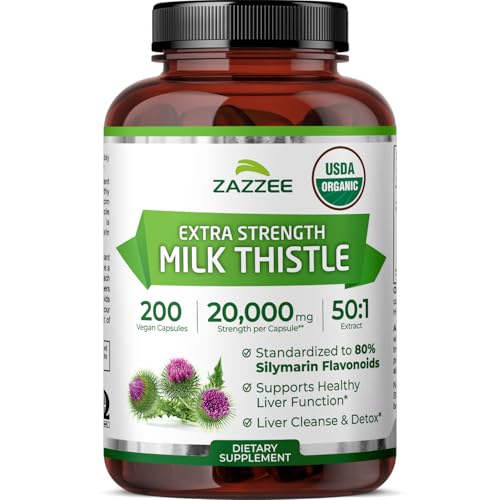
capsules, 1 capsule (~120mg silybin-phosphatidylcholine complex) — Phospholipid complex form (silybin bound to phosphatidylcholine) for liver support - Jarrow Formulas Milk Thistle 150mg (Silymarin Standardized Extract)
capsules, 1 capsule (150mg, 80% silymarin) — Widely used, standard 80% silymarin extract at an accessible price - NOW Foods Silymarin Milk Thistle Extract 150mg
capsules, 1 capsule (150mg, 80% silymarin) — Made under NOW’s GMP Quality Assured program, budget-friendly staple brand with consistent standardization - Nature’s Way Milk Thistle Thisilyn Standardized Extract
capsules, 1 capsule (175mg, 80% silymarin) — Long-running standardized formula, one of the most established milk thistle brands in the US market
As an Amazon Associate we earn from qualifying purchases. Quality varies widely — always choose a product with a published third-party test (COA) before buying.
A Note on the Evidence
This overview reflects a mix of trial sizes, silymarin formulations, and some combination-product studies, so findings should be read as supportive rather than definitive; milk thistle supplements are not FDA-evaluated for safety or effectiveness and are not intended to diagnose, treat, cure, or prevent any disease. Anyone with diagnosed liver disease, on CYP450-metabolized medications, or with ragweed/Asteraceae allergies should talk to a physician before starting milk thistle, and this article is informational only, not medical advice.
Frequently Asked Questions
Can milk thistle cure or reverse fatty liver disease?
No. Current research suggests silymarin may help lower liver enzymes in people with NAFLD/NASH, but it is not established as a cure or a reliable way to reverse fibrosis or fat accumulation [3]. It’s studied as a supportive option, not a replacement for standard care [1].
What does the research say about silymarin and liver enzymes in NAFLD?
Multiple meta-analyses report that silymarin supplementation is associated with reductions in ALT and AST compared to placebo in NAFLD/NASH patients [3][4]. This reflects less ongoing liver cell injury, though it doesn’t confirm reversal of underlying fat or fibrosis.
Has milk thistle been tested in NASH specifically, not just general fatty liver?
Yes. At least one randomized trial evaluated high-dose silymarin in biopsy-confirmed NASH patients [5], and another randomized, placebo-controlled trial studied non-cirrhotic NASH patients [6]. Results across trials are mixed on histologic (biopsy-level) outcomes.

Is milk thistle usually studied alone, or combined with other herbs?
Both. Some trials test standalone silymarin [5][6], while newer trials have tested milk thistle in combination products with other botanicals like Pueraria lobata and Salvia miltiorrhiza [7], or Phyllanthus niruri [8]. Combination trial results can’t be attributed to milk thistle alone.
Is milk thistle safe to take with other medications?
Silymarin can interact with medications metabolized by CYP450 enzymes, including some statins, diabetes medications, and hormonal therapies. People with diagnosed liver disease, ragweed/Asteraceae allergies, or those on interacting medications should consult a physician before use, and this article isn’t medical advice.
Is there ongoing research to clarify silymarin's role in NAFLD treatment?
Yes. Trial protocols such as the Siliver study have been published specifically to test silymarin’s efficacy in NAFLD/NASH more rigorously [11], and review authors continue to note the need for larger, better-standardized trials [9].
References
- Sun J et al. Current strategies for nonalcoholic fatty liver disease treatment (Review). International journal of molecular medicine (2024). PMID 39129305
- Federico A et al. Silymarin/Silybin and Chronic Liver Disease: A Marriage of Many Years. Molecules (Basel, Switzerland) (2017). PMID 28125040
- Kalopitas G et al. Impact of Silymarin in individuals with nonalcoholic fatty liver disease: A systematic review and meta-analysis. Nutrition (Burbank, Los Angeles County, Calif.) (2021). PMID 33418491
- Li S et al. Administration of silymarin in NAFLD/NASH: A systematic review and meta-analysis. Annals of hepatology (2024). PMID 38579127
- Wah Kheong C et al. A Randomized Trial of Silymarin for the Treatment of Nonalcoholic Steatohepatitis. Clinical gastroenterology and hepatology : the official clinical practice journal of the American Gastroenterological Association (2017). PMID 28419855
- Navarro VJ et al. Silymarin in non-cirrhotics with non-alcoholic steatohepatitis: A randomized, double-blind, placebo controlled trial. PloS one (2019). PMID 31536511
- Li BY et al. Effects of Silybum marianum, Pueraria lobate, combined with Salvia miltiorrhiza tablets on non-alcoholic fatty liver disease in adults: A triple-blind, randomized, placebo-controlled clinical trial. Clinical nutrition ESPEN (2024). PMID 38879879
- Shaker MK et al. The activity of a herbal medicinal product of Phyllanthus niruri and Silybum marianum powdered extracts (Heptex®) in patients with apparent risk factors for nonalcoholic steatohepatitis: a phase II, multicentered, randomized, double-blind, placebo-controlled clinical trial. BMC complementary medicine and therapies (2025). PMID 39789561
- Gillessen A et al. Silymarin as Supportive Treatment in Liver Diseases: A Narrative Review. Advances in therapy (2020). PMID 32065376
- Yang K et al. Efficacy and safety of dietary polyphenol supplementation in the treatment of non-alcoholic fatty liver disease: A systematic review and meta-analysis. Frontiers in immunology (2022). PMID 36159792
- de Avelar CR et al. Efficacy of silymarin in patients with non-alcoholic fatty liver disease – the Siliver trial: a study protocol for a randomized controlled clinical trial. Trials (2023). PMID 36899430
These statements have not been evaluated by the Food and Drug Administration. This information is not intended to diagnose, treat, cure, or prevent any disease. Content is for informational purposes only and is not medical advice; consult a qualified healthcare provider before starting any supplement. As an Amazon Associate we earn from qualifying purchases.