Acetaminophen (Tylenol) is one of the most common causes of drug-induced liver injury when taken above recommended doses, and this has led to interest in whether milk thistle, specifically its seed extract silymarin and its main active component silibinin (also called silybin), might help protect the liver during this kind of stress. A meaningful body of laboratory and animal research has explored this question directly, using acetaminophen overdose models to test silymarin’s effects on liver tissue.
This article summarizes what that research actually found, and just as importantly, what it did not test. Nearly all of the available evidence comes from mice and rats, not people, and none of it supports using milk thistle as a treatment for acetaminophen overdose, which is a medical emergency requiring immediate care (typically N-acetylcysteine, administered under medical supervision). This is an evidence summary, not a treatment guide.
Key Takeaways
- Multiple animal and cell-based studies show silymarin/silibinin reduced markers of acetaminophen-induced liver damage in controlled lab settings [1][2].
- Newer research is exploring nanoparticle and liposomal formulations to improve silibinin’s bioavailability and liver-targeting [3][4][5][6].
- Emerging mechanistic work points to effects on mitochondrial quality control and cell death pathways, not just antioxidant activity [7][8].
- All of this evidence is preclinical (animal/cell models); there are no human clinical trials showing milk thistle prevents or treats acetaminophen toxicity.
- Milk thistle is not a substitute for emergency treatment (N-acetylcysteine) in a real acetaminophen overdose.
Why Acetaminophen Stresses the Liver
At recommended doses, acetaminophen is processed by the liver safely. At higher doses, a larger share gets converted by liver enzymes (CYP450 pathway) into a reactive byproduct called NAPQI, which depletes the liver’s glutathione stores and can damage hepatocytes (liver cells) through oxidative stress and disrupted mitochondrial function. This is the well-established mechanism behind acetaminophen-induced hepatotoxicity, and it’s the mechanism researchers use as a model when they want to study liver injury and protection in a lab setting [9].
Because this injury pathway is well characterized and reproducible, it has become a standard tool for testing whether a compound has hepatoprotective (liver-protective) properties, not because acetaminophen itself is the primary target of milk thistle research.

What Animal Studies Have Shown
Several rodent studies have given animals silymarin or silibinin either before or alongside a hepatotoxic dose of acetaminophen, then measured liver enzyme levels (such as ALT and AST), oxidative stress markers, and tissue damage under microscopy. In one such study, silymarin pretreatment reduced markers of acetaminophen-induced liver damage in mice compared to acetaminophen alone [1].
A related study looking at both liver and kidney effects found that silymarin reduced acetaminophen-induced hepatotoxicity and nephrotoxicity (kidney damage) markers in mice [2]. Because silibinin has historically had absorption limitations, researchers have also tested reformulated versions: a solid dispersion formulation improved silibinin’s bioavailability and showed greater protective effect against acetaminophen-induced liver injury in rats compared to standard silymarin [3].
One comparative study evaluated silymarin against artichoke leaf extract in an acetaminophen-hepatotoxicity mouse model, finding both compounds showed protective effects, which is a useful reminder that silymarin isn’t the only botanical studied in this space and that comparative data exists [10].
Newer Delivery Systems and Mechanistic Studies
A notable trend in recent silymarin/silibinin research is nanoparticle and liposomal delivery, aimed at improving how much of the compound actually reaches liver tissue. Silibinin nanoliposomes were tested in an acetaminophen-induced liver failure model and were associated with improved outcomes compared to unmodified silibinin [4]. Similarly, silibinin bound to albumin nanoparticles was evaluated in a preclinical model of acute liver injury with promising protective signals [5], and silymarin liposomes have been shown to improve oral bioavailability and target hepatocytes and immune cells more effectively than standard formulations [6].

On the mechanism side, more recent work has looked at how silibinin might support liver recovery rather than just blunting initial damage. One 2026 study found that silibinin promoted hepatocyte (liver cell) proliferation through a mitophagy pathway called PINK1/Parkin, which is involved in clearing damaged mitochondria, and this was linked to reduced acetaminophen-induced liver injury in the model used [7]. Another study examined a hybrid nanoparticle combining balloon flower root-derived exosome-like particles with silymarin, finding effects on the hepatocyte MAPK signaling pathway and apoptosis (programmed cell death) in an acetaminophen injury model [8].
Together, these newer studies suggest researchers are increasingly interested not just in whether silymarin/silibinin reduces damage, but in the specific cellular pathways involved, oxidative stress, mitochondrial quality control, and cell death signaling.
Milk Thistle's Broader Track Record in Liver Research
Milk thistle has a long history of study in liver disease more broadly, not just in acetaminophen models. A widely cited review traced its use from traditional applications to modern clinical interest, describing proposed antioxidant and membrane-stabilizing mechanisms while also noting that clinical evidence in humans, particularly for conditions like chronic liver disease, has been mixed and often limited by small or inconsistent trials [11].
It’s also worth noting that acetaminophen-injury models are used to screen many other natural compounds, not just milk thistle. For example, polysaccharides from Zizyphus jujube (a type of jujube fruit) have been studied for hepatoprotective effects in similar injury models [12], underscoring that this is a common research paradigm across botanical and natural compound research, not a milk-thistle-specific test.

What This Research Does and Doesn't Tell Us
It’s important to be precise about what these studies show: they demonstrate biological plausibility and measurable protective effects in controlled animal and cell models, using specific extract types, doses, and delivery formulations that are often quite different from what’s in an over-the-counter milk thistle capsule. None of the cited studies are human clinical trials testing whether milk thistle prevents or treats acetaminophen overdose in people.
Acetaminophen overdose in humans is treated with N-acetylcysteine, a proven antidote administered under medical supervision, and timing is critical to outcomes. There is no clinical evidence that milk thistle supplements can substitute for or meaningfully change the course of acetaminophen toxicity in a real overdose situation, and treating it as if it could delay necessary emergency care would carry real risk.
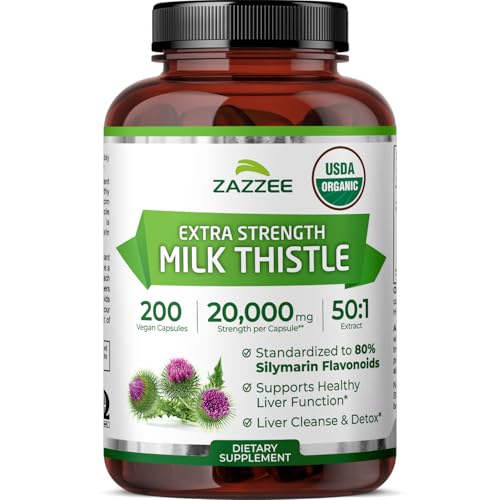
🛒 Where to Buy Milk Thistle (Silymarin)
- CleanseParasites Heavy Metal + Microplastics Binder Editor’s Pick
Contains milk thistle alongside spirulina, zeolite, and other binder herbs. - Thorne Siliphos (Silybin Phosphatidylcholine Complex)
capsules, 1 capsule (~120mg silybin-phosphatidylcholine complex) — Phospholipid complex form (silybin bound to phosphatidylcholine) for liver support - Jarrow Formulas Milk Thistle 150mg (Silymarin Standardized Extract)
capsules, 1 capsule (150mg, 80% silymarin) — Widely used, standard 80% silymarin extract at an accessible price - NOW Foods Silymarin Milk Thistle Extract 150mg
capsules, 1 capsule (150mg, 80% silymarin) — Made under NOW’s GMP Quality Assured program, budget-friendly staple brand with consistent standardization - Nature’s Way Milk Thistle Thisilyn Standardized Extract
capsules, 1 capsule (175mg, 80% silymarin) — Long-running standardized formula, one of the most established milk thistle brands in the US market
As an Amazon Associate we earn from qualifying purchases. Quality varies widely — always choose a product with a published third-party test (COA) before buying.
A Note on the Evidence
The evidence summarized here is preclinical (mouse, rat, and cell-based research) and does not establish that milk thistle prevents, treats, or protects against acetaminophen toxicity in humans. Milk thistle supplements are not FDA-evaluated for safety or effectiveness and are not intended to diagnose, treat, cure, or prevent any disease; anyone who has taken too much acetaminophen should seek immediate medical care rather than relying on a supplement, and those on CYP450-metabolized medications or with diagnosed liver disease or ragweed/Asteraceae allergies should consult a physician before use.
Frequently Asked Questions
Does milk thistle protect the liver from Tylenol overdose in humans?
There’s no human clinical evidence in the studies reviewed here confirming this. The supportive findings come from mouse and rat models using acetaminophen-induced hepatotoxicity as a research tool [1][2], not from human trials.
What is silymarin's proposed mechanism against acetaminophen toxicity?
Acetaminophen overdose generates a toxic byproduct (NAPQI) that depletes glutathione and drives oxidative stress in liver cells [9]. Silymarin and silibinin are proposed to counter this through antioxidant activity, and newer research also points to effects on mitochondrial quality-control pathways and cell death signaling [7][8].
Should I take milk thistle if I've taken too much Tylenol?
No. Acetaminophen overdose is a medical emergency that requires immediate evaluation, typically treated with N-acetylcysteine under medical supervision. Milk thistle has not been shown in human trials to be an effective substitute or addition to this care, and delaying treatment to try a supplement would be dangerous.

Are the nanoparticle and liposomal silibinin formulations available as regular supplements?
Generally no. Most of the enhanced-delivery formulations studied, such as nanoliposomes or albumin nanoparticles, are experimental research formulations tested in animal models [4][5], not the standardized silymarin extracts found in typical over-the-counter capsules.
Is milk thistle safe to take regularly?
Milk thistle supplements are not FDA-evaluated for safety or effectiveness. It can interact with CYP450-metabolized medications, including some statins, diabetes drugs, and hormonal therapies, and people with ragweed/Asteraceae allergies or diagnosed liver disease should consult a physician before use.
Does silymarin work the same way for all types of liver injury?
Not necessarily. A broader review of milk thistle in liver disease notes that its proposed antioxidant and membrane-stabilizing mechanisms have been studied across multiple types of liver stress, but human clinical results across different liver conditions have been mixed [11]. Acetaminophen-injury models are just one specific research context.
References
- Papackova Z et al. Silymarin prevents acetaminophen-induced hepatotoxicity in mice. PloS one (2018). PMID 29342206
- Bektur NE et al. Protective effects of silymarin against acetaminophen-induced hepatotoxicity and nephrotoxicity in mice. Toxicology and industrial health (2016). PMID 24193058
- Song IS et al. Enhanced Bioavailability and Efficacy of Silymarin Solid Dispersion in Rats with Acetaminophen-Induced Hepatotoxicity. Pharmaceutics (2021). PMID 33925040
- Gheybi F et al. Alleviation of acetaminophen-induced liver failure using silibinin nanoliposomes: An in vivo study. Biochemical and biophysical research communications (2023). PMID 37506470
- Ding Y et al. Preclinical validation of silibinin/albumin nanoparticles as an applicable system against acute liver injury. Acta biomaterialia (2022). PMID 35460909
- Kumar N et al. Silymarin liposomes improves oral bioavailability of silybin besides targeting hepatocytes, and immune cells. Pharmacological reports : PR (2014). PMID 25149982
- Xu F et al. Silibinin promotes hepatocyte proliferation through PINK1/Parkin-mediated mitophagy to alleviate acetaminophen-induced liver injury. Clinical and experimental medicine (2026). PMID 42397441
- Kim J et al. A novel approach to alleviate acetaminophen-induced hepatotoxicity with hybrid balloon flower root-derived exosome-like nanoparticles (BDEs) with silymarin via inhibition of hepatocyte MAPK pathway and apoptosis. Cell communication and signaling : CCS (2024). PMID 38890646
- Rani J et al. Drug-induced liver injury and anti-hepatotoxic effect of herbal compounds: a metabolic mechanism perspective. Phytomedicine : international journal of phytotherapy and phytopharmacology (2024). PMID 37913641
- Elsayed Elgarawany G et al. Hepatoprotective effect of artichoke leaf extracts in comparison with silymarin on acetaminophen-induced hepatotoxicity in mice. Journal of immunoassay & immunochemistry (2020). PMID 31739724
- Abenavoli L et al. Milk thistle in liver diseases: past, present, future. Phytotherapy research : PTR (2010). PMID 20564545
- Liu G et al. Hepatoprotective effects of polysaccharides extracted from Zizyphus jujube cv. Huanghetanzao. International journal of biological macromolecules (2015). PMID 25709018
These statements have not been evaluated by the Food and Drug Administration. This information is not intended to diagnose, treat, cure, or prevent any disease. Content is for informational purposes only and is not medical advice; consult a qualified healthcare provider before starting any supplement. As an Amazon Associate we earn from qualifying purchases.