Milk thistle (Silybum marianum) is best known as a liver-support herb, but a growing slice of research asks a different question: does its active compound, silymarin, and its main flavonolignan, silibinin, do anything relevant to cellular aging itself? “Anti-aging” is a loaded phrase in supplement marketing, so it’s worth being precise about what has actually been studied, and what hasn’t.
The honest answer is that most of the evidence here is preclinical, meaning cell-culture and animal studies rather than large human trials. That doesn’t make it meaningless, oxidative stress, chronic inflammation, and cellular senescence are all legitimate mechanisms tied to aging biology, and silymarin has been studied against each of them. But it does mean the leap from “protects cells in a dish” to “slows human aging” hasn’t been made, and this article won’t pretend otherwise.
Key Takeaways
- Silymarin/silibinin research on cellular aging is largely preclinical: cell-culture and animal studies, not large human trials.
- The strongest mechanistic threads are antioxidant protection against oxidative-stress-driven cellular aging [1], ferroptosis inhibition [2], and reduced senescence-related neuroinflammation in aging mouse models [3].
- Autophagy is a key healthy-aging mechanism polyphenols are theorized to support, but this is class-level, not milk-thistle-specific, evidence [4].
- Topical/cosmeceutical silibinin research (skin protection, anti-aging formulations) is a separate application from oral supplementation and shouldn’t be assumed to transfer [5][6].
- No cited evidence shows milk thistle extends human lifespan, reverses visible aging, or treats an aging-related disease in people.
The core mechanism: antioxidant defense against oxidative cellular aging
A central theory of cellular aging holds that accumulated oxidative damage, reactive oxygen species degrading lipids, proteins, and DNA, drives cells toward dysfunction and senescence over time. Silibinin has been studied specifically in this context. One study often cited in this context tested silybin alongside ellagic acid in rat embryonic fibroblasts and reported protection against hydrogen-peroxide-driven oxidative damage linked to premature cellular aging [7]. Molecular and Cellular Biochemistry retracted that paper in 2025. This page no longer counts it as evidence; it stays in the reference list below, marked as retracted and linked to the retraction notice, so you can see exactly what changed. The oxidative-stress thread does not rest on it. 2,3-dehydrosilybin A/B, a minor flavonolignan in silymarin, conferred oxidative stress resistance in human primary cells and extended lifespan in the nematode Caenorhabditis elegans [1]. That is a cell-and-worm result for one minor constituent of the extract, not evidence that a milk thistle capsule slows human aging.
Separately, silymarin’s broader antioxidant and anti-inflammatory profile has been reviewed as relevant to how the compound interacts with inflammatory pathways implicated in aging tissues [8]. These are mechanistic and cell/tissue-level findings, they describe plausible biological activity, not a demonstrated effect on human lifespan or visible aging.

Ferroptosis: a newer angle on cell death and tissue injury
Ferroptosis is a relatively recently characterized form of iron-dependent cell death driven by lipid peroxidation, and it has been increasingly linked to degenerative and age-related tissue injury. Research has found that silibinin can inhibit ferroptosis and reduce ferroptosis-related tissue damage in experimental models [2].
This is a mechanistically interesting finding because ferroptosis sits at the intersection of oxidative stress and cell death, two processes central to aging theories. Still, this is early-stage cellular and animal research, and no clinical outcome data connects this pathway to a measurable anti-aging benefit in people.
Senescence, neuroinflammation, and the aging brain
Cellular senescence, the state where damaged cells stop dividing but linger and secrete inflammatory signals, is one of the more specific hallmarks of aging biology. A 2026 study examined silymarin’s effects on senescence-exacerbated amyloidogenesis, neuroinflammation, and oxidative stress in an aging mouse model with lipopolysaccharide-induced memory impairment, and found silymarin attenuated these processes [3].
This aligns with a broader body of work on silymarin’s neuroprotective mechanisms, including reviews describing its effects on oxidative and inflammatory pathways relevant to neurodegeneration [9] and preclinical evidence around silibinin’s neuroprotective potential more generally [10]. Together these point to a real, biologically plausible signal in animal models of brain aging, but they are animal studies, not evidence of cognitive anti-aging benefits in humans.

Autophagy: the cellular cleanup process tied to healthy aging
Autophagy, the process by which cells clear out damaged proteins and organelles, is one of the most consistently discussed mechanisms in healthy-aging research, and its decline is associated with age-related disease. A review of polyphenols and autophagy in the context of healthy ageing has discussed how plant-derived compounds, a category that includes silymarin’s flavonolignans, may interact with autophagic pathways [4].
This is a class-level, mechanistic discussion rather than a milk-thistle-specific clinical finding. It’s useful context for understanding why researchers are interested in silymarin’s aging-related potential, but it should not be read as proof that milk thistle supplementation measurably enhances autophagy in humans.
Skin aging and topical use: where the evidence is more applied
Outside of systemic aging biology, silibinin and related natural compounds have a more applied research history in topical skin care. Silibinin’s cosmeceutical use has been reviewed in the dermatology literature [5], and natural components, including those used in sun-protective formulations, have been studied for topical photoprotective applications [11]. Newer nanotechnology-based delivery strategies for skin anti-aging have also been reviewed, situating compounds like silibinin within emerging topical formulation science [6].
This topical, skin-specific research is a genuinely different application than oral supplementation for systemic cellular aging, and the two shouldn’t be conflated. A silibinin-containing sunscreen ingredient and a milk thistle capsule are not interchangeable, and evidence for one doesn’t automatically transfer to the other.

Related plant compounds: context, not equivalence
Some adjacent research is sometimes cited alongside milk thistle because it involves overlapping mechanisms or related polyphenol classes. For example, dihydromyricetin has been studied for its role in liver regeneration and alcohol-induced liver injury via a specific molecular pathway [12], and luteolin has been studied for activating Nrf2, an antioxidant-response pathway, in muscle cells with implications for muscle health [13].
These are studies of different compounds, not milk thistle or silymarin. They’re included here only because they illustrate the same broader research theme, plant polyphenols and antioxidant-response pathways in aging tissue, not because they constitute direct evidence for milk thistle itself.
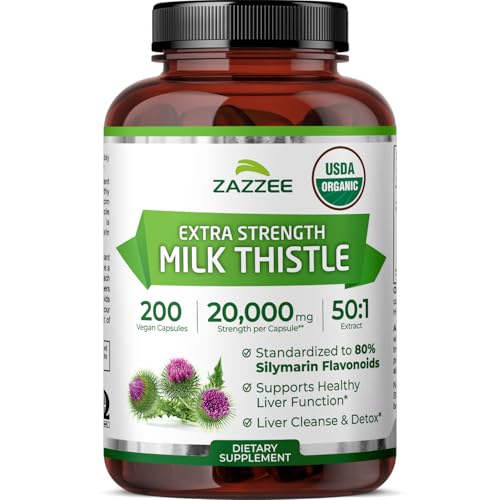
🛒 Where to Buy Milk Thistle (Silymarin)
- CleanseParasites Heavy Metal + Microplastics Binder Editor’s Pick
Contains milk thistle alongside spirulina, zeolite, and other binder herbs. - Thorne Siliphos (Silybin Phosphatidylcholine Complex)
capsules, 1 capsule (~120mg silybin-phosphatidylcholine complex) — Phospholipid complex form (silybin bound to phosphatidylcholine) for liver support - Jarrow Formulas Milk Thistle 150mg (Silymarin Standardized Extract)
capsules, 1 capsule (150mg, 80% silymarin) — Widely used, standard 80% silymarin extract at an accessible price - NOW Foods Silymarin Milk Thistle Extract 150mg
capsules, 1 capsule (150mg, 80% silymarin) — Made under NOW’s GMP Quality Assured program, budget-friendly staple brand with consistent standardization - Nature’s Way Milk Thistle Thisilyn Standardized Extract
capsules, 1 capsule (175mg, 80% silymarin) — Long-running standardized formula, one of the most established milk thistle brands in the US market
As an Amazon Associate we earn from qualifying purchases. Quality varies widely — always choose a product with a published third-party test (COA) before buying.
A Note on the Evidence
Most evidence here comes from cell and animal studies, not human trials, so real-world anti-aging effects in people remain unproven. Milk thistle can interact with CYP450-metabolized medications (including some statins, diabetes drugs, and hormonal therapies), and those with ragweed/Asteraceae allergies, diagnosed liver disease, or who take prescription medications should consult a physician before use; this article is informational, not medical advice.
Frequently Asked Questions
Does milk thistle actually slow aging in humans?
There’s no human clinical evidence in the cited research showing milk thistle slows aging or extends lifespan. The supporting studies are cellular and animal models examining oxidative stress, senescence, and ferroptosis pathways [3][1].
What's the proposed mechanism for milk thistle and cellular aging?
The main proposed mechanisms are antioxidant protection against oxidative-stress-driven cellular damage [1], inhibition of ferroptosis (iron-dependent cell death) [2], and reduced inflammatory signaling tied to senescent cells [8].
Is milk thistle good for skin aging specifically?
Silibinin has an established history in topical cosmeceutical research, including sun-protective formulations [11][5] and newer nanotechnology delivery systems for skin anti-aging [6]. This is distinct from oral supplement use and reflects topical-application research.

Does milk thistle help with brain aging or memory?
In an aging mouse model, silymarin reduced markers of senescence-related amyloid buildup, neuroinflammation, and oxidative stress tied to memory impairment [3], and separate reviews describe plausible neuroprotective mechanisms [9][10]. These are animal and mechanistic findings, not confirmed human cognitive benefits.
Is milk thistle the same as dihydromyricetin or luteolin?
No. Those are different plant compounds studied in separate research on liver regeneration [12] and muscle antioxidant pathways [13]. They’re mentioned only because they explore similar polyphenol/aging mechanisms, not because they’re the same as silymarin.
Should I take milk thistle as an anti-aging supplement?
That’s a decision to make with a physician, especially given milk thistle’s known interactions with CYP450-metabolized medications and its unclear, largely preclinical evidence base for aging specifically. It is not FDA-evaluated for this or any use.
References
- Papaevgeniou N et al. 2,3-Dehydrosilybin A/B as a pro-longevity and anti-aggregation compound. Free radical biology & medicine (2017). PMID 28039083
- Duan W et al. Silibinin Inhibits Cell Ferroptosis and Ferroptosis-Related Tissue Injuries. Antioxidants (Basel, Switzerland) (2023). PMID 38136238
- Chijioke BS et al. Silymarin attenuates senescence-exacerbated amyloidogenesis, neuroinflammation, and oxidative stress in lipopolysaccharide-induced memory impairment in aging mice. Biogerontology (2026). PMID 42440182
- Pallauf K et al. Autophagy, polyphenols and healthy ageing. Ageing research reviews (2013). PMID 22504405
- Singh RP et al. Cosmeceuticals and silibinin. Clinics in dermatology (2009). PMID 19695480
- Pozos-Nonato S et al. Novel Nanotechnological Strategies for Skin Anti-aging. Current pharmaceutical biotechnology (2023). PMID 36567280
- Baeeri M et al. Molecular and biochemical evidence on the protective role of ellagic acid and silybin against oxidative stress-induced cellular aging. Molecular and cellular biochemistry (2018). RETRACTED by the journal in 2025 — listed here for transparency; this page does not treat it as evidence. PMID 28887692 · retraction notice (PMID 40146470)
- Surai PF et al. Silymarin and Inflammation: Food for Thoughts. Antioxidants (Basel, Switzerland) (2024). PMID 38247522
- Devi KP et al. A Mini Review on the Chemistry and Neuroprotective Effects of Silymarin. Current drug targets (2017). PMID 28025940
- Kumar Singh N et al. Preclinical Evidence-based Neuroprotective Potential of Silibinin. Current drug research reviews (2023). PMID 36974407
- He H et al. Natural components in sunscreens: Topical formulations with sun protection factor (SPF). Biomedicine & pharmacotherapy = Biomedecine & pharmacotherapie (2021). PMID 33360043
- Ma Q et al. Dihydromyricetin regulates the miR-155-5p/SIRT1/VDAC1 pathway to promote liver regeneration and improve alcohol-induced liver injury. Phytomedicine : international journal of phytotherapy and phytopharmacology (2025). PMID 39986231
- Böttcher N et al. Luteolin Induces Nrf2 Activity in C2C12 Cells: Implications for Muscle Health. International journal of molecular sciences (2025). PMID 40362329
These statements have not been evaluated by the Food and Drug Administration. This information is not intended to diagnose, treat, cure, or prevent any disease. Content is for informational purposes only and is not medical advice; consult a qualified healthcare provider before starting any supplement. As an Amazon Associate we earn from qualifying purchases.