Milk thistle is best known as a liver-support herb, but a growing body of preclinical research has looked at whether its active compound, silymarin (and its main constituent, silibinin/silybin), might also protect brain cells. The interest stems from silymarin’s well-documented antioxidant and anti-inflammatory properties, since oxidative stress and neuroinflammation are implicated in conditions ranging from Parkinson’s disease to age-related cognitive decline.
It’s important to be direct about what this evidence base is: almost all of it comes from rodent and cell-culture studies using induced neurotoxicity models, not human clinical trials. This article walks through the proposed mechanisms and the specific research findings, while being clear about the gap between ‘protected neurons in a rat model’ and ‘proven to protect the human brain.’
Key Takeaways
- Silymarin’s antioxidant and anti-inflammatory mechanisms are the basis for interest in brain health, not proof of a clinical effect [1]
- Neuroprotective findings for Parkinson’s-like, Alzheimer’s-like, and toxin-induced models come from rodent studies, not human trials [2][3][4]
- Cellular research shows silibinin affects ferroptosis and proteasome activity, both relevant to neurodegeneration mechanisms but studied at the molecular level [5][6]
- Poor natural bioavailability is a known limitation, driving research into nanoliposome and phytosome delivery methods [7][8]
- Milk thistle should be used with caution alongside narrow therapeutic window drugs; those with liver disease or ragweed/Asteraceae allergies should consult a doctor first [9]
Why Researchers Think Silymarin Might Affect the Brain
Silymarin is a complex of flavonolignans, primarily silybin (also called silibinin), extracted from milk thistle seeds. Mechanistically, it’s known for scavenging free radicals, stabilizing cell membranes, and modulating inflammatory signaling in liver tissue, and researchers have asked whether these same properties translate to neurons, which are especially vulnerable to oxidative damage [1].
A broader mechanistic review of silymarin describes its influence on pathways involved in antioxidant defense, mitochondrial function, and inflammatory signaling, all of which are relevant to how neurons age and degenerate [1]. This is the theoretical basis for neuroprotection research, not proof that supplementing with milk thistle changes brain outcomes in people.

Phytochemical reviews more broadly have flagged plant-derived antioxidants, including silymarin, as candidates for influencing pathways tied to brain aging and neurodegenerative disease, largely because oxidative stress and chronic low-grade inflammation are common threads across these conditions [10].
Animal Models: Parkinson's Disease and Toxin-Induced Neurotoxicity
One of the more frequently cited studies used an MPTP mouse model, a standard method for inducing Parkinson’s-like dopaminergic neuron damage in rodents, and found that silymarin exerted a neuroprotective effect in that model [2]. MPTP models are useful for studying mechanisms but do not replicate the full complexity of human Parkinson’s disease, which develops over decades from a mix of genetic and environmental factors.
A separate study examined silymarin’s effect against 3-nitropropionic acid-induced neurotoxicity in rats, a model often used to mimic aspects of Huntington’s disease-like striatal damage, and reported protective effects on neural tissue [4]. Again, this is a chemically induced injury model in rodents, useful for isolating mechanisms but several steps removed from a naturally occurring human disease process.
A newer study delivered silymarin via nanoliposomes (a delivery method designed to improve absorption) in rats with monosodium glutamate-induced cerebellar motor deficits and Purkinje cell damage, reporting protective effects linked to activation of the PI3K/AKT signaling pathway, a pathway involved in cell survival [7]. The nanoliposome delivery detail matters: it suggests researchers are already working around a known limitation of silymarin, which is poor natural bioavailability.
Alzheimer's-Related Research
A rat study modeling Alzheimer’s-like disease using aluminum chloride exposure found that silymarin had a possible neuroprotective effect against the resulting damage [3]. Aluminum chloride models are one of several chemically induced approaches researchers use to study amyloid-related and cognitive decline mechanisms in rodents; they are a research tool, not a stand-in for the human disease.

A review focused on silibinin specifically compiled preclinical evidence for its neuroprotective potential across several models and endpoints, reinforcing that most of what’s known comes from lab and animal research rather than trials in people with diagnosed neurodegenerative disease [11].
Cellular Mechanisms: Ferroptosis, the Proteasome, and Oxidative Stress
At the cellular level, one line of research has looked at silibinin’s ability to inhibit ferroptosis, a form of iron-dependent cell death linked to tissue injury, including in neural tissue [5]. Ferroptosis has become a focus in neurodegeneration research generally, since iron accumulation and lipid peroxidation are observed in several brain disorders.
Separately, researchers have studied how silybins interact with the 20S proteasome, a cellular structure responsible for breaking down damaged proteins, finding that silybins act as stereospecific regulators of proteasome activity [6]. Protein clearance is relevant to neurodegenerative disease because several conditions, including Alzheimer’s and Parkinson’s, involve abnormal protein accumulation. This is a mechanistic, molecular-level finding, not evidence of a clinical brain-health benefit.
A concise mini-review specifically summarizing silymarin’s chemistry and neuroprotective effects ties these threads together, describing the compound’s antioxidant capacity and its investigated relevance to neurodegenerative pathways [12].
The Bioavailability Problem
A recurring challenge across this research is that silymarin and silibinin are poorly absorbed when taken orally in their natural form. This is precisely why some of the newer neuroprotection studies use delivery innovations like nanoliposomes to get more of the compound into circulation and, theoretically, across the blood-brain barrier [7].

Formulation research on polyphenolic phytosomes, a delivery technology designed to improve absorption of plant polyphenols for targeted delivery, reflects this same broader effort in the field to solve silymarin’s bioavailability limitations [8]. Whether any of these enhanced-delivery formulations reach the doses used in animal studies when taken as an over-the-counter human supplement is not established by the cited research.
Safety Considerations
An updated safety and toxicity review of silymarin found it to be generally well tolerated at commonly studied doses, though it noted the need for continued monitoring, particularly around drug interactions and use in specific populations [9].
A safety review found silymarin has low drug-interaction potential and no major effects on cytochromes P-450, but advised caution with narrow therapeutic window drugs. People with diagnosed liver disease, those taking narrow therapeutic window drugs, or anyone with a ragweed or Asteraceae plant family allergy should talk to a physician before using milk thistle supplements.
🛒 Where to Buy Milk Thistle (Silymarin)
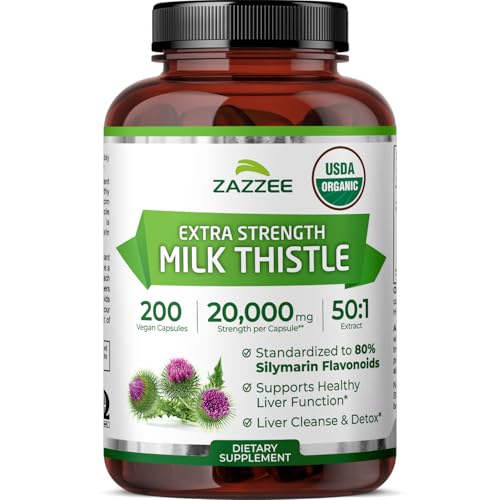
- CleanseParasites Heavy Metal + Microplastics Binder Editor’s Pick
Contains milk thistle alongside spirulina, zeolite, and other binder herbs. - Thorne Siliphos (Silybin Phosphatidylcholine Complex)
capsules, 1 capsule (~120mg silybin-phosphatidylcholine complex) — Phospholipid complex form (silybin bound to phosphatidylcholine) for liver support - Jarrow Formulas Milk Thistle 150mg (Silymarin Standardized Extract)
capsules, 1 capsule (150mg, 80% silymarin) — Widely used, standard 80% silymarin extract at an accessible price - NOW Foods Silymarin Milk Thistle Extract 150mg
capsules, 1 capsule (150mg, 80% silymarin) — Made under NOW’s GMP Quality Assured program, budget-friendly staple brand with consistent standardization - Nature’s Way Milk Thistle Thisilyn Standardized Extract
capsules, 1 capsule (175mg, 80% silymarin) — Long-running standardized formula, one of the most established milk thistle brands in the US market
As an Amazon Associate we earn from qualifying purchases. Quality varies widely — always choose a product with a published third-party test (COA) before buying.
A Note on the Evidence
The neuroprotective research on milk thistle and silymarin described here is preclinical (animal and cell-based), not human clinical evidence, and should not be interpreted as proof of a brain health benefit in people. Milk thistle is not FDA-evaluated for safety or effectiveness, is not intended to diagnose, treat, cure, or prevent any disease, and anyone with liver disease, a ragweed/Asteraceae allergy, or who takes narrow therapeutic window drugs should consult a physician before use; this article is informational only, not medical advice.
Frequently Asked Questions
Does milk thistle prevent or treat Parkinson's disease?
No. Silymarin showed a neuroprotective effect in an MPTP mouse model of Parkinson’s disease, but this is a preclinical rodent model, not evidence that milk thistle prevents or treats Parkinson’s in humans [2].
Can milk thistle help with Alzheimer's disease?
Research in this area is limited to animal models, such as a rat study using aluminum chloride to induce Alzheimer’s-like damage, where silymarin showed a possible protective effect [3]. There is no human clinical evidence to support using milk thistle for Alzheimer’s prevention or treatment.

What is the proposed mechanism behind silymarin's brain effects?
Researchers point to silymarin’s antioxidant activity, its influence on inflammatory signaling, and cellular effects such as inhibiting ferroptosis and regulating proteasome function, all pathways relevant to neuron survival and protein clearance [1][5][6].
Why does bioavailability matter for these studies?
Silymarin is poorly absorbed in its natural form, so much of the newer neuroprotection research uses enhanced-delivery methods like nanoliposomes or phytosomes to test whether more of the compound can reach target tissue [7][8]. Standard oral supplements may not achieve comparable exposure.
Is milk thistle safe to take for general health?
An updated toxicity review found silymarin generally well tolerated in studied doses, but it noted low drug-interaction potential and advised caution with narrow therapeutic window drugs [9]. Anyone with diagnosed liver disease or a ragweed/Asteraceae allergy should consult a physician first.
Has any of this neuroprotective research been done in humans?
The evidence cited here is preclinical, drawn from rodent models and cell studies, not human clinical trials measuring cognitive or neurological outcomes. This is an important limitation to keep in mind before drawing conclusions about real-world brain health benefits.
References
- Wadhwa K et al. Mechanistic Insights into the Pharmacological Significance of Silymarin. Molecules (Basel, Switzerland) (2022). PMID 36014565
- Pérez-H J et al. Neuroprotective effect of silymarin in a MPTP mouse model of Parkinson's disease. Toxicology (2014). PMID 24607817
- Aboelwafa HR et al. The Possible Neuroprotective Effect of Silymarin against Aluminum Chloride-Prompted Alzheimer's-Like Disease in Rats. Brain sciences (2020). PMID 32932753
- Chandolia P et al. Neuroprotective effect of silymarin against 3-Nitropropionic acid-induced neurotoxicity in rats. Current research in pharmacology and drug discovery (2022). PMID 36568269
- Duan W et al. Silibinin Inhibits Cell Ferroptosis and Ferroptosis-Related Tissue Injuries. Antioxidants (Basel, Switzerland) (2023). PMID 38136238
- Persico M et al. Silybins are stereospecific regulators of the 20S proteasome. Bioorganic & medicinal chemistry (2022). PMID 35576657
- Taha M et al. Neuroprotective effect of silymarin-loaded nanoliposomes against monosodium glutamate-induced cerebellar motor deficit and Purkinje cell damage in experimental rats via PI3K/AKT pathway activation. Frontiers in molecular biosciences (2025). PMID 40726996
- Khabarov IA et al. Polyphenolic phytosomes for targeted drug delivery. Fitoterapia (2025). PMID 41046876
- Soleimani V et al. Safety and toxicity of silymarin, the major constituent of milk thistle extract: An updated review. Phytotherapy research : PTR (2019). PMID 31069872
- Abdolmaleky HM et al. Underlying Mechanisms of Brain Aging and Neurodegenerative Diseases as Potential Targets for Preventive or Therapeutic Strategies Using Phytochemicals. Nutrients (2023). PMID 37571393
- Kumar Singh N et al. Preclinical Evidence-based Neuroprotective Potential of Silibinin. Current drug research reviews (2023). PMID 36974407
- Devi KP et al. A Mini Review on the Chemistry and Neuroprotective Effects of Silymarin. Current drug targets (2017). PMID 28025940
These statements have not been evaluated by the Food and Drug Administration. This information is not intended to diagnose, treat, cure, or prevent any disease. Content is for informational purposes only and is not medical advice; consult a qualified healthcare provider before starting any supplement. As an Amazon Associate we earn from qualifying purchases.