Milk thistle (Silybum marianum) seed extract, standardized to the flavonolignan complex silymarin, has been studied for decades in the context of cancer, but not in the way marketing claims often suggest. The bulk of the evidence comes from laboratory and animal (preclinical) research on silibinin, the main active component of silymarin, looking at whether it can interfere with early steps in cancer development or make conventional treatment more tolerable.
This article separates what has actually been tested from what is still hypothetical. It is not a claim that milk thistle treats, cures, or prevents cancer. It is a summary of where the chemoprevention research stands, which cancer types have been studied, and what small clinical trials have found when silymarin was used alongside standard cancer therapy.
Key Takeaways
- Most milk thistle-cancer research is preclinical (lab/animal) chemoprevention work on silibinin, focused on prostate, colorectal, and lung cancer biology, not proof of cancer prevention in humans [1] [2] [3].
- The strongest human trial evidence is for reducing chemotherapy- and radiation-related side effects (liver toxicity, radiodermatitis, hand-foot syndrome), not for preventing or treating cancer itself [4] [5] [6] [7].
- Dietary flavonoid chemoprevention research, including silibinin, is limited by poor bioavailability and a gap between lab-effective doses and realistic human supplementation [8].
- Milk thistle can interact with CYP450-metabolized drugs, which is especially relevant for cancer patients on complex medication regimens; any use during cancer treatment should be discussed with the treating oncologist.
- No study cited here supports using milk thistle as a substitute for, or independent alternative to, conventional cancer screening, treatment, or physician-directed care.
Chemoprevention: The Core Concept Behind Most of the Research
Most milk thistle-and-cancer research falls under “chemoprevention,” the idea of using a compound to interfere with the early molecular steps that allow normal cells to become cancerous, rather than treating existing tumors. Silibinin has been studied this way because dietary flavonoids as a class have drawn interest for their ability to modulate cell signaling pathways involved in cell proliferation, survival, and inflammation [8].
It’s important to be honest about the limits of this field. A recurring theme in flavonoid chemoprevention research generally is poor oral bioavailability, inconsistent dosing across studies, and a large gap between the concentrations that show effects in cell culture and what is realistically achievable in human tissue after normal supplementation [8]. This context matters for interpreting every preclinical finding below.

Prostate Cancer: The Most Studied Application
Prostate cancer is the cancer type with the longest track record of silibinin chemoprevention research. Early work described a “bench to bedside” trajectory, in which laboratory and animal studies of silibinin’s effects on prostate cancer cell growth, invasion, and angiogenesis were used to justify moving toward human feasibility studies [1].
Mechanistic reviews describe silibinin as acting on multiple pathways implicated in prostate cancer progression, including cell cycle regulators and signaling cascades tied to cell survival and inflammation, with much of this work focused on identifying molecular targets rather than confirming a clinical benefit [9]. An earlier review in this same line of research likewise framed silibinin as a candidate prostate cancer prevention agent based on preclinical mechanistic data, while noting that translating this into a proven preventive strategy in humans had not been established [10].
Taken together, this body of work shows sustained scientific interest in silibinin for prostate cancer chemoprevention, but the evidence remains predominantly preclinical and mechanistic rather than a demonstrated reduction in prostate cancer incidence in humans.
Colorectal Cancer: Mechanistic and Pathway-Level Evidence
Colorectal cancer is another area where silibinin’s chemopreventive potential has been reviewed in depth. One comprehensive review examined proposed mechanisms by which silibinin might influence colorectal cancer development and summarized efficacy data from available studies, again largely at the preclinical level [2].
More specific mechanistic work has looked at silibinin’s effect on the E-cadherin/beta-catenin pathway, a signaling system involved in how colorectal cancer cells adhere to one another and progress toward invasive disease. Regulation of this pathway is one proposed route through which silibinin’s chemopreventive activity has been studied in colorectal cancer models [11].

As with prostate cancer, this represents plausible, biologically grounded research rather than proof that milk thistle supplementation prevents colorectal cancer in people.
Lung Cancer: A More Recent Research Focus
Interest in silibinin has extended to lung cancer management, with a historical and translational review tracing how silibinin research moved from early mechanistic studies toward efforts to translate those findings into potential clinical applications [3]. This reflects the same chemoprevention logic applied to a different cancer type, and the same caveat applies: translational interest does not equal established clinical efficacy.
Where Human Trial Data Actually Exists: Reducing Treatment Side Effects
The clearest, most directly applicable human evidence for milk thistle in oncology is not about preventing or treating cancer itself, it’s about reducing side effects of conventional cancer therapy. Several randomized, placebo-controlled trials have tested silymarin for this purpose.
In breast cancer patients receiving AC-T chemotherapy (a regimen known for liver toxicity), a randomized, triple-blind, placebo-controlled trial evaluated an oral silymarin formulation for managing chemotherapy-induced liver injury [4]. Separately, a randomized, double-blind, placebo-controlled trial tested topical silymarin for preventing acute radiodermatitis (radiation-induced skin reactions) in breast cancer patients undergoing radiotherapy [5].

Hand-foot syndrome, a painful skin reaction caused by certain chemotherapy drugs, has also been a trial target. A randomized, double-blinded, placebo-controlled trial tested topical silymarin for preventing capecitabine-induced hand-foot syndrome [6], and a more recent triple-blinded randomized trial evaluated an oral nano-silymarin formulation for preventing hand-foot syndrome and neuropathy in metastatic colorectal cancer patients receiving XELOX or m-FOLFOX6 regimens [7]. These are the studies that come closest to showing a measurable clinical benefit of silymarin in cancer care, specifically as a supportive-care adjunct during treatment, not as a cancer treatment or preventive agent itself.
What This Research Does Not Show
None of the cited evidence demonstrates that milk thistle or silymarin prevents cancer from developing, shrinks existing tumors, treats cancer, or extends survival in humans. The chemoprevention literature on prostate, colorectal, and lung cancer is built primarily on laboratory and mechanistic studies identifying biological targets, not on completed human trials measuring cancer incidence or outcomes [1] [9] [2] [3].
The strongest human data relates to a separate question entirely: whether silymarin, given alongside chemotherapy or radiation, can reduce specific treatment side effects like liver toxicity, radiodermatitis, or hand-foot syndrome [4] [5] [6] [7]. That is a supportive-care question, distinct from cancer prevention or treatment.
🛒 Where to Buy Milk Thistle (Silymarin)
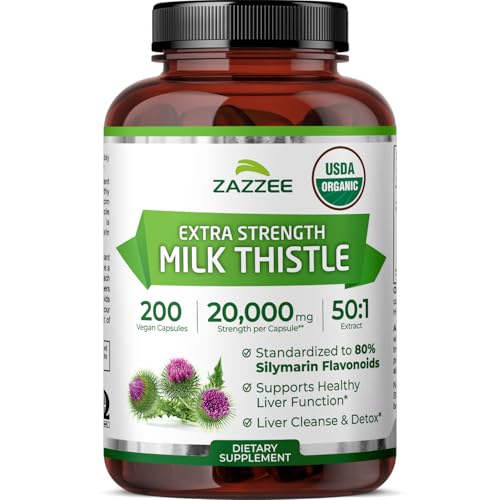
- CleanseParasites Heavy Metal + Microplastics Binder Editor’s Pick
Contains milk thistle alongside spirulina, zeolite, and other binder herbs. - Thorne Siliphos (Silybin Phosphatidylcholine Complex)
capsules, 1 capsule (~120mg silybin-phosphatidylcholine complex) — Phospholipid complex form (silybin bound to phosphatidylcholine) for liver support - Jarrow Formulas Milk Thistle 150mg (Silymarin Standardized Extract)
capsules, 1 capsule (150mg, 80% silymarin) — Widely used, standard 80% silymarin extract at an accessible price - NOW Foods Silymarin Milk Thistle Extract 150mg
capsules, 1 capsule (150mg, 80% silymarin) — Made under NOW’s GMP Quality Assured program, budget-friendly staple brand with consistent standardization - Nature’s Way Milk Thistle Thisilyn Standardized Extract
capsules, 1 capsule (175mg, 80% silymarin) — Long-running standardized formula, one of the most established milk thistle brands in the US market
As an Amazon Associate we earn from qualifying purchases. Quality varies widely — always choose a product with a published third-party test (COA) before buying.
A Note on the Evidence
This article summarizes preclinical and early clinical research; it is not medical advice and milk thistle/silymarin supplements are not FDA-evaluated to prevent, treat, or cure cancer. Anyone with a cancer diagnosis, on chemotherapy or other medications metabolized by CYP450 enzymes, or with a ragweed/Asteraceae allergy or liver disease should consult their physician or oncologist before using milk thistle.
Frequently Asked Questions
Does milk thistle prevent cancer?
No human trial has shown that milk thistle prevents cancer. The chemoprevention research on silibinin for prostate, colorectal, and lung cancer is largely preclinical, focused on identifying biological mechanisms rather than confirming prevention in people [1] [2] [3].
Can milk thistle treat cancer or shrink tumors?
No. None of the cited research shows silymarin or silibinin treating existing cancer or shrinking tumors in humans. The human trials that exist test silymarin for managing side effects of chemotherapy and radiation, not for treating the cancer itself [4] [5].
Is there any real human evidence for milk thistle in cancer care?
Yes, but for a specific supportive-care purpose: small randomized trials have tested silymarin for reducing chemotherapy-induced liver toxicity, radiation-induced skin reactions, and chemotherapy-induced hand-foot syndrome [4] [5] [6] [7].

Why is prostate cancer research on silibinin so prominent?
Silibinin has a long research history in prostate cancer chemoprevention, with reviews tracing work from lab studies through early translational efforts, largely examining molecular pathways tied to prostate cancer cell growth and progression [1] [9] [10].
Can milk thistle interact with cancer treatment drugs?
Milk thistle can affect CYP450 liver enzymes that metabolize many medications, including some drugs used in cancer care. Anyone undergoing cancer treatment should talk to their oncologist before taking milk thistle or any supplement.
Should someone with cancer take milk thistle instead of following their treatment plan?
No. Nothing in this research supports using milk thistle as a substitute for conventional cancer treatment. The available human evidence positions silymarin as a possible supportive adjunct to standard therapy under medical supervision, not as an alternative to it.
References
- Singh RP et al. Prostate cancer chemoprevention by silibinin: bench to bedside. Molecular carcinogenesis (2006). PMID 16637061
- Raina K et al. Silibinin and colorectal cancer chemoprevention: a comprehensive review on mechanisms and efficacy. Journal of biomedical research (2016). PMID 27476880
- Verdura S et al. Lung Cancer Management with Silibinin: A Historical and Translational Perspective. Pharmaceuticals (Basel, Switzerland) (2021). PMID 34208282
- Moezian GSA et al. Oral silymarin formulation efficacy in management of AC-T protocol induced hepatotoxicity in breast cancer patients: A randomized, triple blind, placebo-controlled clinical trial. Journal of oncology pharmacy practice : official publication of the International Society of Oncology Pharmacy Practitioners (2022). PMID 33861657
- Karbasforooshan H et al. Topical silymarin administration for prevention of acute radiodermatitis in breast cancer patients: A randomized, double-blind, placebo-controlled clinical trial. Phytotherapy research : PTR (2019). PMID 30479044
- Elyasi S et al. Topical Silymarin Administration for Prevention of Capecitabine-Induced Hand-Foot Syndrome: A Randomized, Double-Blinded, Placebo-Controlled Clinical Trial. Phytotherapy research : PTR (2017). PMID 28635153
- Karbasforooshan H et al. Evaluation of Oral Nano-Silymarin Formulation Efficacy in the Prevention of Hand-Foot Syndrome and Neuropathy Induced by XELOX or m-FOLFOX6 Regimens in Metastatic Colorectal Cancer: A Triple-Blinded, Randomized Clinical Trial. Iranian journal of pharmaceutical research : IJPR (2024). PMID 40066113
- Amawi H et al. Cancer chemoprevention through dietary flavonoids: what's limiting?. Chinese journal of cancer (2017). PMID 28629389
- Ting H et al. Molecular mechanisms of silibinin-mediated cancer chemoprevention with major emphasis on prostate cancer. The AAPS journal (2013). PMID 23588585
- Singh RP et al. Prostate cancer prevention by silibinin. Current cancer drug targets (2004). PMID 14965263
- Sameri S et al. Cancer Chemopreventive Activities of Silibinin on Colorectal Cancer through Regulation of E-Cadherin/β-Catenin Pathway. Nutrition and cancer (2021). PMID 32748663
These statements have not been evaluated by the Food and Drug Administration. This information is not intended to diagnose, treat, cure, or prevent any disease. Content is for informational purposes only and is not medical advice; consult a qualified healthcare provider before starting any supplement. As an Amazon Associate we earn from qualifying purchases.