Milk thistle (Silybum marianum) is one of the most studied liver-support herbs, and much of that research has focused on a simple, measurable question: does it change blood levels of ALT and AST, the two liver enzymes doctors use to flag hepatocyte stress or damage? Its seed extract is standardized to silymarin, a mix of flavonolignans dominated by silybin (also called silibinin), which is proposed to act on liver cells through antioxidant activity, stabilization of hepatocyte membranes, and mild anti-inflammatory effects.
The honest answer is that the evidence is mixed and highly dependent on context. Some trials and meta-analyses report meaningful ALT/AST reductions, particularly in people with fatty liver disease or enzyme elevations from a specific drug exposure. Others show little to no effect, especially in healthier populations or short trials. This article walks through what the actual studies found, who benefited, and where the evidence runs thin.
Key Takeaways
- The strongest enzyme-lowering signal for silymarin comes from NAFLD/NASH trials and meta-analyses, not from healthy-population studies [1][2]
- Results vary by dose, formulation, and duration, so pooled meta-analysis conclusions do not guarantee an individual result
- Some combination formulas (silymarin plus berberine, Pueraria, Phyllanthus niruri) show effects, but isolating milk thistle’s individual contribution is often not possible from these designs
- Newer research suggests current dosing/administration practices may need revision to get more consistent liver-injury outcomes [3]
- Milk thistle has a generally favorable safety profile but can interact with CYP450-metabolized drugs, so it is not a substitute for medical evaluation of elevated liver enzymes [4]
How Milk Thistle Is Thought to Affect Liver Enzymes
ALT and AST are enzymes that leak into the bloodstream when hepatocytes (liver cells) are stressed or injured, so falling levels on a follow-up blood panel are generally interpreted as a sign that liver cell stress has eased, not proof that underlying disease has resolved.
Silymarin’s proposed mechanism centers on silybin binding to hepatocyte cell membranes, where it may limit oxidative damage and help stabilize the membrane against toxins. It is also proposed to have mild anti-inflammatory effects within the liver. These are plausible, biologically grounded mechanisms, but a plausible mechanism is not the same as proof of a clinical effect, which is why the enzyme data from trials matters more than the mechanism story alone.

Silymarin and Fatty Liver Disease (NAFLD/NASH): The Strongest Signal
The most consistent enzyme-lowering data comes from studies in non-alcoholic fatty liver disease (NAFLD) and its more severe form, NASH. A systematic review and meta-analysis of silymarin administration in NAFLD/NASH found improvements in liver enzymes across pooled randomized trials [1]. A broader meta-analysis of dietary polyphenol supplementation, which included silymarin among other polyphenols, likewise reported benefits for markers relevant to fatty liver disease [2].
Combination approaches also show promise in this population. A trial combining silymarin with berberine found effects on liver enzymes when analyzed across randomized controlled trials [5], and a triple-blind, placebo-controlled trial combining Silybum marianum with Pueraria lobata and Salvia miltiorrhiza reported effects on NAFLD-related markers [6]. A network meta-analysis comparing several natural products in NAFLD patients also included silymarin-based interventions in its comparisons [7].
Not every fatty-liver signal is uniform. Some of the products just discussed pair silymarin with other actives, so isolating silymarin’s individual contribution from the combination’s effect is not always possible from these designs, and NAFLD trial protocols such as the Siliver trial were themselves set up because the field still needed more rigorous, adequately powered data [8].

Drug-Induced and Situational Liver Stress
A separate line of research looks at silymarin in situations where the liver is under acute or medication-related stress rather than chronic fatty liver disease. In a randomized clinical trial of patients taking isotretinoin, a medication known to raise liver enzymes in some users, silymarin was studied for its effect on ALT and AST during treatment [9].
In critically ill trauma patients in the ICU, a randomized, double-blinded, placebo-controlled trial examined silymarin’s effect on liver enzymes and antioxidant status during a period of acute physiological stress [10]. These are narrower, situational contexts, and results in an ICU trauma population should not be generalized to someone taking a supplement for everyday liver support.
Newer research has also questioned whether current silymarin dosing and administration practices are actually optimized for liver injury outcomes. A 2025 meta-analysis and novel outlook on randomized trials targeting liver injury suggested that alterations to how silymarin is dosed or administered may be needed to get more consistent results [3], which is a useful reminder that a null result in an older trial may reflect a dosing problem rather than a true lack of effect.
Newer and Combination Formulations
Beyond standalone silymarin, some newer trials test Silybum marianum in combination with other botanicals aimed at similar liver risk profiles. A phase II, multicentered, randomized, double-blind, placebo-controlled trial of a combined Phyllanthus niruri and Silybum marianum extract (branded Heptex) was conducted in patients with apparent risk factors for nonalcoholic steatohepatitis [11].

These combination-product trials add to the overall evidence base but make it harder to say how much of any benefit is attributable to the milk thistle component specifically versus the other botanical in the formula.
Where the Evidence Is Weaker or Inconsistent
The overall research picture is not a uniform yes. Meta-analyses in this space frequently note substantial variability between trials in dose, formulation, silymarin bioavailability, treatment duration, and the baseline liver condition of participants, all of which can push pooled results in either direction. A trial in metabolically healthy people over a few weeks is a very different test than a trial in NAFLD patients over several months, and the enzyme response can differ accordingly.
A broader review of Silybum marianum and silymarin’s role in metabolic syndrome describes the plant’s therapeutic potential while also framing it as an area still being clarified rather than settled science [12]. Readers should treat headline claims of guaranteed enzyme reduction with skepticism; the data supports a reasonable possibility of benefit in specific populations, not a universal effect.
Safety Considerations Relevant to Liver Monitoring
An updated safety and toxicity review of silymarin found it generally well tolerated across the studies reviewed, with a favorable safety profile relative to many other supplements marketed for liver support [4]. That said, being generally well tolerated is not the same as being risk-free for everyone.
Silymarin can interact with CYP450-metabolized medications, including some statins, diabetes medications, and hormonal therapies, because it can affect how the liver processes these drugs. People with a ragweed or Asteraceae allergy, or with a diagnosed liver disease, should talk to a physician before starting milk thistle, and anyone using it to try to normalize abnormal liver enzymes should be doing so under medical supervision with follow-up bloodwork, not as a substitute for diagnosis.
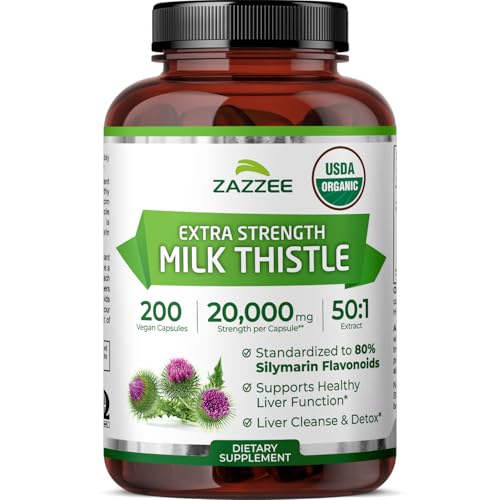
🛒 Where to Buy Milk Thistle (Silymarin)
- CleanseParasites Heavy Metal + Microplastics Binder Editor’s Pick
Contains milk thistle alongside spirulina, zeolite, and other binder herbs. - Thorne Siliphos (Silybin Phosphatidylcholine Complex)Lab-tested / studied
capsules, 1 capsule (~120mg silybin-phosphatidylcholine complex) — Clinically-studied phospholipid complex form used in bioavailability research; NSF Certified for Sport option - Jarrow Formulas Milk Thistle 150mg (Silymarin Standardized Extract)
capsules, 1 capsule (150mg, 80% silymarin) — Widely used, third-party tested, standard 80% silymarin extract at an accessible price - NOW Foods Silymarin Milk Thistle Extract 150mg
capsules, 1 capsule (150mg, 80% silymarin) — GMP-certified, budget-friendly staple brand with consistent standardization - Nature’s Way Milk Thistle Thisilyn Standardized Extract
capsules, 1 capsule (175mg, 80% silymarin) — Long-running standardized formula, one of the most established milk thistle brands in the US market
As an Amazon Associate we earn from qualifying purchases. Quality varies widely — always choose a product with a published third-party test (COA) before buying.
A Note on the Evidence
This article summarizes findings from a limited set of clinical trials and meta-analyses; results vary by population, dose, and formulation, and milk thistle supplements are not FDA-evaluated for safety or effectiveness and are not intended to diagnose, treat, cure, or prevent any disease. Anyone with elevated liver enzymes, a diagnosed liver condition, a ragweed/Asteraceae allergy, or who takes CYP450-metabolized medications should consult a physician before using milk thistle; this content is informational, not medical advice.

Frequently Asked Questions
Can milk thistle actually lower ALT and AST?
In several trials and meta-analyses focused on fatty liver disease, silymarin supplementation was associated with improvements in liver enzyme markers [1][2]. Results are less consistent outside of fatty liver populations, so it should not be assumed to work the same way for every cause of elevated enzymes.
Does milk thistle help with fatty liver disease specifically?
This is where the evidence base is strongest. Meta-analyses of silymarin in NAFLD/NASH have reported enzyme and related metabolic improvements [1], and combination trials involving silymarin have also shown effects in this population [5][6].
Is milk thistle useful for medication-related liver stress, like from isotretinoin?
A randomized clinical trial specifically tested silymarin’s effect on liver enzymes in patients taking isotretinoin [9]. This is a narrow, specific context, and it should not be generalized to other medications without similar trial evidence.

Is the current milk thistle research considered high quality?
It is mixed. Some meta-analyses show clear pooled benefits [1][5], while others highlight substantial variability in dosing and formulation across trials, and a 2025 analysis suggested dosing practices themselves may need reconsideration [3]. The field still has ongoing dedicated trials, like the Siliver protocol, aimed at producing more definitive data [8].
Is milk thistle safe to take alongside prescription medications?
A safety and toxicity review found silymarin generally well tolerated [4], but it can interact with CYP450-metabolized drugs, including some statins, diabetes medications, and hormonal therapies. Anyone on these medications should consult a physician before use.
Should I use milk thistle instead of getting elevated liver enzymes checked by a doctor?
No. Elevated ALT/AST can have many causes, and self-treating with a supplement risks masking or delaying diagnosis of an underlying condition. Milk thistle research on enzyme levels comes from monitored clinical trials, not from unsupervised self-use.
References
- Li S et al. Administration of silymarin in NAFLD/NASH: A systematic review and meta-analysis. Annals of hepatology (2024). PMID 38579127
- Yang K et al. Efficacy and safety of dietary polyphenol supplementation in the treatment of non-alcoholic fatty liver disease: A systematic review and meta-analysis. Frontiers in immunology (2022). PMID 36159792
- Shahsavari K et al. Are alterations needed in Silybum marianum (Silymarin) administration practices? A novel outlook and meta-analysis on randomized trials targeting liver injury. BMC complementary medicine and therapies (2025). PMID 40221681
- Soleimani V et al. Safety and toxicity of silymarin, the major constituent of milk thistle extract: An updated review. Phytotherapy research : PTR (2019). PMID 31069872
- Mohtashaminia F et al. Effects berberine-silymarin on liver enzymes: A systematic review and meta-analysis of randomized controlled trials. Clinical nutrition ESPEN (2022). PMID 35623810
- Li BY et al. Effects of Silybum marianum, Pueraria lobate, combined with Salvia miltiorrhiza tablets on non-alcoholic fatty liver disease in adults: A triple-blind, randomized, placebo-controlled clinical trial. Clinical nutrition ESPEN (2024). PMID 38879879
- Liu H et al. Effects of different natural products in patients with non-alcoholic fatty liver disease-A network meta-analysis of randomized controlled trials. Phytotherapy research : PTR (2024). PMID 38886838
- de Avelar CR et al. Efficacy of silymarin in patients with non-alcoholic fatty liver disease – the Siliver trial: a study protocol for a randomized controlled clinical trial. Trials (2023). PMID 36899430
- Mirnezami M et al. The effect of silymarin on liver enzymes in patients taking isotretinoin: A randomized clinical trial. Dermatologic therapy (2020). PMID 31997509
- Mirzaei E et al. The effect of silymarin on liver enzymes and antioxidant status in trauma patients in the intensive care unit: a randomized double blinded placebo-controlled clinical trial. Clinical and experimental hepatology (2021). PMID 34295981
- Shaker MK et al. The activity of a herbal medicinal product of Phyllanthus niruri and Silybum marianum powdered extracts (Heptex®) in patients with apparent risk factors for nonalcoholic steatohepatitis: a phase II, multicentered, randomized, double-blind, placebo-controlled clinical trial. BMC complementary medicine and therapies (2025). PMID 39789561
- Tajmohammadi A et al. Silybum marianum (milk thistle) and its main constituent, silymarin, as a potential therapeutic plant in metabolic syndrome: A review. Phytotherapy research : PTR (2018). PMID 30015401
These statements have not been evaluated by the Food and Drug Administration. This information is not intended to diagnose, treat, cure, or prevent any disease. Content is for informational purposes only and is not medical advice; consult a qualified healthcare provider before starting any supplement. As an Amazon Associate we earn from qualifying purchases.