Milk thistle (Silybum marianum) seed extract is standardized to silymarin, a mixture of flavonolignans dominated by silybin, and is widely used as a liver-support supplement. A recurring problem with silybin, however, is that it is poorly water-soluble and absorbed inefficiently on its own, which has led manufacturers to develop delivery forms intended to improve how much of it actually reaches the bloodstream.
One of the most studied approaches is complexing silybin with phosphatidylcholine (a phospholipid), sometimes marketed under names like IdB 1016 or silipide. This article looks specifically at what the pharmacokinetic and cell-based research says about phosphatidylcholine-complexed silybin compared to standard, uncomplexed silymarin extract, without overstating what that improved absorption means for liver outcomes.
Key Takeaways
- Standard silymarin extract has known bioavailability limitations due to silybin’s poor water solubility.
- Phosphatidylcholine complexation is designed to improve intestinal absorption of silybin, supported by Caco-2 permeability data [1] and human pharmacokinetic comparisons [2].
- A soft-gel silybin-phosphatidylcholine formulation showed superior silybin bioavailability versus conventional tablets in healthy volunteers [2].
- Animal pharmacokinetic data [3] and emerging nanoparticle delivery research [4] support the same underlying mechanism but don’t establish clinical superiority.
- Improved absorption is not the same as proven improved liver outcomes; this area still needs disease-population clinical trials.
Why Bioavailability Is the Core Issue With Milk Thistle
Silybin is the primary active flavonolignan in silymarin, but it has low aqueous solubility and limited membrane permeability, which restricts how much is absorbed from a standard oral extract. This is a formulation problem more than a mechanism-of-action problem: the proposed antioxidant and membrane-stabilizing effects of silybin on hepatocytes depend on enough of the compound reaching liver tissue in an active form.
Because of this, much of the innovation around milk thistle products has focused on delivery technology, phospholipid complexes, soft-gel formulations, and phyto-liposome systems, rather than on discovering new active constituents.
What Is a Silybin-Phosphatidylcholine Complex?
A silybin-phosphatidylcholine complex is formed by combining silybin with phosphatidylcholine, a phospholipid that is also a structural component of cell membranes. The idea is that binding silybin to a phospholipid improves its ability to cross the lipid-rich intestinal membrane, since the resulting complex behaves more like a fat-soluble molecule than the free flavonolignan does.

Cell-based (Caco-2 monolayer) research has been used to directly test this permeability question. One study comparing clinically relevant silibinin formulations in Caco-2 cell monolayers found that phosphatidylcholine-complexed forms showed improved intestinal permeability characteristics relative to non-complexed silibinin, consistent with the proposed mechanism [1].
Human Pharmacokinetic Evidence
The original human pharmacokinetic work on this delivery approach was done with IdB 1016, a silybin-phosphatidylcholine complex, in healthy volunteers. That study characterized the absorption and disposition of silybin delivered in complexed form and helped establish the pharmacokinetic profile that later comparative work built on [5].
A more recent controlled comparison directly tested a silybin-phosphatidylcholine complex delivered in oily-medium soft-gel capsules against conventional silymarin tablets in healthy volunteers. That study reported superior silybin bioavailability with the phosphatidylcholine complex soft-gel formulation compared to the conventional tablet form [2]. This is one of the more direct head-to-head comparisons available in the current evidence base, though it was conducted in a healthy volunteer population rather than in people with liver disease.
Supporting Evidence From Animal and Nanoparticle Research
Beyond human data, a pharmacokinetic study in dogs evaluated a silybin-phosphatidylcholine complex and reported on its absorption behavior in that model, adding to the cross-species consistency of the bioavailability signal for this delivery form [3].
Separately, researchers have explored phyto-liposome formulations, nanoscale lipid-based carriers, as a way to further improve delivery of the water-insoluble silybin-phospholipid complex. One such study described phyto-liposomes functioning as nanoshuttles for silybin-phospholipid material, representing a more advanced engineering approach built on the same underlying phospholipid-complexation principle [4]. This line of research is still largely at the formulation and preclinical stage rather than confirmed in large human trials.

What Improved Bioavailability Does and Doesn't Tell Us
It’s important to be precise about what these studies actually measure: they assess how much silybin is absorbed and how it behaves pharmacokinetically, not whether a phosphatidylcholine complex produces better liver health outcomes than standard silymarin in people with liver conditions. Higher blood levels of silybin are a reasonable proxy for improved delivery, but they are not the same as demonstrated clinical benefit.
The available evidence here is also concentrated in healthy volunteers, animal models, and cell culture systems. None of the cited studies establish comparative clinical efficacy for liver disease outcomes between the two formulation types, so claims that a phosphatidylcholine complex “works better” for the liver go beyond what this specific evidence base supports.
Practical Considerations When Comparing Products
If bioavailability is a priority, the pharmacokinetic data suggest that phosphatidylcholine-complexed silybin formulations, particularly in soft-gel form, are absorbed more efficiently than conventional silymarin tablets in healthy adults [2]. Product labels sometimes reference this technology under trade names, so checking the actual formulation (complex vs. standard extract, and delivery format) is more informative than relying on total milligram dose alone, since a lower-dose complexed product may deliver more absorbed silybin than a higher-dose standard extract.
As with any supplement claim, marketing language can outpace the underlying research, and formulation differences don’t override the general safety and interaction considerations that apply to milk thistle products broadly.

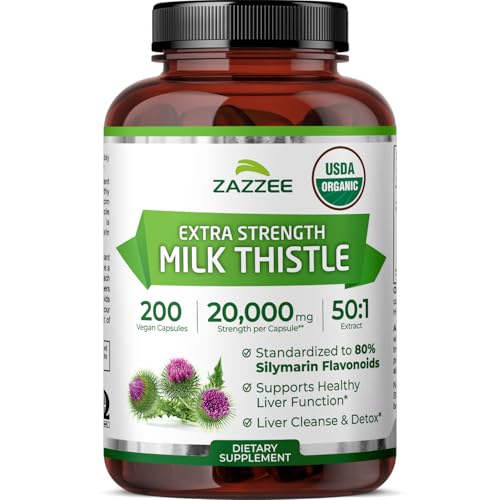
🛒 Where to Buy Milk Thistle (Silymarin)
- CleanseParasites Heavy Metal + Microplastics Binder Editor’s Pick
Contains milk thistle alongside spirulina, zeolite, and other binder herbs. - Thorne Siliphos (Silybin Phosphatidylcholine Complex)
capsules, 1 capsule (~120mg silybin-phosphatidylcholine complex) — Phospholipid complex form (silybin bound to phosphatidylcholine) for liver support - Jarrow Formulas Milk Thistle 150mg (Silymarin Standardized Extract)
capsules, 1 capsule (150mg, 80% silymarin) — Widely used, standard 80% silymarin extract at an accessible price - NOW Foods Silymarin Milk Thistle Extract 150mg
capsules, 1 capsule (150mg, 80% silymarin) — Made under NOW’s GMP Quality Assured program, budget-friendly staple brand with consistent standardization - Nature’s Way Milk Thistle Thisilyn Standardized Extract
capsules, 1 capsule (175mg, 80% silymarin) — Long-running standardized formula, one of the most established milk thistle brands in the US market
As an Amazon Associate we earn from qualifying purchases. Quality varies widely — always choose a product with a published third-party test (COA) before buying.
A Note on the Evidence
This evidence base is mostly small pharmacokinetic and cell/animal studies, largely in healthy volunteers rather than people with liver disease, so it speaks to absorption, not proven clinical superiority. Milk thistle supplements are not FDA-evaluated for safety or effectiveness and are not intended to diagnose, treat, cure, or prevent any disease; anyone on CYP450-metabolized medications, with ragweed/Asteraceae allergies, or with diagnosed liver disease should consult a physician before use.
Frequently Asked Questions
Is silybin-phosphatidylcholine complex the same thing as milk thistle?
It’s a specific delivery form of milk thistle’s main active compound, silybin, chemically complexed with the phospholipid phosphatidylcholine to improve absorption [5]. Standard milk thistle extract contains silybin without this complexation.
Does phosphatidylcholine complexing actually improve absorption?
Human pharmacokinetic research has found superior silybin bioavailability with a phosphatidylcholine complex in soft-gel form compared to conventional silymarin tablets [2], and cell-based permeability studies support the underlying mechanism [1].
Does better absorption mean better liver health results?
Not necessarily. The cited studies measure absorption and pharmacokinetics, mostly in healthy volunteers, animals, or cell models, not clinical liver outcomes, so more absorbed silybin has not been directly proven to translate into superior therapeutic benefit in people with liver disease.
Has this been tested in animals as well as humans?
Yes, a pharmacokinetic study in dogs evaluated absorption of a silybin-phosphatidylcholine complex [3], complementing the human data [5] [2].
What are phyto-liposomes and how do they relate to this?
Phyto-liposomes are nanoscale lipid carriers explored as a further delivery upgrade for silybin-phospholipid material, described as functioning as nanoshuttles for the otherwise water-insoluble complex [4]. This is a more advanced but less clinically established approach than the standard phosphatidylcholine complex.
Are there safety concerns specific to the phosphatidylcholine complex form?
The general safety profile and precautions for milk thistle, including possible CYP450 drug interactions and caution for those with ragweed/Asteraceae allergies or diagnosed liver disease, apply regardless of formulation. Formulation changes affect absorption, not the underlying safety considerations.
References
- Pérez-Sánchez A et al. Intestinal Permeability Study of Clinically Relevant Formulations of Silibinin in Caco-2 Cell Monolayers. International journal of molecular sciences (2019). PMID 30935093
- Méndez-Sánchez N et al. Superior silybin bioavailability of silybin-phosphatidylcholine complex in oily-medium soft-gel capsules versus conventional silymarin tablets in healthy volunteers. BMC pharmacology & toxicology (2019). PMID 30635055
- Filburn CR et al. Bioavailability of a silybin-phosphatidylcholine complex in dogs. Journal of veterinary pharmacology and therapeutics (2007). PMID 17348898
- Angelico R et al. Phyto-liposomes as nanoshuttles for water-insoluble silybin-phospholipid complex. International journal of pharmaceutics (2014). PMID 24858381
- Barzaghi N et al. Pharmacokinetic studies on IdB 1016, a silybin- phosphatidylcholine complex, in healthy human subjects. European journal of drug metabolism and pharmacokinetics (1990). PMID 2088770
These statements have not been evaluated by the Food and Drug Administration. This information is not intended to diagnose, treat, cure, or prevent any disease. Content is for informational purposes only and is not medical advice; consult a qualified healthcare provider before starting any supplement. As an Amazon Associate we earn from qualifying purchases.