Milk thistle (Silybum marianum) has a long history as a liver-support herb, thanks to its seed extract silymarin and its main active component, silibinin (also called silybin). Because the liver and kidneys share overlapping jobs in filtering and detoxifying the blood, researchers have started asking a related question: does silymarin or silibinin do anything meaningful for the kidneys too?
The honest answer right now is: possibly, but the evidence is still early. Most of what exists comes from animal and cell-based studies looking at kidney injury caused by toxins, reduced blood flow, or disease processes like diabetes, not large human clinical trials. This article walks through what the research actually shows, the proposed mechanisms, and where the real uncertainty lies.
Key Takeaways
- Kidney-focused silymarin/silibinin research is real but almost entirely preclinical (animal and cell studies), not large human trials.
- Proposed mechanisms include antioxidant protection, reduced ferroptosis via FTH1 [1], and effects on MAPK/PI3K-AKT signaling during injury and recovery [2].
- Much of the evidence comes from toxin-induced injury models (lead, aluminum) using enhanced-delivery formulations like nanoparticles, which may not reflect natural supplement absorption [3] [4].
- Diabetic kidney disease research is emerging but mechanistic, not a basis for treatment claims [5].
- Anyone with diagnosed kidney disease, liver disease, or on CYP450-metabolized medications should talk to a physician before using milk thistle.
The Basic Case for Silymarin and Kidney Protection
A 2025 systematic review and meta-analysis pooling nephroprotection studies concluded that silymarin shows a consistent nephroprotective signal across the animal and preclinical literature it evaluated, generally by reducing markers of oxidative stress and kidney tissue damage [6]. Systematic reviews like this are useful because they aggregate many smaller studies, but it’s worth noting that a meta-analysis of animal studies is still several steps removed from proof that silymarin protects human kidneys in everyday use.

This nephroprotective idea isn’t unique to milk thistle. Plant-derived nephroprotective agents are a fairly active area of toxicology research generally; other extracts, such as those from Asparagus africanus root [7], persimmon leaves [8], Viola serpens [9], and oyster mushroom (Pleurotus ostreatus) [10], have been studied in similar toxin-challenge animal models. Milk thistle’s silymarin sits within this broader field of botanical antioxidant research rather than standing apart from it.
Proposed Mechanisms: Why Might Silibinin Matter for Kidneys?
The kidneys are highly metabolically active and vulnerable to oxidative stress, especially in the tubular cells responsible for filtering and reabsorbing fluid. Silibinin’s antioxidant and membrane-stabilizing properties, the same properties proposed for liver protection, are thought to reduce oxidative damage to these cells and help preserve mitochondrial function under stress.
One specific pathway getting attention is ferroptosis, a form of iron-dependent cell death linked to acute kidney injury. A 2024 study found that silibinin reduced ferroptosis in kidney cells by acting on a protein called FTH1, which helps regulate cellular iron handling [1]. Separately, research on ischemia-reperfusion injury (the kind of damage that happens when blood flow to the kidney is cut off and then restored, such as during surgery or transplant) found that silibinin affected MAPK and PI3K/AKT signaling pathways involved in the transition from acute kidney injury to chronic kidney disease [2].
A related formulation study using a silibinin-cyclodextrin complex to improve absorption found reduced apoptosis (programmed cell death) in both liver and kidney tissue after hepatic ischemia-reperfusion injury in an animal model [11]. This also points to a recurring theme in the literature: much of the research on silibinin’s kidney effects comes packaged with formulation tweaks (nanoparticles, cyclodextrin complexes, lipid carriers) designed to get more of the compound into tissue, since natural silymarin absorption is notoriously poor.

Toxin- and Injury-Induced Kidney Damage Models
A good portion of the silibinin-kidney research uses animal models where kidney damage is deliberately induced by a toxic exposure, then researchers test whether silibinin (often in an enhanced-delivery form) reduces the damage. Silibinin loaded into nanostructured lipid carriers reduced markers of acute kidney injury caused by lead exposure in male rats [3]. Silibinin nanoparticles were also studied against aluminum-induced kidney damage, oxidative stress, and abnormal lipid levels, with the nanoparticle form showing effects on multiple damage markers [4].
These toxin-challenge studies are informative for understanding mechanism, but they don’t tell us how silymarin behaves in a kidney that isn’t being deliberately poisoned with lead or aluminum in a lab. Real-world human kidney stress (aging, high blood pressure, diabetes) is a different physiological situation than an acute toxic insult in a rodent.
Diabetic Kidney Disease and Metabolic Angles
Diabetic kidney disease is one of the more clinically relevant contexts being explored. A 2026 study looked at silibinin’s effect on a receptor called GHSR-1α, finding that it appeared to enhance mitophagy (the clearance of damaged mitochondria) and reduce tubular injury in a diabetic kidney disease model [5]. This is a more disease-relevant angle than a one-time toxin exposure, since chronic conditions like diabetes involve sustained, low-grade kidney stress over years.

It’s worth being direct about what this kind of study can and can’t support: it identifies a plausible cellular mechanism in an animal or cell model. It is not evidence that taking milk thistle will prevent or treat diabetic kidney disease in people, and no one should substitute it for glucose control, blood pressure management, or prescribed nephroprotective medications.
How This Connects to Milk Thistle's Better-Known Cardiac and Liver Research
Silymarin’s antioxidant and cell-protective mechanisms have also been studied outside the kidney, including in cardiac preconditioning, where researchers have looked at silymarin’s constituents for their potential to protect heart tissue against ischemic stress [12]. This fits the broader pattern: silymarin’s core proposed mechanisms, antioxidant activity, membrane stabilization, and effects on cell-death pathways, are being tested across multiple organ systems, not just the liver it’s traditionally associated with.
That consistency across organ systems is scientifically interesting, but it also reflects how early-stage this research is. The same handful of mechanistic ideas keep showing up across small studies in different tissues, which is a normal part of building a research base, but is not the same as confirmed clinical benefit in any one of those areas, including the kidney.
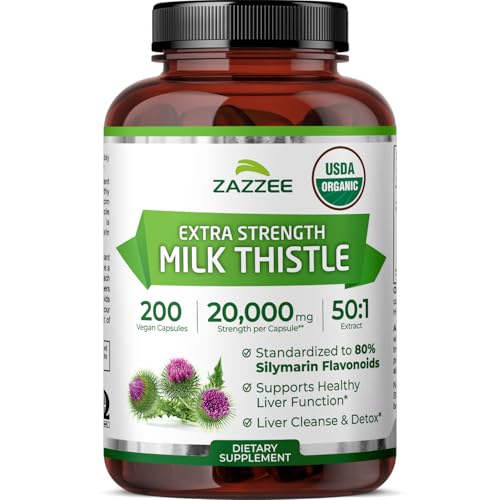
🛒 Where to Buy Milk Thistle (Silymarin)
- CleanseParasites Heavy Metal + Microplastics Binder Editor’s Pick
Contains milk thistle alongside spirulina, zeolite, and other binder herbs. - Thorne Siliphos (Silybin Phosphatidylcholine Complex)Lab-tested / studied
capsules, 1 capsule (~120mg silybin-phosphatidylcholine complex) — Clinically-studied phospholipid complex form used in bioavailability research; NSF Certified for Sport option - Jarrow Formulas Milk Thistle 150mg (Silymarin Standardized Extract)
capsules, 1 capsule (150mg, 80% silymarin) — Widely used, third-party tested, standard 80% silymarin extract at an accessible price - NOW Foods Silymarin Milk Thistle Extract 150mg
capsules, 1 capsule (150mg, 80% silymarin) — GMP-certified, budget-friendly staple brand with consistent standardization - Nature’s Way Milk Thistle Thisilyn Standardized Extract
capsules, 1 capsule (175mg, 80% silymarin) — Long-running standardized formula, one of the most established milk thistle brands in the US market
As an Amazon Associate we earn from qualifying purchases. Quality varies widely — always choose a product with a published third-party test (COA) before buying.
A Note on the Evidence
This article summarizes early-stage animal and cell research, not human clinical evidence, and milk thistle supplements are not FDA-evaluated for safety or effectiveness or intended to diagnose, treat, cure, or prevent any disease. People with diagnosed kidney or liver disease, ragweed/Asteraceae allergies, or who take CYP450-metabolized medications (including some statins, diabetes drugs, or hormonal therapies) should consult a physician before use; this content is informational, not medical advice.

Frequently Asked Questions
Does milk thistle treat kidney disease?
No. The current evidence is from animal and cell studies exploring protective mechanisms, not clinical trials establishing that milk thistle treats kidney disease in people. A 2025 meta-analysis found a consistent nephroprotective signal in the preclinical literature it reviewed, but that doesn’t equal a proven human treatment [6].
What is silibinin and how is it different from silymarin?
Silymarin is the overall flavonolignan extract from milk thistle seeds, and silibinin (also called silybin) is its primary and most-studied active component. Most of the specific kidney-related mechanism research, including work on ferroptosis and injury signaling, focuses on silibinin specifically [1] [2].
Why do so many of these studies use nanoparticles or special formulations?
Natural silymarin absorbs poorly in the body, so researchers often test enhanced-delivery versions, like nanostructured lipid carriers or cyclodextrin complexes, to get more of the compound into tissue for study purposes [3] [11]. This makes it hard to know how a standard oral milk thistle supplement would compare.
Can milk thistle help with kidney injury from reduced blood flow, like during surgery?
Some ischemia-reperfusion injury studies (modeling the kind of damage from temporarily cut-off blood flow) have found silibinin affected injury-related signaling pathways and reduced cell death in kidney tissue [2] [11]. These are animal studies, and this is not an approved or established use in humans.

Is milk thistle safe to take if I have kidney or liver disease?
Milk thistle supplements are not FDA-evaluated for safety or effectiveness. People with diagnosed kidney disease, liver disease, or ragweed/Asteraceae allergies should consult a physician before use, and anyone on CYP450-metabolized medications should check for interactions first.
Is this the same evidence base as milk thistle's liver benefits?
Related but distinct. Milk thistle’s traditional reputation is built on liver research; the kidney-specific findings described here are a newer and smaller body of work using overlapping mechanisms (antioxidant activity, cell-death pathway effects) rather than a direct extension of the liver evidence [12].
References
- Deng Y et al. Silibinin attenuates ferroptosis in acute kidney injury by targeting FTH1. Redox biology (2024). PMID 39326069
- Dong S et al. Silibinin mitigates AKI-to-CKD transition via MAPK and PI3K/AKT signaling pathways in Ischemia-Reperfusion injury. Scientific reports (2025). PMID 41254063
- Makhdoomi S et al. Silibinin-loaded Nanostructured Lipid Carriers (NLCs) Ameliorated Lead-induced Acute Nephrotoxicity in Male Rats. Cell biochemistry and biophysics (2024). PMID 39107467
- El-Demerdash FM et al. Nephroprotective effects of silymarin and its fabricated nanoparticles against aluminum-induced oxidative stress, hyperlipidemia, and genotoxicity. Environmental toxicology (2024). PMID 38546352
- Zhang N et al. Targeting GHSR-1α with silibinin to enhance mitophagy and prevent tubular injury in diabetic kidney disease. Biochimica et biophysica acta. Molecular basis of disease (2026). PMID 41951014
- Frounchi N et al. Nephroprotective Effects of Silymarin: A Systematic Review and Meta-Analysis. Biochemistry. Biokhimiia (2025). PMID 40886393
- Meka Kedir W et al. Nephroprotective Effect of Asparagus africanus Lam. Root Extract against Gentamicin-Induced Nephrotoxicity in Swiss Albino Mice. Journal of toxicology (2022). PMID 35495873
- Shahat AA et al. Nephroprotective effect of persimmon leaves (Diospyros kaki L.f.) against CCl(4)-induced renal toxicity in Swiss Albino rats. Drug and chemical toxicology (2022). PMID 33522322
- Ghaffar R et al. Nephroprotective effect of the hydromethanolic extract and fractions of Viola serpens Wall. Histological and hematological evidence. Cellular and molecular biology (Noisy-le-Grand, France) (2022). PMID 36905283
- Dkhil MA et al. Nephroprotective effect of Pleurotus ostreatus extract against cadmium chloride toxicity in rats. Anais da Academia Brasileira de Ciencias (2020). PMID 32428092
- Tsaroucha AK et al. Silibinin-hydroxypropyl-β-cyclodextrin (SLB-HP-β-CD) complex prevents apoptosis in liver and kidney after hepatic ischemia-reperfusion injury. Food and chemical toxicology : an international journal published for the British Industrial Biological Research Association (2020). PMID 32891719
- Zholobenko A et al. Silymarin and its constituents in cardiac preconditioning. Fitoterapia (2014). PMID 24879900
These statements have not been evaluated by the Food and Drug Administration. This information is not intended to diagnose, treat, cure, or prevent any disease. Content is for informational purposes only and is not medical advice; consult a qualified healthcare provider before starting any supplement. As an Amazon Associate we earn from qualifying purchases.